


Review Article
Antimicrobial and Antioxidant Efficiency of Different Extracts of Banana Flower: A Meta Review
Souharda Chatterjee, Manotosh Ghosh, Punam Ghanti and Shilpa Purkait*
Department of Medical Lab Technology, Dr. B. C. Roy Academy of Professional Courses (Formerly known as Dr. B.C. Roy
Engineering College), Durgapur, West Bengal, Kolkata, India.
*Corresponding author:Shilpa Purkait, Department of Medical Lab Technology, Dr. B. C. Roy Academy of Professional Courses (Formerly known as Dr. B.C. Roy Engineering College), Durgapur, West Bengal, Kolkata, India. E-Mail Id: shilpa.purkait.10@gmail.com
Copyright: © Chatterjee S, et al. 2026. This is an open access article distributed under the Creative Commons Attribution License, which permits unrestricted use, distribution, and reproduction in any medium, provided the original work is properly cited.
Article Information:Submission: 25/07/2026; Accepted: 15/09/2026; Published: 19/09/2026
Abstract
Banana (Musa spp.) flower is an unutilized agricultural by-product with growing academic interest in light of its well-balanced content of bioactive phytochemicals and possible therapeutic benefits. This review will discuss and critically evaluate the available literature on the antimicrobial and antioxidant potential of banana flower extracts obtained by the use of various solvents. To extract these compounds, many different solvents have been commonly used, like methanol, ethanol, chloroform, hydro-ethanol, hydro-chloroform, and the polarity of the solvents has been found to be a significant factor in extraction yield. Many studies have indicated that polar solvents especially methanol and ethanol tend to achieve higher concentrations of phenolic substances and strong antioxidant properties, which are usually measured using techniques like DPPH radical scavenging frameworks. In the same manner, antimicrobial effect on a number of pathogenic microorganisms has been reported using conventional microbiological tests which means that banana flower extracts have potential as natural antimicrobial agents. The evidence obtained indicates that extracts of banana flowers have high antioxidant and antimicrobial activity and can be used as potential natural alternatives to be applied in food preservation, pharmaceutical preparation, and in the development of nutraceuticals.
Moreover, the fact that banana flower is used as a value-added product demonstrates the need to consider agricultural by-products as renewable sources of bioactive compounds with possible industrial and therapeutic use.
Keywords:Banana Flower; Antioxidant Activity; Antimicrobial Activity; Phytochemical Compounds; Solvent Extraction
Introduction
Banana (Musa spp., often formerly referred to as Musa sapientum
L.) is an example of a climacteric fruit, that define the staple foods
in tropical regions of world. According to, FAOSTAT (2014) [1]
has indicated that world banana production is about 126 million
beyond 150 countries, which means that plantains and bananas are
one of the ten essential food crops along with export commodities
in the world. Over the last few years, plant-derived proteins have
received significant consideration towards their use in the feed,
food, pharmaceutical, cosmetics sector (Kitts and Weiler 2003) [2].
Banana is also industrially processed to produce several products,
which include canned flowers in brine, dried vegetables, pickles,
and some pharmaceutical preparations, especially banana blossoms
(Wickramarachchi and Ranamukhaarachchi 2005) [3]. Plant sources
of bioactive peptides have been shown to inhibit growth of Gramnegative
and Gram-positive bacteria with some also having antiviral
and antifungal properties (Shai 2002; Reddy et al. 2004) [4,5].
Moreover, these peptides of vegetable source are linked to various
medicinal activities, such as anticancer, antioxidant, proteinase
inhibitory and chitinase (Hoskin and Ramamoorthy 2008; Sinha et
al. 2014) [6,7].
The trend that leans towards natural food additives has also escalated the study on plant-derived antibacterial agents (Tiwari et al., 2009) [8] whose applications in food systems have great potentials. However, the sustainability of these natural antibacterials in the long term is highly determined by the sources of the raw materials of these substances in terms of accessibility and quantity (McChesney et al., 2007) [9]. Agro-response, especially banana plantation can be considered a promising and sustainable resource. Banana is also one of the fruits most produced in the world with an estimated annual production of around 120 million tons in banana varieties, including plantain fruits (FAO, 2008) [10]. Nevertheless, even with this scale-based production, significant amounts of biomass, which are approximately 220 tons per hectare (Shah et al., 2005) [11], are still not utilized and in most cases, they are treated as agricultural byproducts instead of value-added products.
Banana inflorescence, which is a unique floral arrangement that grows in the end part of the bunch of fruits and continues to grow till fruit maturity is one of these products. It is traditionally eaten in various Asian societies either raw or cooked as a vegetable. The inflorescence provides an appropriate target to be used in studying the antibacterial properties given that it is widely available. Previously, the studies of the different banana byproducts of the various cultivars have shown significant antibacterial properties (Mokbe and Hashmaka, 2005) [12], antioxidant properties in the fruit peels (Someya et al., 2002) [13] and flowers (Ho et al., 2007) [14], and antifungal properties in fruits (Roobha et al., 2011) [15].
The trend that leans towards natural food additives has also escalated the study on plant-derived antibacterial agents (Tiwari et al., 2009) [8] whose applications in food systems have great potentials. However, the sustainability of these natural antibacterials in the long term is highly determined by the sources of the raw materials of these substances in terms of accessibility and quantity (McChesney et al., 2007) [9]. Agro-response, especially banana plantation can be considered a promising and sustainable resource. Banana is also one of the fruits most produced in the world with an estimated annual production of around 120 million tons in banana varieties, including plantain fruits (FAO, 2008) [10]. Nevertheless, even with this scale-based production, significant amounts of biomass, which are approximately 220 tons per hectare (Shah et al., 2005) [11], are still not utilized and in most cases, they are treated as agricultural byproducts instead of value-added products.
Banana inflorescence, which is a unique floral arrangement that grows in the end part of the bunch of fruits and continues to grow till fruit maturity is one of these products. It is traditionally eaten in various Asian societies either raw or cooked as a vegetable. The inflorescence provides an appropriate target to be used in studying the antibacterial properties given that it is widely available. Previously, the studies of the different banana byproducts of the various cultivars have shown significant antibacterial properties (Mokbe and Hashmaka, 2005) [12], antioxidant properties in the fruit peels (Someya et al., 2002) [13] and flowers (Ho et al., 2007) [14], and antifungal properties in fruits (Roobha et al., 2011) [15].
The studies of various banana flower extracts (Musa spp., Musa
acuminata and Musa paradisiaca) are underway due to the fact
that the biological activity of this plant is extremely dependent on
the extraction method and solvent. Various phytochemicals in
banana inflorescence include phenolic acids, flavonoids, tannin,
anthocyanin, however, they vary in terms of polarity and solubility.
Consequently, methanol, ethanol, aqueous, acetone or other solvent
systems films off various categories of bioactive constituents at
different concentrations. As the antioxidant and antimicrobial
activities are directly proportional to the total phenolic and flavonoid
content, comparative extraction investigations are required to reveal
which solvent system is best to extract phytochemical and biological
activity. Dosage cannot be standardized, reproducibility cannot be
ensured, no extract can be optimized to be used in preservation of
pharmaceutical, nutraceutical, or food products without investigating
the various extracts (Sulaiman et al., 2011; Singh et al., 2016) [16,17].
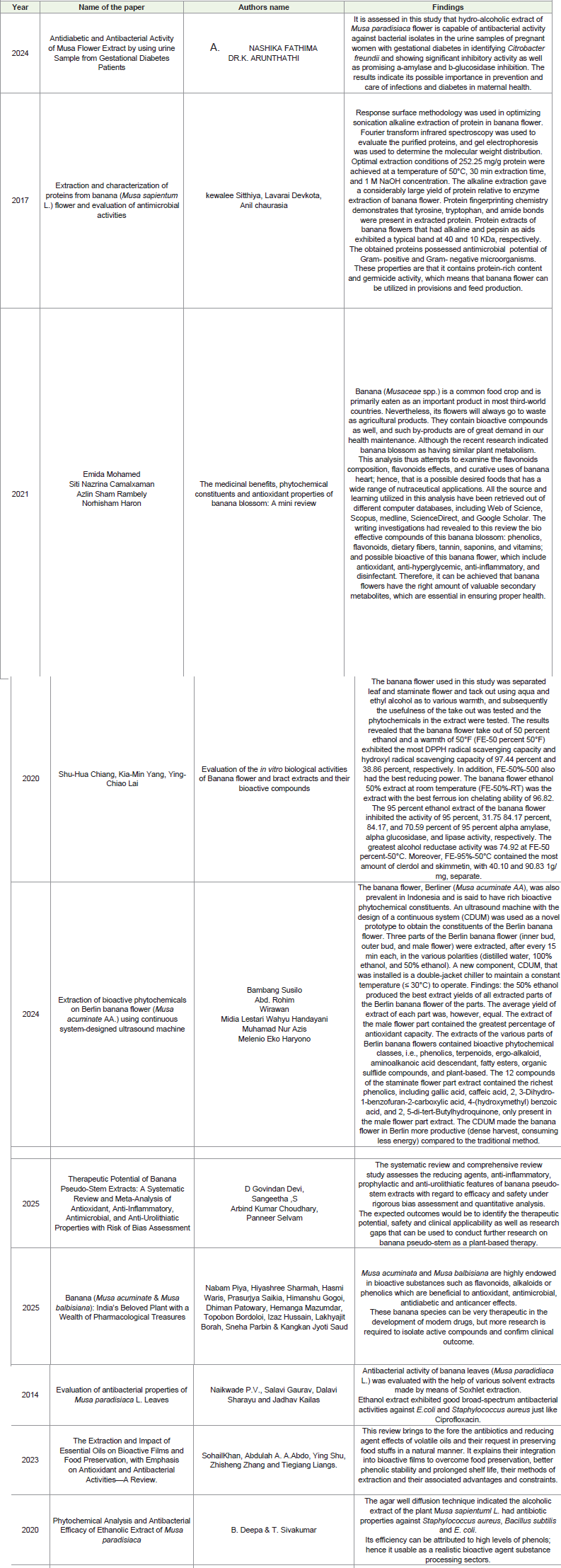
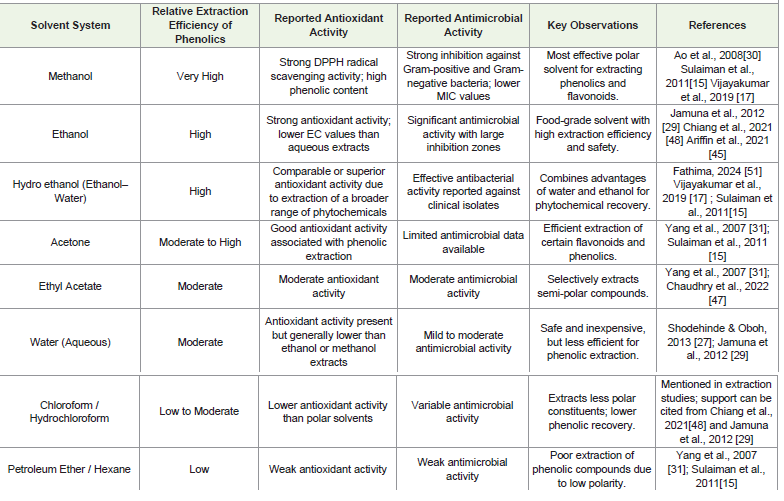
This study as well conducted in order to fullfill more scientific and general public health requirements. The growing need to combat oxidative stress-related diseases, the world-wide epidemic of antimicrobial resistance, has made the quest to find safe bioactive compounds of plant origin even more demanding. The banana flower is an agricultural by-product, which is underutilized but can be used as an antimicrobial and antioxidant, and is thus the potential natural alternative to synthetic additives and food conventional antibiotics. Through the examination of various extracts, scientists strive to determine the most productive fraction that has a high biological activity and low toxicity and, in such a way, promotes the creation of natural therapeutic agents and value-added products of low cost (Vijayakumar et al., 2019) [18]. Essentially, the study is motivated by secure natural antioxidant, new antimicrobial agent and efficient use of agro-resources [Table 1,2]
This study as well conducted in order to fullfill more scientific and general public health requirements. The growing need to combat oxidative stress-related diseases, the world-wide epidemic of antimicrobial resistance, has made the quest to find safe bioactive compounds of plant origin even more demanding. The banana flower is an agricultural by-product, which is underutilized but can be used as an antimicrobial and antioxidant, and is thus the potential natural alternative to synthetic additives and food conventional antibiotics. Through the examination of various extracts, scientists strive to determine the most productive fraction that has a high biological activity and low toxicity and, in such a way, promotes the creation of natural therapeutic agents and value-added products of low cost (Vijayakumar et al., 2019) [18]. Essentially, the study is motivated by secure natural antioxidant, new antimicrobial agent and efficient use of agro-resources [Table 1,2]
Overall Trend:
Polar solvents, particularly methanol, ethanol, and hydroethanolic
mixtures, consistently demonstrate superior extraction of phenolic
and flavonoid compounds, resulting in stronger antioxidant and
antimicrobial activities. In contrast, non-polar solvents such as
hexane and petroleum ether generally show lower biological activity
because of their limited ability to extract phenolic constituents.Antimicrobial Assay:
It is undisputed that plant secondary metabolites are bioactive
and have been historically utilized as therapeutic agents and natural
preservatives (Tiwari et al., 2009) [8]. These are compounds that be
a major contribute in the defense of plants to various environmental
stressors, microbial infestations, and herbivore attacks (Munne-
Bosch et al., 2001; Huang et al., 2006) [19,20]. It has been
shown that a number of plants possess the potential to produce
antibacterial and antioxidant compounds that can find applications
in pharmaceutical and food sectors (Oyelana et al., 2011) [21].
Nevertheless, the problem of antimicrobial resistance in bacteria that
are growing increasingly with genetic mutations and horizontal gene
transfer between species underscores the necessity of new natural
antibacterial agents (; Davidson and Branen, 2005; Adeleke and
Omafuvbe, 2011) [22,23].Based on the established significance of plant secondary
metabolites as natural antimicrobial agents, the analysis of banana
flower (Musa spp., Musa acuminata and Musa paradisiaca) by use of
standardized antimicrobial tests has gained growing importance. The
most common antimicrobial evaluation techniques including agar
well diffusion, disc diffusion, minimum bactericidal concentration
(MBC) and minimum inhibitory concentration (MIC) determination
are extensively accustomed measure the inhibitory activity of plant
extracts against pathogenic microorganisms. These tests will give
crucial information on antimicrobial spectrum, potency and dose dependent
response. Balouiri M et al. (2016) [24] argue that
reproducibility and sound cross-comparisons of plant-derived
extracts and traditional antimicrobial agents is achieved by the use
of standardized in vitro susceptibility testing methods. Methanolic
and ethanolic extracts have often been found in banana flower to
have larger inhibitory zones and a lower MIC value than non-polar
fractions depending on the solvent polarity effect on antimicrobial
activity.
Banana flower extracts have a close relationship between their
phytochemical properties and the antimicrobial activity, with the
presence of phenolic acids, flavonoid, tannin, and anthocyanin. These
substances have the ability to destabilize cell membranes of microbes,
precipitate proteins within the cell, chelate necessary metal ions and
disrupt the production of nucleic acids. The various ways in which
plant phenolics act as antimicrobials were described as proposed
by Cowan MM (1999) [25] as follows; membrane disruption and
enzyme inhibition are some of the pathways. Dalia M (2012) [26],
on the same note, indicated that polyphenols are highly active against
pathogenic organisms in food and clinically-relevant organisms,
which explains their possible use as natural food preservatives and
natural therapeutic agents. Besides, Burt S (2004) [27] emphasized
the capacity of phenolic compounds of plant origin to change the
permeability of the membranes and disrupt the metabolic activity
of microorganisms. This multi-target mode of action is especially
relevant when it comes to the increased antimicrobial resistance
where it is less likely to induce resistance unlike the single-site
synthetic antibiotics. As such, the whole antimicrobial testing of
various banana flower extracts is critical not only in the validation of
their bioactivity but also to determine powerful fractions that can be
used to develop new antimicrobial agents derived using plants.
Toxicity Study:
Banana flower (Musa spp.) extracts have in general been
toxicologically tested in the in vivo and in vitro contexts with a
positive safety profile. In an acute oral toxicity study carried out
following OECD guidelines, once administered at graded doses
up to 2000mg/kg body weight, Wistar rat showed zero mortality,
behaviour abnormalities, change in body mass, food intake, and
body part morphology; thus, indicating an LD50 of more than
2000mg/kg (Shodehinde and Oboh, 2013) [28]. The biochemical
parameters such as serum aspartate aminotransferase (AST), alanine
aminotransferase (ALT), creatinine, and urea were within the
normal physiological values, and this showed there were no evident
hepatotoxic or nephrotoxic conditions. Equally, in streptozotocin induced
diabetic animals, the use of banana flower extract as a
supplement was able to markedly ameliorate the glycaemic and
oxidative stress markers without causing histopathological changes
to the liver or kidney tissues, which would confirm the systemic
safety of banana flower extract in sub-acute exposures (Pari &
Maheswari, 1999) [29]. The in vitro cytotoxicity studies with the use
of mammalian cell lines (3T3-L1 preadipocytes) have also shown that
banana flower extracts do not affect cell viability at concentrations
of lower therapeutic relevance and did not cause any noticeable
membrane rupture or apoptotic effects in the cell lines (Jamuna
et al., 2012) [30]. The non-toxicity is explained by the fact that
predominantly the naturally occurring phenolics and flavonoids are
present, and those, although being bioactive, do not have cytotoxicity
in the traditional experimental relationships. Nevertheless, although
acute and sub-acute explorations are promising results, all-inclusive
chronic toxicity, genotoxicity, and clinical safety testing have not
been done, and additional standard toxicology studies are needed to
be completed before the large-scale pharmaceutical or nutraceutical
utilization can be completely approved.Total phenolic content of different extracts of banana flower:
Banana flower (Musa spp.) phenolic extracts have been widely
determined by Folin Cicaldeau colorimetric method, and the results
are usually expressed in gallic acid equivalents (GAE). It is always
shown in studies that the phenolic concentration is highly variable
according to the polarity of the medium as well as the method of
extraction used. Polar solvents like methanol and ethanol tend
to produce high levels of phenolic content in contrast to the nonpolar
solvents like hexane or petroleum ether. As an example, Ao
et al. (2008) [31] found that the total phenolic values of methanolic
extracts were much larger and the antioxidant activities of the same
extracts was much higher as compared to the less polar fractions.
Likewise, it was noted that the extracts of acetone, ethanol, methanol,
and ethyl acetate were excessive in phenolic concentration compared
to the petroleum ether extracts (Yang et al., 2007) [32]. This
observation highlighted the influence of solvent polarity in extracting
the highest level of phenols. The banana inflorescence in particular,
bud extracts often show higher levels of phenolics than bract extracts,
which is associated with the presence of a positive relationship
with DPPH radical scavenging ability and low EC50. High level of
phenolic compounds has been explained by occurrence phenolic
acids, flavonoids, and anthocyanins including cyanidin derivatives
that also give it hydrogen-donating and metal-chelating properties.
According to these findings, the conditions of extraction of banana
flower extracts are critical determinants of such phenolic yield and,
by extension, the biological activity of the extracts, making solvent
choice the key to phytochemical recovery in banana flower extracts.Antioxidant assay:
Water, alcohols, acetone, and ethyl acetate are more ideal solvents
in the extraction of antioxidants in banana inflorescence with over
50% of DPPH radical scavenging activity at 1.0 mg mL⁻¹, whereas nonpolar
solvents have little. The antioxidant activity has been attributed
to such compounds as cyanidin rutinoside in Musa acuminata bracts
(Roobha et al., 2011) [15] and the hydrogen-donating capacity of
extracts that cause DPPH discoloration (Ao et al., 2008) [31]. The
scavenging of DPPH was found to be dose dependent, with the ability
of banana inflorescence leaf extract synthesized FeONPs reaching
87% at 100 μg/ml, inferior to ascorbic acid at the same concentration
(Tabassum et al., 2023) [33].It was found that the redox activity of the take out was ascertained utilize the setup test of the 1,1-dimethyl-2-phenylethyl formate. Picrylhydrazyl radical (DPPH) is an example of a thorough founded on a process determined by (Villano et al. 2007) [34] with some exceptions.
The DPPH test is a widely employed test in the antioxidant activity
study. Ascorbic in the measurement of the percentage of radical
scavenging activity, acid (C₆H₈O₆) was employed as a standard. For in
this test, 1 ml of 4 various concentrations (30, 50, 80, and 100 μg/ml)
of FeONPs was combined with 1.ml of freshly prepared DPPH (1 mM
in methanol) solution. In it were mixed the DPPH radical solution
and the DPPH radical. The solution was stirred with methanol for a
reaction time of 30 minutes. The optical density of the mixture was
calculated at 718 nm. In the antioxidant test, DPPH, it was taken as a
positive control, and the methanol was used as a blank solution. The
decrease of the presence of DPPH radicals due to the action of an
antioxidant leads to deformation of the test solution.
Analysis of the activity of antioxidants in M. paradisiaca flowers showed that the ethanol extract used needed a lesser amount of substrate compared to the aqueous extract to prevent a 50% DPPH colour. This implies that ethanol was found to be more antioxidant active compared to aqueous extracts. The outcomes represent the occurrence of antioxidant principles in the extractives. The antioxidant activities were supposed to be there in the M. paradisiaca flower, as it has been so.
It is said to have vitamin E (Sheng et al., 2010) [35], vitamin C (Sun, Chu, Wu, and Liu, 2002) [36], and vitamin- E (Ching and Mohamed, 2001) [37]. The naturally occurring plant compounds tend to naturally correlate with their physiological activity as antioxidants. The difficulty of comparing them, however, is quite high.
Analysis of the activity of antioxidants in M. paradisiaca flowers showed that the ethanol extract used needed a lesser amount of substrate compared to the aqueous extract to prevent a 50% DPPH colour. This implies that ethanol was found to be more antioxidant active compared to aqueous extracts. The outcomes represent the occurrence of antioxidant principles in the extractives. The antioxidant activities were supposed to be there in the M. paradisiaca flower, as it has been so.
It is said to have vitamin E (Sheng et al., 2010) [35], vitamin C (Sun, Chu, Wu, and Liu, 2002) [36], and vitamin- E (Ching and Mohamed, 2001) [37]. The naturally occurring plant compounds tend to naturally correlate with their physiological activity as antioxidants. The difficulty of comparing them, however, is quite high.
The data of the DPPH scavenging capacity across various
laboratories is attributed to a limited number of reasons, which
include response time, the attentiveness of DPPH, and the presence of
antioxidant(s) in the mixture. The antioxidant effect of M. paradisiaca
flowers could be linked to the attending of polyphenolic amalgam in
the take out, including flavonoids, alkaloids, and tannins.
Phytochemical Analysis:
The plant extracts were conducted using standard qualitative
strategies such as those suggested by different authors. The stocking
of the plant extracts was determined in relation to the presence
of biologically active compounds. as in the glycosides, alkaloids,
flavonoids, phenolics, saponins, steroids, and quinine and tannin.
They are subjected to chemical analyses. plant sample of both the
aqueous extract of the plant sample and the powdered plant. similar
to ordinary sampling (Edeoga et al., 2005) [38].Banana (Musa spp.) is the most important of all the tropical fruits. All the known cultivars of banana are high in concentrations of numerous of the main health-promoting phytochemicals of the diet, such as carbohydrates, potassium, vitamin C, carotenoids of fiber, and provitamin A. Vitamin A is the product of the precursor betacarotene. The most prevalent nutritional issue is vitamin A deficiency around the world, among malnourished children (Davey et al., 2003) [39].
Most epidemiological research papers have discovered that enriched intake of plant-based foods is abundant. Nutritionists have an interconnecting relationship with lower risk of various diseases such as cancers and cardiovascular diseases (Englberger et al., 2003) [40].
Therefore, the most profitable and sustainable strategies are food-based. prophylaxis of vitamin A deficiency. Hence a wholesome inventory of all the genetic diversity that can be offered in the of all the genetic diversity that is there (Slavin & Lloyd, 2012) [41]. They make banana species very indispensable at this time, as they are sexually compatible species (Arvanitoyannis & Mavromatis, 2009) [42].
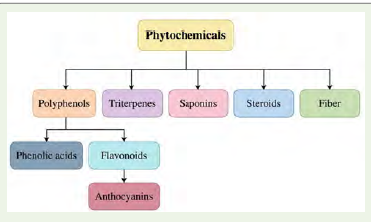
It is also necessary to know the numerous characteristics, such as the botanical, agronomic, nutritional, and processing quality of the fruits (Perrier et al., 2011) [43]. It turned out that there is a very huge amount of genetic diversity that the Musa species holds, and, unfortunately, only modest data are known as to the nutritional composition of even the wild species and the popular ones, often (WHO, 2009) [44,45] [Figure 1,2].
Discussion:
The banana flower (Musa spp. has become a viable source of
naturally occurring bioactive substances with strong antioxidant
and antimicrobial qualities. The results presented in this review
demonstrate the presence of significant phytochemicals that support
the biological activities of banana flower extracts including phenolic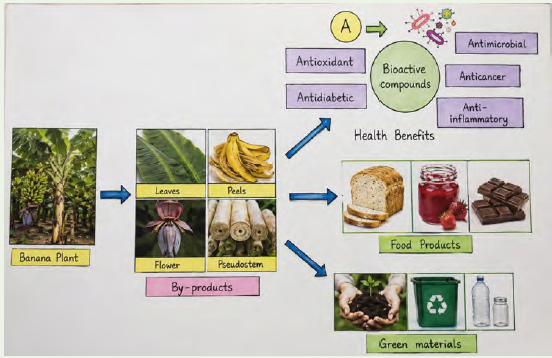
compounds flavonoids tannins anthocyanins and other secondary
metabolites. These substances are well-known for their capacity to
scavenge free radicals stop the growth of microorganisms and offer
defense against illnesses linked to oxidative stress. The kind of solvent
used is one of the most significant variables affecting the extraction of
these bioactive compounds. In comparison to nonpolar solvents like
petroleum ether or hexane polar solvents like methanol ethanol and
hydroalcoholic mixtures have continuously demonstrated greater
extraction efficiency for phenolic compounds. Stronger antioxidant
activity is strongly associated with higher phenolic content especially
in tests like the DPPH radical scavenging method. According to
studies banana flower ethanolic or methanolic extracts have strong
antioxidant potential because they can donate hydrogen atoms and
scavenge free radicals. Extracts from banana flowers have also been
shown to have antimicrobial properties. Banana flower extracts have
been shown to inhibit the growth of both Gram-positive and Gramnegative
bacteria using standard microbiological techniques like disc
diffusion agar well diffusion minimum inhibitory concentration
(MIC) and minimum bactericidal concentration (MBC) tests.
Phenolic acids flavonoids and tannins are primarily responsible
for the antimicrobial effects since they can damage microbial cell
membranes prevent enzyme activity and obstruct the synthesis of
nucleic acids. Since plant-derived compounds are less likely to cause
resistance than synthetic antibiotics this multi-target mode of action
is especially crucial in light of the growing antimicrobial resistance.
The medicinal potential of banana flower extracts is further supported
by recent research. Hydroalcoholic extracts for example have shown
antibacterial activity against pathogens isolated from patients with
gestational diabetes and other studies have reported strong enzyme
inhibition potential and radical scavenging activity. Banana flower
extracts have also demonstrated low toxicity in studies on animals and
cell lines indicating a good safety profile for possible pharmaceutical
and nutraceutical uses. The literature also emphasizes the importance
of agricultural by-product valuation. Despite their great nutritional
and medicinal value banana flowers are frequently thrown away
during banana cultivation. In addition to adding economic
value using banana flowers as a source of bioactive compounds
encourages the use of renewable plant resources and reduces waste
both of which support sustainable agricultural practices. But even
with the encouraging results there are still a number of difficulties.
Standardization is challenging because reported results frequently
differ due to variations in extraction techniques solvent systems
and experimental conditions. Furthermore, the majority of research
has been done in vitro and thorough clinical and long-term toxicity
studies are still lacking to properly validate the therapeutic uses of
banana flower extracts. To isolate particular active compounds,
improve extraction methods and assess their effectiveness through
clinical studies more research is therefore required.
Conclusion
Banana blossom (Musa spp. is an underutilized agricultural byproduct
that because of its rich composition of phenolic compounds
flavonoids tannins and other bioactive metabolites has significant
antimicrobial and antioxidant potential. According to research the
polarity of the solvent is an important factor in the extraction of these
compounds’ polar solvents like ethanol and methanol yield extracts
with stronger biological activities and a higher phenolic content.
Banana flower extracts antimicrobial qualities allow them to stop the
growth of different harmful microorganisms while their antioxidant
capacity is primarily linked to their capacity to neutralize free radicals
and lower oxidative stress. These biological activities demonstrate
the potential of banana flower extracts as natural substitutes for
artificial antioxidants and antimicrobial agents in nutraceuticals
pharmaceutical formulations and food preservation. Additionally,
by transforming an underutilized by-product into a useful source of
functional compounds the use of banana flowers supports sustainable
agricultural practices. Further research is necessary to standardize
extraction techniques isolate active compounds and carry out
thorough clinical studies to confirm their efficacy and safety for largescale
applications even though preliminary studies show encouraging
safety and therapeutic potential. All things considered the banana
flower is an important natural resource with a great deal of promise
for advancement in the domains of biotechnology food science and
medicine.
Future research should be focused on standardizing extraction
procedures, identifying and characterizing the specific bioactive
compounds responsible for the observed antimicrobial and
antioxidant activities, and validating their efficacy through in vivo
and clinical studies. Advanced extraction technologies such as
ultrasound-assisted, microwave-assisted, and green solvent extraction
may further enhance the recovery of valuable phytochemicals while
improving sustainability. From an industrial perspective, banana
flower extracts show considerable potential for application as
natural food preservatives, functional food ingredients, nutraceutical
supplements, pharmaceutical formulations, and cosmetic products.
The valorization of banana flowers, an abundant agricultural byproduct,
could also contribute to waste reduction, sustainable
resource utilization, and the development of cost-effective bio-based
products.
Acknowledgments
The authors are thankful to the Department of B.Sc. MLT of Dr.
B.C. Roy Academy of Professional courses, Durgapur, West Bengal
to provide research infrastructure for pursuing this research work.
Conflicts of interest:
No potential conflict of interest was reported by the authors.Funding and Ethical consideration:
The article does not contain any studies with human participants
or animals by any of the author.References
24. Cowan MM (1999) Plant products as antimicrobial agents. Clinical Microbiology Reviews 12: 564-582.
Citation
Chatterjee S, Ghosh M, Ghanti P, Purkait S. Antimicrobial and Antioxidant Efficiency of Different Extracts of Banana Flower: A Meta Review. J Plant Sci Res. 2026;13(2): 300.