


Research Article
Impact of Climate Change on Soil Microbes and their Environmental Management
Sinha M and Prasad SK*
Department of Botany, MMC, Patna University, Patna, Bihar, India
*Corresponding author: Dr. Surendra Kumar Prasad, Department of Botany, MMC, Patna University, Patna, Bihar, India. E-mail Id: surendra_kumar010@yahoo.com
Copyright: © Sinha M, et al. 2025. This is an open access article distributed under the Creative Commons Attribution License, which permits unrestricted use, distribution, and reproduction in any medium, provided the original work is properly cited.
Article Information: Submission: 01/11/2025; Accepted: 25/11/2025; Published: 29/11/2025
Abstract
Global climate change, mainly temperature rise and increased carbon dioxide (CO2) concentration, is a major concern these days. The inter-annual climatic variability is prominent and significantly influences the agricultural production. Soil productivity is influenced by the amount and activity of beneficial soil microorganisms, which help in degrading the organic matter as well ascertaining the availability of plant nutrients. It is essential to reduce the emission
of CO2 and other major greenhouse gases (GHGs) through the implementation of various strategies in the land use planning and by increasing the soil organic matter by adoption of various techniques which will not only help in reducing the greenhouse gas emissions and mitigating the impact of climate change on beneficial soil microbial community but also allow additional benefits to the farmers in the form of reduced labour, costs, greater efficiency,
improved soil quality along with sustainable crop production. Environmental changes are causing shifts in the species distributions on a global scale and can alter the interactions between the microorganisms within ecosystems. Climate change disrupts the delicate balance of plant-soil ecosystems, which significantly affecting plant health and soil fertility. The crucial role of soil microorganisms in nutrient cycling, plant nutrition, facilitation of plant coexistence, and population regulation could have significant consequences for plant community composition and overall ecosystem function. This study focuses on climate-changes, which directly and indirectly have effects on soil microbes and their interactions with plants. Overall, this study has the potential to contribute to our understanding significantly of climate-changes effects on ecosystem.
Keywords: Ecosystem, Microbial Communities; Heat Waves; Flooding; Drought; Climate Change Ghgs Mitigation Strategies
Introduction
Environmental changes are causing shifts in the species
distributions on a global scale and can alter the interactions between
the microorganisms within ecosystems. The ecosystem comprised a
complex web of species with diverse life history strategies and varying
dispersal capabilities. Therefore, it is improbable that all species
respond to climatic changes identically. Climate change disrupts the
delicate balance of plant-soil ecosystems, which significantly affecting
plant health and soil fertility. Life as we know it has been transformed
due to climate change. The heavy impact of climate change has taken
its toll on everything. The rate and extent of damage are expected to
become worse each year. Climate change impact has been the center
of attention during the past few years. The use of mineral fertilizers
has strongly increased the flow of nitrogen (N) and phosphorus (P)
in agricultural systems worldwide and altered global biogeochemical
cycles. A significant part of the N and P contained in the fertilizers is
lost from agro‐ecosystems via leaching, causing serious groundwater
pollution and eutrophication (Galloway et al., 2003). The amount of
nutrients applied in agricultural systems is not expected to decline in
the coming decades and models predict a global increase of N and
P excess of 23% and 54%, respectively, with a major intensification
in developing countries (Bouwman et al., 2013; McIntyre, Herren,
Wakhungu, & Watson, 2009) Earth maintains a delicate balance of
incoming and outgoing radiation (He et al., 2023). However, human
activity has disrupted this equilibrium by releasing greenhouse gases
(Joly et al., 2023). This amplified greenhouse effect pushes global
temperatures higher, a seemingly small rise of 1°C masking a cascade
of consequences (Peng et al., 2023). The soil microbial community
is an important biological component of soil function, valued for its
role in improving soil quality and regulating nutrient availability,
and thereby influencing plant production for agriculture and other
purposes (Kennedy & Smith 1995, Papendick & Parr 1992).The soil
microbial community is expected to be impacted by various facets of
global climate change, such as increased atmospheric CO2 , altered
temperature and precipitation patterns, and increased frequency of
extreme climate events (IPCC 2007). We must focus on developing
strategies to mitigate climate change damage and reinforce plant
tolerance and resilience in the face of this intensifying stress to ensure
global food security and sustainable production. This review aims to
provide a comprehensive overview of the influence of climate change
on soil microorganisms.
Impact Of Climate Change on Microbial Community:
Climate change refers to a statistically significant variation in
either the mean state of the climate or in its variability, persisting for
an extended period (typically decades or longer). Microbial processes
are dependent on environmental factors such as temperature,
moisture, enzyme activity and nutrient availability, all of which are
affected by climate change. Soil respiration is dependent on soil
temperature and moisture and may increase or decrease as a result
of changes in precipitation and increased atmospheric temperatures.
Climate change may be due to natural internal processes or external
force or due to persistent anthropogenic changes in the composition
of the atmosphere or in land use.Impact of Heatwaves on The Soil Microbiota:
Climate change is already causing significant impacts on
plant diseases worldwide. In the USA, warmer temperatures have
contributed to the northward expansion of corn diseases like
northern corn leaf blight. In Europe, the incidence of late blight
on potato crops is expected to increase significantly with rising
temperatures. Understanding this intricate interplay between
temperature and fungal phytopathogens is key to developing effective
disease management strategies (Cruz-Paredes et al., 2023) [10]. This
knowledge empowers us to protect precious crops and gardens from
the silent threat of these microscopic pathogens, ensuring a bountiful
harvest and a flourishing landscape (Nottingham et al., 2021).Impact of Droughts on The Soil Microbiota:
Microbial life depends critically on water availability.
Beyond its role as a solvent, water acts as a reactant in numerous
metabolic pathways, directly influencing cellular processes such as
photosynthesis and respiration (Siebielec et al., 2020 and Veach and
Zeglin, 2020). Water abundance correlates with increased metabolic
activity and growth (Peng et al., 2023). Decomposition is a key
process for releasing nutrients from dead organic matter, which slows
down, leading to nutrient deficiencies for plants (Qu et al., 2023). This
could create a vicious cycle, as stressed plants are more susceptible
to drought in the first place (Bogati and Walczak, 2022). Microbes
play a crucial role in biogeochemical cycles, like carbon and nitrogen
cycling (Wang et al., 2023a). Droughts could disrupt these cycles,
leading to changes in greenhouse gas emissions and influencing the
overall health of the planet.Impact of Flooding on The Soil Microbiota:
Increased rainfall and extreme weather could lead to soil
saturation (Arnell and Gosling, 2016). This flooding disrupts
oxygen availability, favoring anaerobic microbes like methanogen
that contribute to greenhouse gas emissions. Additionally, it could
cause the elimination of microbes, further disrupting community
composition (Chung and Lee, 2020) [1]. Flooding, an increasingly
frequent natural disaster due to climate change, significantly impacts
plant health and agricultural productivity (Duan et al., 2019) . This
effect is often amplified by the rise of phytopathogens, microscopic
organisms that grow in wet environments and cause devastating
diseases (Moche et al., 2015). Understanding the complex interplay
between floods and fungal phytopathogen is crucial for mitigating
their destructive potential and ensuring food security (Jones et al.,
2019) [2]. The influx of water displaces oxygen, creating an anaerobic
environment (Gschwend et al., 2020). The floodwaters can wash away
certain microbial groups, disrupting the delicate balance of the soil
micro biome.Impact of Increased Co2 on Microbial Community:
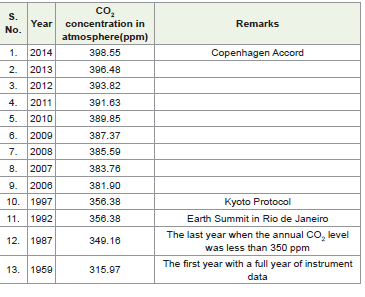
The present atmospheric CO2 increase is caused by anthropogenic
emissions of CO2. [Table 1] show that the atmospheric CO2 levels are
increasing at a rate of 0.4% per year and are predicted to double
by 2100 largely as a result of human activities such as fossil fuel,
combustion and land-use changes. An estimated 30-40% of the
CO2 released by humans into the atmosphere dissolves into oceans,
rivers and lakes (Feely et al. 2004, Millero 1995), which contributes
to ocean acidification. The direct effect of elevated CO2 in stimulating
above-ground biomass production has been extensively studied (Pan
et al. 1998). This increase in above-ground net pri mary production
(ANPP) has been shown to increase C supply below-ground and
stimulates soil biological activity (Pendall et al. 2004) [3].High CO2 concentrations accelerate average growth rate of plants, thereby allowing them to see quester more CO2. This growth of plants was coupled with an increase in soil respiration due to the
increase in nutrients available for decomposition by releasing more
CO2 into the atmosphere. Increased levels of CO2 quantitatively and
qualitatively alter the release of labile sugars, organic acids and amino
acids from plant roots, and this can stimulate microbial growth and
activity. In the long term, it is argued that the increase in microbial
biomass as a result of increased carbon release by the roots can lead
to immobilization of soil N, thereby limiting the nitrogen available
for plants and creating negative feedback that constraints future
increase in plant growth. This, in turn, may lead to an increased soil
carbon to nitrogen ratio, which favour higher fungal dominance and
diversity. Global carbon flux between the atmosphere and terrestrial
ecosystems is depicted in [Figure 1]
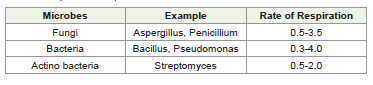
Fungi generally have higher carbon assimilation efficiencies (they
store more C than they metabolize) than bacteria, and fungal cell
walls mainly consist of carbon polymers (chitin and melatin) that
are much more resistant to decomposition than those in bacterial
cell membranes and walls (phospholipids and peptidoglycan).
As a result, in eco systems dominated by fungi, soil respiration
rates are typically low, which increases the potential for carbon
sequestration. An increase in atmospheric CO2 may be one of the
effects of climate change, can significantly change soil environment
mainly by modifying the distribution of above and below-ground
nutrients. For example, an increase of atmospheric CO2 could lead to
an increased plant growth, since CO2 is the molecular building block
for photosynthesis. This may lead to an increase in litter production
rate and a modification in litter chemical composition, which may
in turn lead to a change in its digestibility. Such modifications
will then influence the nature of organic matter available for soil
microorganisms (Zak et al. 2000).
Result and Analysis
Outcome and Discussion:
As climate change due to increasing concentrations of GHG
effect on soil microbes which lead to environmental management. for
its improvement following strategies would be beneficial which are asMitigation Strategies:
To a large extent, the same practices that increase productivity
and resilience to climate change also provide positive co-benefits
with respect to agricultural mitigation of GHGs. There are three
main mechanisms for mitigating GHGs in agriculture: a) reducing
emissions, b) enhancing removal of carbon from the atmosphere and
c) avoiding emissions through the use of bio energy or agricultural
intensification rather than expansion (Smith et al. 2007). There is
a positive correlation between soil organic carbon and crop yield,
practice that increase soil fertility and crop productivity also mitigate
GHGs emissions, particularly in areas where soil degradation is a
major challenge (Lal 2004) [5]. There is little research to date on the
synergies and tradeoffs between agricultural adaptation, mitigation
and productivity impacts.Mulching/light soil sealing:
Mulching consists of covering the soil surface to protect against
erosion and to enhance its fertility. Mulch is usually applied towards
the beginning of the crop growing season, and may be reapplied as
necessary. It serves initially to warm the soil through retaining heat
and moisture. A variety of materials can be used as mulch including
organic residues (e.g. crop residue, hay, bark), manures, sewage
sludge, compost and rubber or plastic films.Fertilizers:
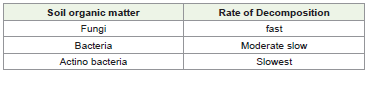
High levels of some inorganic nitrogenous fertilizers provide
microbes nitrogen with easy to use, thereby boosting their activity.
This increases the rate of decomposition of low-quality organic
inputs and soil organic matter, resulting in less of soil carbon and the
continuing decline of soil organic matter content which, ultimately,
results in loss of soil structure and water holding capacity.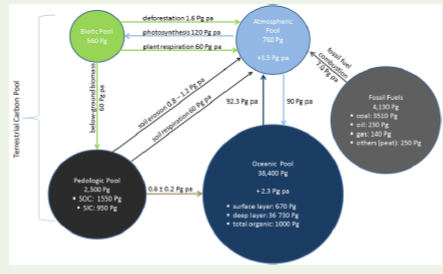
Crop Management
Selection of the crop species:
The choice of the cultivated crop is important as it defines the
kind of habitat available to soil fauna. For example, legumes can
act as natural fertilizers, improving the N concentration in soil by
establishing symbiotic relationship with rhizobia. Application of
nitrate fertilizers as calcium ammonium nitrate in crops with aerobic
conditions and ammonium fertilizers as ammonium sulphate, urea,
in wetland crops also helping reducing the nitrous oxide (N2 O)
emission (Pathak & Nedwell 2001).Crop rotations:
Crop rotations can also help to avoid the buildup of pathogens and
pests, as the alteration of crops modifies the associated communities
of biological regulators. Appropriate crop management practices,
which lead to increase N use efficiency and yield, hold the key to re
duce nitrous oxide emission.Landscape Management
Hedgerows and grassy field margins:
Establishing hedge rows or grassy strips at the edge of arable
fields offer a stable habitat, food and a protective environment for
soil fauna next to the intensively managed fields. Hedgerows are even
more favourable to soil organisms, in particular biological regulators,
than grassy field margins, however, due to their low mobility; the soil
organisms will have only limited dispersal into the fields. That also
counts for field margins, in which 10% of the soil dwelling species
present in farmland were found to occur exclusively.Microbial Communities and Mitigation Options
Managing microbial communities to reduce carbon dioxide emissions:
Currently, soils contain about 2,000 Pg of organic carbon, which
is twice the amount of carbon in the atmosphere and three times
the quantity found in vegetation (IPCC 2007, Smith 2004) [6]. The
capacity of different land types (for example, woodland, pasture and
arable land) to store carbon differs, and it has been suggested that
land use can be managed to sequester a further 1 Pg of carbon per
year in soils (Smith 2004, Houghton 2008) [6], this potential has
received considerable scientific attention (Lal 2008, Busse 2009) [4].Managing microbial communities to reduce methane emissions:
Global emissions of CH4 are arguably even more directly
controlled by microorganisms than emissions of CO2. Natural
emissions (~250 million tonnes CH4 per year) are dominated by
microbial methanogenesis, a process that is carried out by a group
of anaerobic archaea in wetlands, oceans, rumens and termite
guts. However, these natural sources are exceeded by emissions
from human activities (mainly rice cultivation, land fill, fossil fuel
extraction and livestock farming). Methanotrophic bacteria serve
as a crucial buffer to the huge amounts of CH4 produced in some
of these environments. The so-called ‘low-affinity’ methano trophs
(active only at a CH4 concentration of >40 ppm; also called type I
methanotrophs), which mainly belong to the class Gammaproteo
bacteria, can often consume a large proportion of the CH4 produced
in soils before it escapes to the atmosphere.Discussion
Regarding role of microbes in promoting soil management
various authors expressed their findings. Allison, S.D., Wallenstein,
M.D. and Bradford, M.A. 2010 [7]. Focused on Soil carbon response
to warming dependent on microbial physiology, Berntson, G.M.
and Bazzaz, F.A. 1997 [8], Pendall, E., Bridgham, S., Hanson, P.J.,
Hungate, B., Kicklighter, D.W., Johnson, D.W., Law, B.E., Luo,
Y.Q., Megonigal, J.P., Olsrud, M., Ryan, M.G. and Wan, S. 2004.
observed Below-ground process responses to elevated CO2 and
temperature: a discussion of observations, measurement methods,
and models. Nitrogen cycling in microcosms of yellow birch exposed
to elevated CO2 : simultaneous positive and negative below-ground
feedbacks. Lal, R. 2008 [4]. Carbon sequestration impacts on global
climate change and food security, Jones, P.; Garcia, BJ.; Furches,
A. et al. (2019) [2]. Observed Plant host‐associated mechanisms
for microbial selection. Davidson, E.A. and Janssens, I.A. 2006 [9].
Stated Temperature sensitivity of soil carbon decomposition and
feedbacks to climate change.,Global Climate Change Impacts in the
United States (GCCI) 2009. Was observed by Karl, T.R., Melillo, J.M.
and Peterson, T.C. (eds.) [10]. Cambridge University Press, New
York, USA.,Akram, M.A.; Zhang, Y.H.; Wang, X.T. et al. (2022) [11].
Phylogenetic independence in the variations in leaf functional traits
among different plant life forms in an arid environment, Anjileli,
H.; Huning, L.S.; Moftakhari, H. et al. (2021) [12]. Stated Extreme
heat events heighten soil respiration. Bardgett, R.D. and Caruso, T.
(2020) [13]. Soil microbial community responses to climate extremes:
resistance, resilience and transitions to alternative states. Prado, A.G.
and Airoldi, C. (1999) [14]. The influence of moisture on microbial
activity of soils. Bei, Q.; Reitz, T.; Schnabel, B. et al. (2023) [15].
Extreme summers impact cropland and grassland soil microbiomes.
Pankhurst, C.E., Ophel-Keller, K., Doube, B.M. and Gupta,
V.V.S.R. (1996) [16]. Biodiversity of soil microbial communities in
agricultural systems. Biodiversity and Conservation, Chung, H. and
Lee, Y.H. (2020) [1]. Hypoxia: a double‐edged sword during fungal
pathogenesis? Global Climate Change Impacts in the United States
(GCCI) 2009. Karl, T.R., Melillo, J.M. and Peterson, T.C. (eds.) [10].
Cambridge University Press, New York, USA.Smith, P. 2004.[5] Soils
as carbon sinks: the global context. Soil Use Management,
Conclusion
Lastly, it is concluded that the climate change, as noticed through
trends of temperature rise, altered precipitation and increased CO2
concentration, is a major concern to microbial community. Increase
in temperature over a long period of time will not affect the microbial
population a lot as it will get adapted to it, but it will contribute to
increase in CO2 emission which is a major greenhouse gas. Microbes
have emerged as the major contributor as well as consumer for GHGs
as the microorganisms are the main intermediaries of C turnover in
soil. Climate change is likely to have significant impacts on soils that
may affect all of the services provided by soil microbial community;
indeed, the quantification of these impacts is needed. In any case, all
mitigation and attenuation measures taken to limit global climate
change are expected to have a beneficial impact on soil microbial
community preservation, soil functioning and associated services.
References
Citation
Sinha M, Prasad SK. Impact of Climate Change on Soil Microbes and their Environmental Management. J Plant Sci Res. 2025;12(2): 291.