


Research Article
Phytochemical Profiling, Morpho-Anatomic Characterization, and Pharmacognostic Potential of Dolichandrone falcata
Vidya Chavan, Rutuja Teke, Yogesh Ugale and Mukul Barwant*
Department of Botany, Sanjivani Arts Commerce and Science College Kopargoan, Ahmednagar, Maharashtra, India
*Corresponding author:Barwant Mukul, Department of Botany, Sanjivani Arts Commerce and Science College Kopargoan, Ahmednagar, Maharashtra, India. E-mail Id: mukulbarwant97@gmail.com
Copyright: ©Vidya Chavan,, et al. 2025. This is an open access article distributed under the Creative Commons Attribution License, which permits unrestricted use, distribution, and reproduction in any medium, provided the original work is properly cited.
Article Information:Submission: 19/09/2025; Accepted: 22/10/2025; Published: 24/10/2025
Abstract
Dolichandrone falcata (Bignoniaceae) is a medicinally significant tree known for its diverse pharmacological properties. This study provides a comprehensive evaluation of its phytochemical profile, morpho-anatomical characteristics, and pharmacognostic potential. Morphological and anatomical
analyses revealed distinctive features of the stem, leaves, and roots, aiding in species authentication and quality control. Phytochemical screening confirmed the presence of steroids, amino acids, alkaloids, flavonoids, saponins, polyphenols, terpenoids, and cardiac glycosides. Quantitative analysis showed
chlorophyll a and b concentrations of 0.0282 mg/g and 0.0560 mg/g in the alcoholic extract, respectively, and extractive values of 68.75% (alcohol) and
100% (water). These bioactive compounds exhibited antioxidant, anti-inflammatory, antimicrobial, and hepatoprotective activities. The study provides up-todate information on the traditional uses, phytochemistry, and pharmacology of the species, supporting its relevance in both traditional and modern medicine. These findings emphasize the need for further pharmacological and clinical investigations to validate therapeutic efficacy and develop novel plant-based formulations.
Keywords:Dolichandrone falcata; Phytochemical Profiling; Morpho-Anatomy; Pharmacognostic Evaluation; Microscopic Analysis; Medicinal Plants
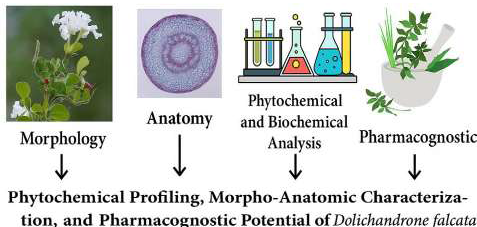
Introduction
Dolichandrone falcata Seem synonym (Markhamia falcata)
belonging to Bignoniaceae. The plant is also called ‘medhshingi’
in Hindi and ‘mesasinghi’ in Sanskrit. Dolichandrone falcata Seem
has a long history of use by indigenous and tribal peoples all over
the world, including India, for medicinal purposes and various
pharmacological effects.The exploration of medicinal plants has been
an integral part of traditional medicine, with modern pharmacognosy
playing a crucial role in validating their therapeutic potential through
scientific methods. Dolichandrone falcata (Wall. ex DC.) Seem., a
lesser-known but pharmacologically significant species from the
Bignoniaceae family, has been widely used in traditional Indian
medicine for treating various ailments, including inflammatory
disorders, gastrointestinal disturbances, and respiratory conditions
(Patel et al., 2021). However, despite its ethnomedicinal relevance,
comprehensive phytochemical profiling and morpho-anatomic
characterization remain largely underexplored. Phytochemical
investigations of D. falcata have suggested the presence of bioactive
compounds such as flavonoids, alkaloids, tannins, and glycosides,
which contribute to its pharmacological properties (Sharma &
Verma, 2020). The standardization of herbal drugs necessitates a
thorough understanding of their morphological, anatomical, and
physicochemical characteristics, which serve as essential diagnostic
tools for authentication and quality control (Rao et al., 2019).
Pharmacognostic studies, including morpho-anatomical and
physicochemical evaluations, are essential for the identification
and quality assurance of herbal drugs. These parameters ensure
the consistency, safety, and efficacy of plant-derived formulations.
Similarly, phytochemical profiling aids in identifying the bioactive
compounds responsible for therapeutic effects, thereby bridging
traditional knowledge and modern evidence-based medicine.
Medicinal plants have played a crucial role in the traditional
healthcare systems of many cultures and continue to serve as a
vital source for drug development in modern pharmacology. The
resurgence of interest in plant-based remedies has emphasized the
need for comprehensive scientific evaluation of lesser-known yet
potentially therapeutic species. One such plant is Dolichandrone
falcata (Wall. ex DC.) Seem., a member of the family Bignoniaceae,
which has long been used in various traditional and folk medicinal
systems in India for its therapeutic properties.Morphological studies
provide insights into macroscopic features such as leaf structure, bark
texture, and floral characteristics, while anatomical analysis aids in the
identification of unique cellular and tissue patterns that distinguish
the plant from adulterants and substitutes (Kumar & Singh, 2018).
Pharmacognostic evaluation is an essential aspect of herbal medicine
research, ensuring the safety, efficacy, and consistency of medicinal
plant-based formulations (Gupta et al., 2022). Standardized protocols
for extraction, isolation, and characterization of phytochemicals
further strengthen the scientific validation of plant-based therapeutics.
Advances in chromatographic and spectroscopic techniques, such
as HPLC, GC-MS, and FTIR, have significantly improved the
identification and quantification of bioactive constituents (Mishra
et al., 2023).Given the increasing global interest in plant-based drug
discovery, this study aims to provide a comprehensive analysis of
Dolichandrone falcata, encompassing its phytochemical composition,
morpho-anatomical characteristics, and pharmacognostic attributes.
This integrated approach will contribute to the standardization,
authentication, and pharmacological validation of D. falcata for
future medicinal applications.
Materials and Methods
Plant Material Collection:
Dolichandrone falcata (Family: Bignoniaceae) was collected from
the Ahilyanagar District region, Maharashtra, India, in August
2024. The specimen was authenticated using regional floras, including
the Flora of Ahmednagar, and cross-verified with relevant botanical
references. A voucher specimen (Voucher No.: DFP-2024-01) has
been deposited at the Herbarium of the Department of Botany,
Sanjivani Arts, Commerce and Science College, Kopargaon,
Maharashtra, India. Fresh plant material was washed, shade-dried at
room temperature (25–28°C) for 10–12 days, and ground into a fine
powder for further analysis.Morphological Study:
Morphological characteristics of D. falcata were examined
using fresh plant material. Key features including leaf arrangement,
flower structure, stem characteristics, and bark morphology were
documented. Observations were compared with descriptions from
the Flora of Ahmednagar and other published literature to ensure
accurate identification and characterization.Anatomical Study:
Microscopic anatomical studies were performed on the leaf, stem,
and root tissues. Thin sections (20–30 μm) were prepared using a
hand microtome, followed by double staining with safranin (1%
w/v, 5–10 min) and fast green (0.5% w/v, 2–3 min). Sections were
mounted in glycerin and observed under a compound microscope at
10×, 40×, and 100× magnifications. Key features such as epidermal
cells, trichomes, stomata, vascular bundles, mesophyll arrangement,
and secretory structures were recorded and photomicrographed.Pharmacognostic Evaluation:
Pharmacognostic parameters were determined following AOAC
guidelines. Parameters included:• Extractive values: alcohol-soluble and water-soluble fractions
• Ash values: total ash, acid-insoluble ash, water-soluble ash
• Moisture content: loss on drying
These evaluations provide quality control and standardization benchmarks for crude plant material.
Biochemical and Phytochemical Analysis
Biochemical analysis: Chlorophyll content was estimated spectrophotometrically in both aqueous and alcoholic extracts following standard protocols.
Phytochemical screening: Preliminary screening using TLC and paper chromatography was performed to detect major secondary metabolites. Qualitative tests for alkaloids, flavonoids, saponins, tannins, glycosides, phenols, and steroids were conducted as described by Harborne (1998).
Extraction details for reproducibility:
• Solvents used: hexane, ethyl acetate, ethanol, and distilled water
• Solvent-to-powder ratio: 10:1 (v/w)
• Maceration duration: 48 h at room temperature for each solvent
• Filtration: using Whatman No. 1 filter paper
• Concentration: extracts were concentrated under reduced pressure using a rotary evaporator
• Percentage yield: calculated as (weight of extract / weight of dried plant powder) × 100
Result and Discussion
Morphology:
Dolichandrone falcata Seem (synonym: Markhamia falcata),
belonging to the family Bignoniaceae, is a medium-sized tree,
approximately 15 m in height, with dense foliage and profuse
flowering. The tree produces highly scented, creamish-white flowers
that bloom in the evening and fall the following morning. Mature
fruits from the previous year often remain on the tree while new
flowers bloom.Leaves are opposite, measuring 1.3–3.8 cm × 1.1–3.8
cm, suborbicular to obovate, and glabrous or slightly pubescent.
The leaf base is cuneate or rounded and generally unequally sided,
with main veins in pairs and prominent beneath. Petiolules of lateral
leaflets are 0–0.5 mm long. Flowers are arranged in terminal fewflowered
racemes with pedicels 1.3 cm long. The calyx is pubescent
with a short, stout mucro at the apex. The corolla is white, ≥2.5
cm long, with a narrow basal tube (~2.5 mm) gradually widening
upward; limb lobes are obovate-oblong with crisped, undulate
margins.Fruits are flat, falcate, curved capsules, measuring 25–45
cm long × 2 cm wide, glabrous. Seeds are rectangular, winged at
both ends, approximately 2.5 cm × 6 mm. The bark is dark brown,
covering a substantial portion of the trunk in mature trees. The
plant Dolichandrone falcata (Bignoniaceae) was collected from the
Akurakhe–Rahata region, Maharashtra, India, in August 2024. The
specimen was authenticated using regional floras, including the Flora
of Ahmednagar, and verified with relevant botanical references. A
voucher specimen (Voucher No.: DFP-2024-01) has been deposited
at the Herbarium of the Department of Botany, Sanjivani Arts,
Commerce and Science College, Kopargaon, Maharashtra, India,
ensuring proper authentication and future reference.Anatomy:
The epidermis lined with cuticle was visible in the transverse
section of a Dolichandrone falcata Seem leaflet. A dorsiventral structure
was visible in the transverse region. The epidermal cell was observed
in a single layer covered with a thick cuticle. Unicellular trichomes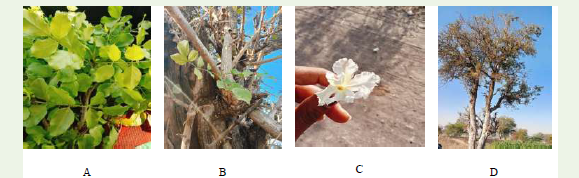
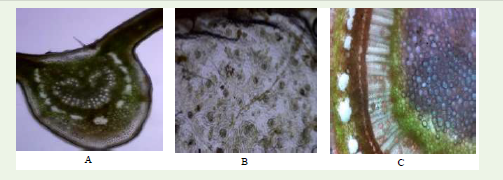
interrupted the epidermis. Amphistomatic stomata is included in
anomocytic stomata. The anatomical study of Dolichandrone falcata
reveals distinct structural adaptations across its leaf, stem, root, and
bark, aiding in identification and pharmacognostic standardization.
The leaves are hypostomatic, with a thick cuticle, paracytic
stomata, and non-glandular trichomes for protection, while the
mesophyll is differentiated into palisade and spongy parenchyma
for photosynthesis and gas exchange. The stem exhibits primary
growth in young plants and secondary growth in mature ones, with
a well-defined epidermis, cortex, vascular bundles arranged in a ring,
and a central pith storing nutrients. The root system comprises an
epidermis with root hairs for absorption, a parenchymatous cortex,
an endodermis with Casparian strips regulating water movement,
and a radial vascular arrangement of xylem and phloem. The bark,
essential for protection and secondary growth, consists of periderm
layers (phellem, phellogen, and phelloderm), a supportive cortex, and
secondary phloem responsible for nutrient transport.
Phytochemical and Biochemical Analysis:
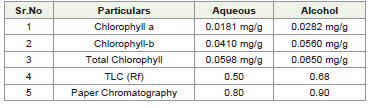
Chlorophyll Estimation: The spectrophotometric estimation
of chlorophyll pigments demonstrated higher concentrations in the
alcoholic extract compared to the aqueous extract. Chlorophyll a and
b concentrations were 0.0282 mg/g and 0.0560 mg/g respectively in
the alcoholic extract, while they were 0.0181 mg/g and 0.0410 mg/g in
the aqueous extract. Total chlorophyll content was found to be 0.0650
mg/g in alcohol and 0.0598 mg/g in water. These findings suggest that
ethanol is a more effective solvent for extracting chlorophyll due to
its ability to disrupt cellular membranes and dissolve hydrophobic
pigments efficiently. The higher pigment content in the alcoholic
extract may also indicate a better preservation of photosynthetic
activity in the sampled tissue, which can be relevant in nutraceutical
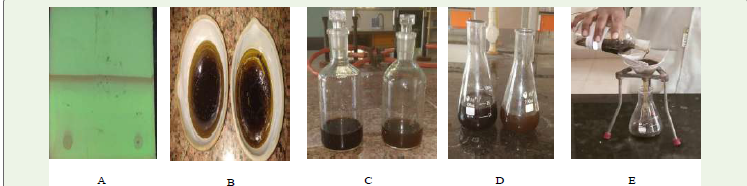
or cosmetic formulations.Chromatographic Profiling: Chromatographic analysis using
TLC and paper chromatography revealed variation in Rf values
between the aqueous and alcoholic extracts. The Rf value in TLC was
0.50 for the aqueous extract and 0.68 for the alcoholic extract, while
in paper chromatography it was 0.80 (aqueous) and 0.90 (alcoholic).
These differences are attributed to the distinct polarity of compounds
present in each solvent system and confirm the presence of multiple
phytoconstituents with varying solubility profiles. TLC and paper
chromatography also serve as reliable fingerprinting tools for
compound identification and quality assurance.
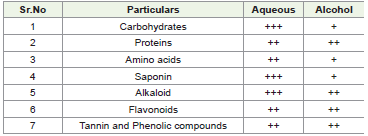
Phytochemical Screening: Qualitative phytochemical analysis
indicated the presence of various bioactive compounds in both
extracts. Carbohydrates, saponins, and alkaloids were abundantly
present in the aqueous extract, while the alcoholic extract showed
moderate levels of proteins, flavonoids, and phenolic compounds.
These findings align with the polarity preferences of secondary
metabolites—saponins and alkaloids tend to be more watersoluble,
whereas phenolic compounds and flavonoids are more
readily extracted in alcoholic solvents.The presence of diverse
phytoconstituents highlights the medicinal potential of Dolichandrone
falcata. Alkaloids and saponins are known for their antimicrobial
and anti-inflammatory properties, while phenolics and flavonoids
contribute antioxidant activity. The combination of these metabolites
supports the traditional usage of the plant in herbal formulations and
justifies further pharmacological investigation.
Pharmacognostic:
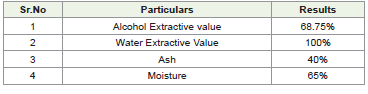
The pharmacognostic evaluation of Dolichandrone falcata
revealed critical parameters essential for the standardization and
quality assessment of its crude drug material. A notably high
water-soluble extractive value (100%) indicates a rich presence of
hydrophilic phytoconstituents, while the alcohol-soluble extractive
value (68.75%) highlights the abundance of bioactive compounds
like phenolics, flavonoids, and alkaloids. The total ash content,
recorded at 56%, may reflect the presence of essential minerals or
potential contamination from environmental sources, underscoring
the importance of assessing purity. Additionally, the moisture
content of 65% suggests a significant level of water retention,
necessitating proper drying and storage to prevent microbial growth
and degradation. These pharmacognostic benchmarks serve as a
foundation for selecting appropriate solvents and conditions in
phytopharmaceutical formulations and further research applications.Conclusion
Dolichandrone falcata (Bignoniaceae) is a medicinally valuable
tree with diverse pharmacological properties. This study provides
a detailed evaluation of its phytochemical composition, morphoanatomic
characteristics, and pharmacognostic parameters, which
together support species identification, quality assessment, and
standardization of the crude drug. Phytochemical and biochemical
analyses confirmed the presence of bioactive compounds such as
flavonoids, alkaloids, tannins, phenolics, saponins, and chlorophyll,
which are associated with antioxidant, anti-inflammatory,
antimicrobial, and hepatoprotective activities.These findings highlight
the therapeutic potential of D. falcata in both traditional and modern
medicine. Future research should focus on the isolation, purification,
and structural characterization of its bioactive compounds, as well
as in vivo and clinical studies to validate their pharmacological
efficacy. Such studies could pave the way for the development of novel
phytopharmaceuticals and nutraceuticals derived from this species.
Acknowledgements
I sincerely acknowledge the unwavering support and
encouragement provided by the Department of Botany, Sanjivani
Arts, Commerce and Science College, Kopargaon, Maharashtra,
India, throughout the course of this research. The department’s
excellent academic environment, well-equipped laboratory facilities,
and access to essential resources played a pivotal role in the
successful completion of this work. I am especially grateful to the
faculty members and fellow researchers for their valuable guidance,
insightful discussions, and constant motivation, which significantly
enriched the quality and depth of this study.
References
Citation
Chavan V, Teke R, Yogesh U, Mukul B. Phytochemical Profiling, Morpho-Anatomic Characterization, and Pharmacognostic Potential of Dolichandrone falcata. J Plant Sci Res. 2025;12(2): 289.