


Research Article
Phytochemical-Assisted Synthesis of Palladium Nanoparticles from Aqueous Blueberry Extract and their Antibacterial Activity
Ruqya Banu1 and K.Chandra mohan2
1Department of Chemistry, Dr. BRR GDC(A) Jadcherla, Mahbubnagar Telangana, India.
2Department of Chemistry, MALD Government Degree College Gadwal Telangana, India.
2Department of Chemistry, MALD Government Degree College Gadwal Telangana, India.
*Corresponding author:Ruqya Banu, Department of Chemistry, Jadcherla, Mahbubnagar Telangana, India; E-mail:ruqyabrr@gmail.com
Copyright: © 2026 Banu R. This is an open access article distributed under the Creative Commons Attribution License, which permits unrestricted use, distribution, and reproduction in any medium, provided the original work is properly cited.
Article Information:Submission: 10/06/2026; Accepted: 04/07/2026; Published: 06/07/2026
Abstract
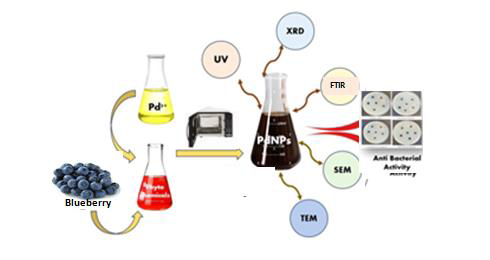
Green synthesis has emerged as a sustainable and cost-effective alternative to conventional chemical methods for the fabrication of metal nanoparticles. In current research, palladium nanoparticles (PdNPs) were synthesized using blueberry fruit extract through an eco-friendly green synthesis approach. The phytochemical constituents present in blueberry extract served as effective reducing and stabilizing agents, facilitating the formation of
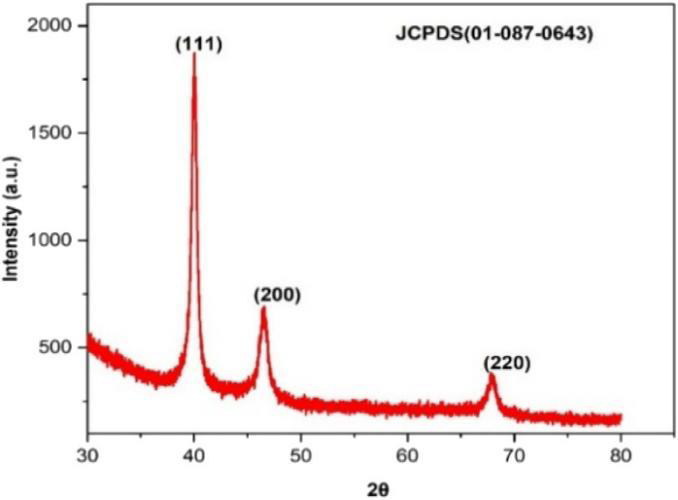
PdNPs without the need for hazardous chemicals. The synthesized nanoparticles were comprehensively characterized employing “scanning electron microscopy (SEM), ultraviolet–visible (UV–Vis) spectroscopy, X-ray diffraction (XRD), transmission electron microscopy (TEM). XRD results exhibited characteristic diffraction peaks at 39.98° (111), 46.49° (200), and 67.95° (220), confirming the crystalline nature and face-centered cubic (FCC) structure
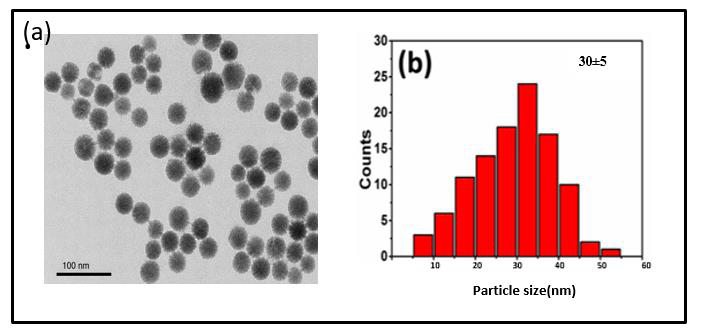
of PdNPs. Morphological investigations by SEM and TEM suggested formation of predominantly spherical nanoparticles with sizes ranging from 30±5 nm. Furthermore, biogenically synthesized PdNPs displayed promising antibacterial activity against Gram-positive and Gram-negative” bacterial strains. Biosynthesis “of palladium nanoparticles employing aqueous blueberry fruit extract and their potential application as” Antibacterial agents.
Introduction
The rapid development of nanoscience and nanotechnology has
significantly transformed modern scientific research, making the
field one of the most influential areas of the twenty-first century.
The progress of nanotechnology largely depends on the ability
to synthesize metal NPs with controlled size, morphology, shape
and to integrate them effectively into complex systems for diverse
applications. Among the various methods available for nanoparticle
production, biological or green synthesis becomes “sustainable and
environmentally friendly alternative to” conventional physical as well
as chemical approaches [1-3]. Biogenic nanomaterials offer several
advantages, encompassing lower energy consumption, reduced
toxicity, and utilization of renewable biological resources. Various
biological entities such as microorganisms, plants, and animal-derived
materials “have been employed as reducing and stabilizing agents for
nanoparticle synthesis [4-6]. In particular, plant-mediated synthesis
has gained considerable attention because of its cost-effectiveness,
eco-friendliness, simplicity nature. The abundance of phytochemicals
present in plant extracts enables the efficient reduction” of metal ions
from their oxidized states to their corresponding zero-valent metallic
nanoparticles.
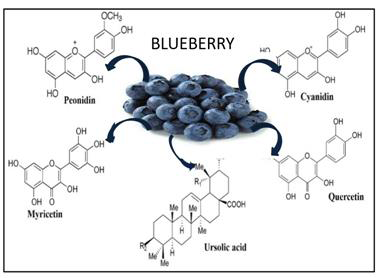
Blueberry (Vaccinium Corymbosum), belonging to Ericaceae
family, rich source of diverse phytochemicals and bioactive
compounds. The fruit contains substantial amounts of polyphenols,
flavonoids, anthocyanins, proanthocyanidins, and Vitamin C,Vit K1,
Vit E, and other minerals that display a variety of biological activity
[3]. blueberries have been “reported to possess antibacterial, antiinflammatory,
antiviral, antioxidant, antimutagenic, anticarcinogenic,
antitumor, and antiangiogenic properties [7]. Due to these therapeutic
benefits, they have long been” employed in conventional medicine for
treating and preventing microbial infections [8].
Concentration and composition of phenolic compounds in blueberries vary with cultivar, geographical location, climatic conditions, fruit maturity, harvesting time, and storage conditions. blueberries are recognized for their health benefits [9,10], including the prevention of dental caries, periodontal diseases, urinary tract infections, inflammation, digestive disorders, and hypercholesterolemia.
In current research, PdNPs were synthesized employing aqueous blueberry extract (ABE) and evaluated for their biological
Concentration and composition of phenolic compounds in blueberries vary with cultivar, geographical location, climatic conditions, fruit maturity, harvesting time, and storage conditions. blueberries are recognized for their health benefits [9,10], including the prevention of dental caries, periodontal diseases, urinary tract infections, inflammation, digestive disorders, and hypercholesterolemia.
In current research, PdNPs were synthesized employing aqueous blueberry extract (ABE) and evaluated for their biological
applications. PdNPs possess excellent oxidation resistance, stability,
biocompatibility, and catalytic activity, along with superior optical,
electronic, and plasmonic properties. Their “face-centered cubic
(fcc)” crystal structure enables formation of diverse morphologies
[11,12], while their exceptional hydrogen absorption capacity makes
them valuable for sensing, storage, and catalytic applications.
Conventional “physical and chemical synthesis methods
frequently necessitate expensive equipment, high energy input, and
toxic reducing agents, generating” hazardous by-products that limit
biomedical applications. In contrast, green synthesis offers simple,
environmentally friendly, cost-effective alternative. Biological
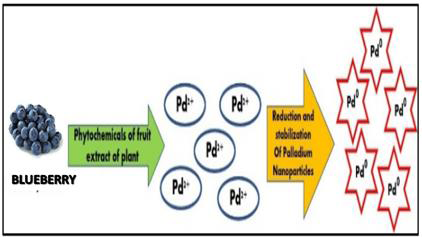
resources like “plant extracts act as natural reducing and stabilizing
agents, enabling controlled NP synthesis. ABE serves as an efficient
reducing and capping agent for the one-step synthesis of eco-friendly
PdNPs. This sustainable approach offers a promising route for
forming functional PdNPs with potential applications in catalysis,
environmental” remediation, and biomedicine [13-15].
Furthermore, a comprehensive survey of the existing literature revealed that blueberry (Vaccinium Corymbosum) fruit extract has previously been discovered for green synthesis of PdNPs. Therefore, we reveal eco-friendly synthesis and stabilization of PdNPs employing ABE as “both reducing and capping agent. The synthesized PdNPs were thoroughly characterized using a range of spectroscopic and microscopic techniques, including Transmission Electron Microscopy (TEM), Fourier Transform Infrared (FTIR) spectroscopy UV–Visible spectroscopy. In addition, the biological efficacy of the prepared nanoparticles was evaluated by investigating their antibacterial properties, signifying their potential for biomedical” and therapeutic applications.
Furthermore, a comprehensive survey of the existing literature revealed that blueberry (Vaccinium Corymbosum) fruit extract has previously been discovered for green synthesis of PdNPs. Therefore, we reveal eco-friendly synthesis and stabilization of PdNPs employing ABE as “both reducing and capping agent. The synthesized PdNPs were thoroughly characterized using a range of spectroscopic and microscopic techniques, including Transmission Electron Microscopy (TEM), Fourier Transform Infrared (FTIR) spectroscopy UV–Visible spectroscopy. In addition, the biological efficacy of the prepared nanoparticles was evaluated by investigating their antibacterial properties, signifying their potential for biomedical” and therapeutic applications.
Materials and Methods
Materials:
Ripen fruits of blueberry were purchased from a local market
in Hyderabad, India our university garden. We bought palladium
chloride (PdCl2) from Mumbai, India’s S.D. Fine Chemicals.
Analytical-grade reagents were all utilized without additional
purification. During experiment, double-distilled (DD) water was
utilized.Preparation of Aqueous blueberry Fruit Extract:
To remove dust, surface contaminants, and fungal spores, the
fruits were thoroughly cleaned multiple times with distilled water.
10 g of fresh blueberries were crushed and homogenized in 100ml of
DD water to make the aqueous extract. Resulting mixture then
centrifuged to separate the solid residues and obtain a clear extract.
The supernatant was collected and kept at 5 °C for subsequent usage
in biosynthesis of PdNPs.Green Synthesis of Palladium Nanoparticles (PdNPs):
They were synthesized employing aqueous blueberry extract as
a bioreducing and stabilizing agent. Briefly, adding dropwise 1mL
of aqueous blueberry extract to 10mL of a 1mM aqueous palladium
(II) chloride (PdCl2) solution under continuous stirring. Reaction
mixture was treated with microwave irradiation for 2min. Reduction
occurs slowly by the appearance of an intense black color, highlighting
reduction of Pd²⁺ ions as well as formation of PdNPs. The PdNPs
synthesis has been initially confirmed by visual observation and
subsequently verified using UV–Visible spectroscopic analysis in
wavelength ranging 300 to 500nm. Synthesized nanoparticles were
then collected by centrifugation at 6000 rpm, washed to remove
residual impurities, and dried for further characterization and
applications.Antibacterial Activity:
The agar “well diffusion method” biosynthesized PdNPs’
antibacterial activity [16,17]. Four bacterial strains were chosen as
test organisms: Pseudomonas aeruginosa, Klebsiella pneumoniae,
(Gram-negative bacteria), and Enterococcus faecalis, Bacillus subtilis
(Gram-positive bacteria).The “antimicrobial activity of AgNPs has been assessed utilizing agar well diffusion approach. Preparing nutrient agar plates and allowed to solidify under laminar airflow conditions. After solidification, bacterial” cultures uniformly swabbed onto agar surface. Wells created in agar utilizing sterile 1 mL micropipette tips and filled with nanoparticle “solution at a concentration of 100μg mL⁻¹. Following 37°C, zones” of inhibition have been assessed.
Results and Discussion
UV–Visible Spectral Analysis:
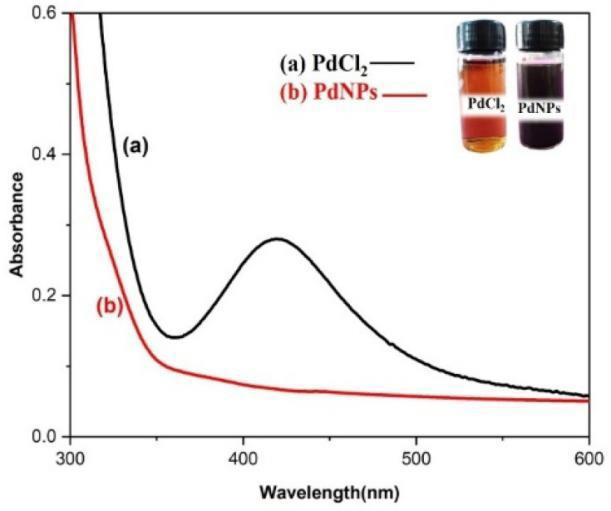
The formation of palladium nanoparticles was initially confirmed
through UV–visible spectroscopy by comparing the absorption
characteristics of the precursor palladium chloride solution and
the synthesized nanoparticles. Unlike AuNPs & AgNPs, exhibiting
characteristic localized surface plasmon resonance (LSPR) bands
responsible for their vivid colors, palladium nanoparticles generally
do not display a distinct surface plasmon resonance peak. Instead,
they are characterized “by a broad and continuous absorption profile
across the visible region [18,19].[Figure 3] presents the UV–visible spectra of the PdCl2 solution and the PdNPs obtained after microwave irradiation using blueberry fruit extract. The PdCl₂ solution exhibited a prominent absorption band around 425 nm, attributed to ligand-to-metal charge transfer (LMCT) transitions and d–d electronic transitions related to Pd (II) ions. Following nanoparticle formation, this characteristic absorption peak disappeared, demonstrating complete reduction of Pd (II) ions” to metallic palladium. In contrast, the synthesized PdNPs displayed broad absorption band extending from the near-ultraviolet to visible region, which is characteristic of PdNPs and confirms their successful formation.
FTIR:
The successful formation of palladium nanoparticles (PdNPs)
stabilized blueberry fruit extract was further confirmed by FTIR
analysis via identifying various “functional groups in NPs reduction
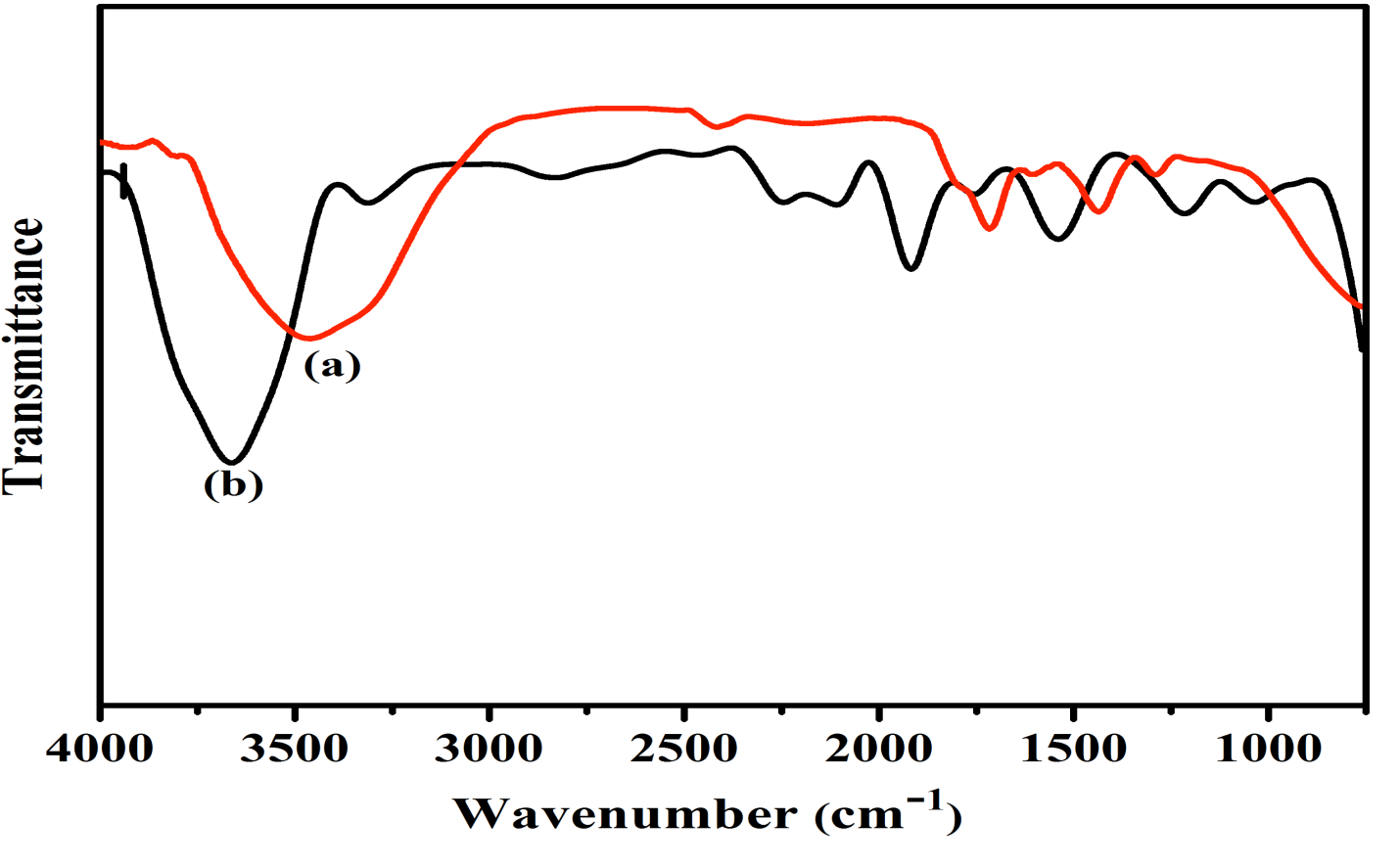
and stabilization. [Figure 3] represents FTIR spectra of” the fruit extract
and the synthesized PdNPs. O–H as a broad absorption band at 3285
cm⁻¹, whereas aliphatic C–H stretching vibrations in the fruit extract
were identified as a weak peak at 2851cm⁻¹. The bands detected at
1602 & 1404cm⁻¹ were “attributed to the symmetric and asymmetric
stretching vibrations of COO⁻ and C=O groups, correspondingly.
Carbonyl” and carboxylate functional groups’ C–O stretching
vibrations were linked to a strong, abrupt peak at 1013cm⁻¹ [42].Comparison of FTIR spectra of fruit extract and PdNPs revealed slight shifts in peak positions and variations in peak intensities, indicating the involvement of these biomolecules in nanoparticle formation. Additionally, a new peak appeared at 1720 cm⁻¹ in the PdNP spectrum, corresponding to stretching vibration of C=O group. Such spectral changes suggest interactions between functional groups of phytochemicals and palladium ions, leading to “reduction of Pd(II) to Pd(0) and” subsequent stabilization of synthesized nanoparticles.
XRD Analysis:
XRD analysis took place for investigating crystalline structure of
biogenically synthesized PdNPs. As illustrated “in (Figure 5) XRD
pattern exhibited distinct diffraction peaks” at 2θ values 39.98°,
46.49°, & 67.95°, which were “indexed to (111), (200), and (220)
lattice planes, respectively. The” presence of these reflections confirms
the successful formation of crystalline metallic palladium with FCC
structure. Additionally, observed “diffraction pattern closely matches
standard” JCPDS data for palladium, verifying phase purity as well as
crystallographic identity of the synthesized NPs.[20]
Among the observed reflections, (111) plane “exhibited the
highest intensity, suggesting that crystal growth preferentially
occurred along this” direction. Applying “equation, full width at half
maximum (FWHM) of (111) diffraction peak was computed for”
determining “average crystallite size of the produced PdNPs. The”
average crystallite size determined was roughly 6.7nm.SEM and TEM Analysis:
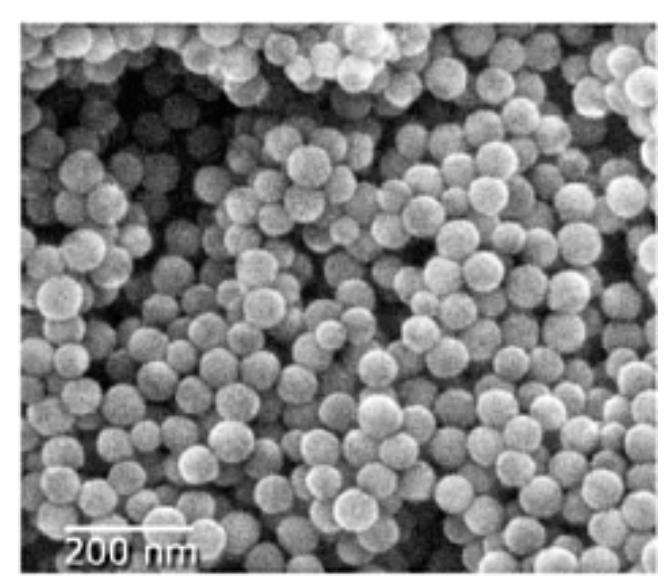
Employing morphology of synthesized PdNPs was investigated.
The “NPs had a mostly spherical morphology and a rather uniform
distribution, as” seen in (Figure 6a).Further structural and size characterization was carried out using TEM. The TEM images suggested the formation of well-dispersed nanoparticles with homogeneous morphology under optimized synthesis conditions [21]. Particle size analysis obtained from the histogram plot [Figure 7b] indicated an average particle size is 30±5 nm. TEM demonstrated that the nanoparticles were composed of aggregated nanocrystalline domains arranged into extended and well-defined network-like structures. These observations confirm the successful formation of small, crystalline, and uniformly distributed palladium nanoparticles.
Antibacterial Activity:
The agar has been employed to assess the biogenic PdNPs’
antibacterial activity. Test organisms included “two Gram-positive
bacterial strains (Enterococcus faecalis and Bacillus subtilis) and
two Gram-negative strains (Pseudomonas aeruginosa and Klebsiella
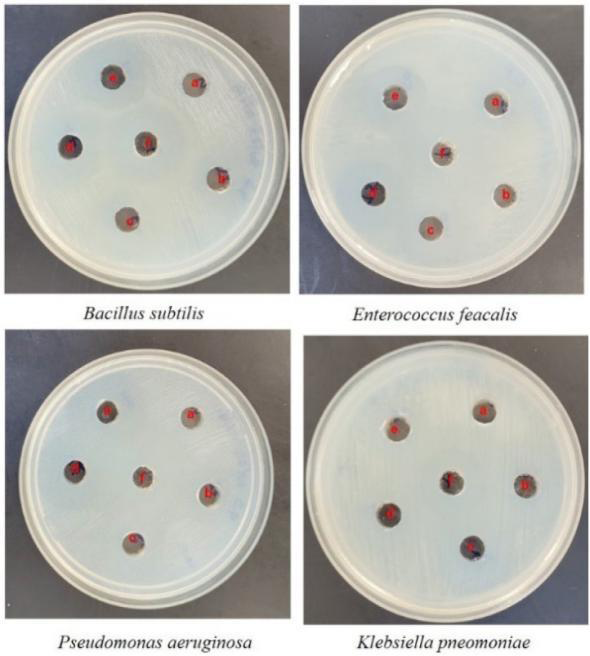
pneumoniae). The antibacterial activity of synthesized nanoparticles
was verified by development of a distinct inhibition zone surrounding
PdNP-treated wells following a 24-h incubation period [Figure 3].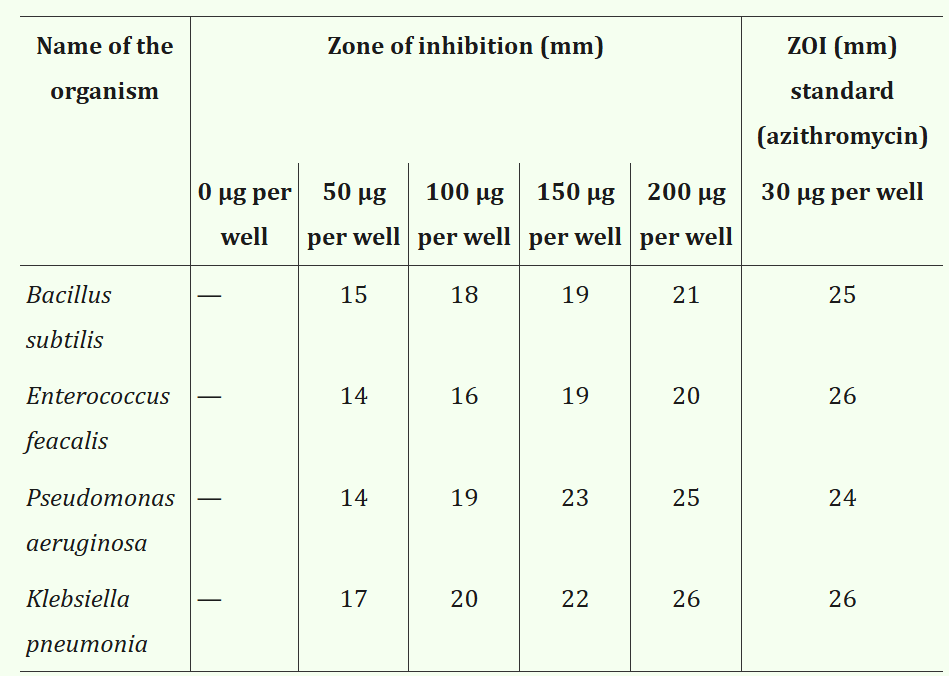
Significant antibacterial action against both Gram-positive as well
as Gram-negative bacteria was also demonstrated by” aqueous
cranberry fruit extract utilized for PdNP production [22-25]. Primary
mechanism of metal NPs antibacterial action is their ingestion and
contact with bacterial cell membranes, which disrupts membrane
transport. Additionally, nanoparticles may interact with cellular
enzymes and DNA, resulting in respiratory inhibition and cell death.
Findings of present study revealed “that the biogenically
synthesized palladium nanoparticles exhibited greater antibacterial
activity against Gram-negative bacterial strains than against Grampositive
strains, as” “summarized in [Table 1]. These observations
align with previously reported research on antimicrobial properties
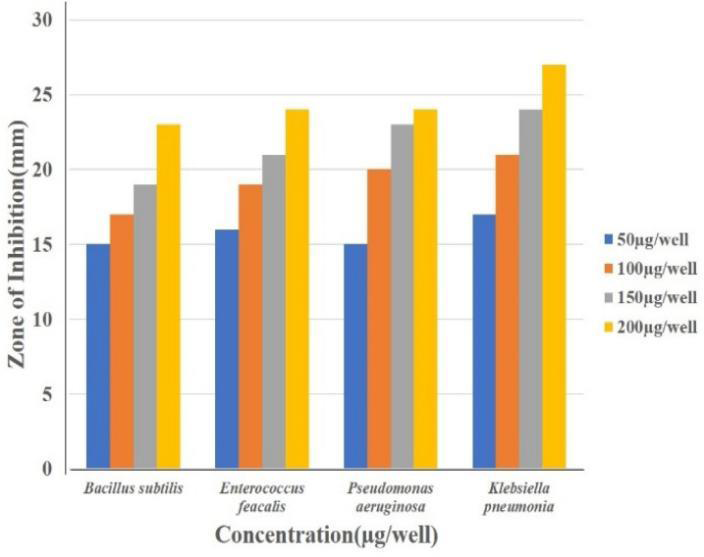
of palladium nanoparticles. As illustrated in [Figure 8,9],
the PdNPs synthesized using aqueous blueberry fruit extract showed
pronounced bactericidal effects, particularly against Gram-negative
bacteria.
Enhanced susceptibility of “Gram-negative bacteria may be
attributed” to their relatively thin peptidoglycan layer, facilitating
easier penetration” of nanoparticles into the bacterial cell. Once
internalized, the PdNPs can interfere with essential cellular and
metabolic functions, ultimately leading to bacterial growth inhibition
and cell death. Conversely, thicker peptidoglycan wall present in
Gram-positive bacteria might act as a protective barrier, reducing
nanoparticle penetration and antibacterial effectiveness.
Furthermore, the phytochemical compounds from the blueberry fruit extract that remain adsorbed on the nanoparticle surface as capping agents may contribute synergistically to the observed antimicrobial activity, thereby enhancing the overall bactericidal performance of the synthesized PdNPs against Gram-negative microorganisms.
Furthermore, the phytochemical compounds from the blueberry fruit extract that remain adsorbed on the nanoparticle surface as capping agents may contribute synergistically to the observed antimicrobial activity, thereby enhancing the overall bactericidal performance of the synthesized PdNPs against Gram-negative microorganisms.
Conclusion
By blueberry fruit extract with a PdCl2 solution, green techniques
were successfully employed to generate palladium nanoparticles. This
has been validated by UV-visible spectrum analysis, eliminating SPR
peak. PdNPs’ face-centered cubic structure and crystalline character
were validated by XRD analysis. The biosynthesized PdNPs’ spherical
shape, particle size 30±5 nm demonstrated by TEM images. PdNPs
antibacterial activity generated from aqueous blueberry fruit extract
was assessed “against Gram-positive (Enterococcus faecalis, Bacillus
subtilis), Gram-negative (Klebsiella pneumonia, Pseudomonas”
aeruginosa) bacteria. Results showed a significant zone of inhibition.
References
Citation
Banu R, Mohan KC. Phytochemical-Assisted Synthesis of Palladium Nanoparticles from Aqueous Blueberry Extract and their Antibacterial Activity. J Chem Applied Biochem. 2026;7(1): 125.