


Research Article
Dietary and Lifestyle Risk Factors of Alcoholic and Non-Alcoholic Fatty Liver Disease: A Hospital- Based Cross-Sectional Study
Samrudhi Mahesh Khaire and Anushree Rajendra Khaire*
Department of Home Science, Women’s College of Home Science &BCA, Loni Tal. Rahata Dist Ahilyanagar, India
*Corresponding author: Dr. Anushree Rajendra Khaire, Department of Home Science, Women’s College of Home Science &BCA, Loni Tal. Rahata Dist Ahilyanagar, India. E-mail Id: anushree.khaire26@gmail.com
Article Information:Submission: 25/09/2026; Accepted: 06/11/2026; Published: 09/11/2026
Copyright: © 2026 Samrudhi MK, et al. This is an open access article distributed under the Creative Commons Attribution License, which permits unrestricted use, distribution, and reproduction in any medium, provided the original work is properly cited.
Abstract
Background: Fatty liver disease is an increasingly important health problem associated with unhealthy dietary habits, excess body weight, physical inactivity, alcohol consumption and other lifestyle-related factors. Both Alcoholic Fatty Liver Disease (AFLD) and Non-Alcoholic Fatty Liver Disease (NAFLD) are influenced by modifiable nutritional and behavioural factors. The present study assessed dietary and lifestyle characteristics among patients with fatty liver
disease attending a tertiary care hospital in Nashik.
Objective: To assess dietary patterns and lifestyle risk factors among patients with AFLD and NAFLD and to describe their relationship with anthropometric characteristics and severity of fatty liver disease.
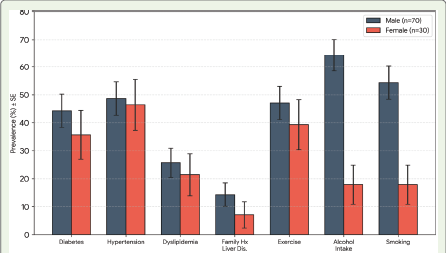
Methods: A hospital-based cross-sectional observational study was conducted among 100 patients aged 18–60 years diagnosed with fatty liver disease. The sample consisted of 50 patients with AFLD and 50 patients with NAFLD. Participants were selected using purposive sampling. Data were collected using a structured questionnaire covering socio-demographic characteristics, medical history, lifestyle practices, anthropometric measurements and dietary habits. A Food Frequency Questionnaire (FFQ) was used to assess the frequency of consumption of major food groups. Fatty liver severity was classified into Grade I, II and III. Descriptive statistics including frequency and percentage were used. Standard error (SE) of percentages was calculated for presentation of variability. Results: Among the 100 participants, 70% were male and 30% were female. The largest BMI category was 25–27 kg/m² (34%). Among male participants, alcohol consumption (64.3%) and smoking (54.3%) were prominent lifestyle factors, whereas hypertension (46.4%) was the most frequently reported medical condition among females. Among alcoholic patients, 48% reported daily alcohol consumption and another 48% reported occasional consumption. Dietary assessment showed frequent consumption of cereals, vegetables, dairy products and pulses, alongside regular consumption of bakery products, sweets, fast foods, soft drinks and packaged foods. Fatty liver Grade II was the most common severity category (51%), followed by Grade I (36%) and Grade III (13%).
Conclusion: The findings indicate that fatty liver disease in this hospital population occurred in the context of multiple modifiable dietary and lifestyle factors, including excess body weight, unhealthy food choices, physical inactivity and alcohol consumption. Early nutritional assessment, weight management, dietary counselling, physical activity and appropriate alcohol cessation strategies should form important components of fatty liver disease management.
Objective: To assess dietary patterns and lifestyle risk factors among patients with AFLD and NAFLD and to describe their relationship with anthropometric characteristics and severity of fatty liver disease.
Methods: A hospital-based cross-sectional observational study was conducted among 100 patients aged 18–60 years diagnosed with fatty liver disease. The sample consisted of 50 patients with AFLD and 50 patients with NAFLD. Participants were selected using purposive sampling. Data were collected using a structured questionnaire covering socio-demographic characteristics, medical history, lifestyle practices, anthropometric measurements and dietary habits. A Food Frequency Questionnaire (FFQ) was used to assess the frequency of consumption of major food groups. Fatty liver severity was classified into Grade I, II and III. Descriptive statistics including frequency and percentage were used. Standard error (SE) of percentages was calculated for presentation of variability. Results: Among the 100 participants, 70% were male and 30% were female. The largest BMI category was 25–27 kg/m² (34%). Among male participants, alcohol consumption (64.3%) and smoking (54.3%) were prominent lifestyle factors, whereas hypertension (46.4%) was the most frequently reported medical condition among females. Among alcoholic patients, 48% reported daily alcohol consumption and another 48% reported occasional consumption. Dietary assessment showed frequent consumption of cereals, vegetables, dairy products and pulses, alongside regular consumption of bakery products, sweets, fast foods, soft drinks and packaged foods. Fatty liver Grade II was the most common severity category (51%), followed by Grade I (36%) and Grade III (13%).
Conclusion: The findings indicate that fatty liver disease in this hospital population occurred in the context of multiple modifiable dietary and lifestyle factors, including excess body weight, unhealthy food choices, physical inactivity and alcohol consumption. Early nutritional assessment, weight management, dietary counselling, physical activity and appropriate alcohol cessation strategies should form important components of fatty liver disease management.
Keywords:Fatty Liver Disease; AFLD; NAFLD; Dietary Pattern; Lifestyle Risk Factors; Alcohol Consumption; BMI; Food Frequency Questionnaire.
Introduction
Fatty liver disease is an important metabolic and hepatological
disorder characterized by excessive accumulation of fat within
hepatocytes (Tewari et al., 2019) [1]. It includes Alcoholic Fatty
Liver Disease (AFLD), associated primarily with excessive alcohol
consumption, and Non-Alcoholic Fatty Liver Disease (NAFLD),
which is strongly associated with obesity, diabetes, dyslipidemia,
insulin resistance and metabolic syndrome (Tewari et al., 2026)
[2]. The increasing consumption of energy-dense foods, refined
carbohydrates, added sugars, fried foods, processed foods and
sugar-sweetened beverages, together with sedentary lifestyles, has
contributed to the increasing burden of fatty liver disease (Yang
et al., 2026) [3]. Dietary pattern is particularly important because
it represents the overall combination and frequency of foods
consumed rather than isolated nutrients (Riaz et al., 2026) [4]. The
study identified frequent consumption of cereals, vegetables, pulses
and dairy products but also regular consumption of fried foods,
processed foods, sweets and sugar-sweetened beverages. Excess body
weight, physical inactivity, alcohol consumption and tobacco use
were also identified as important lifestyle characteristics among the
participants.
Objective
The present study was undertaken to assess dietary and lifestyle
risk factors among patients with Alcoholic Fatty Liver Disease and
Non-Alcoholic Fatty Liver Disease attending a tertiary care hospital
in Nashik, with particular emphasis on dietary food-frequency
patterns, BMI, alcohol consumption, physical activity, tobacco use
and fatty liver severity. The study methodology specifically included
100 patients aged 18–60 years, divided equally into AFLD and
NAFLD groups.
Materials and Methods
Study Design:
A hospital-based cross-sectional observational study was
conducted to assess dietary and lifestyle characteristics among
patients diagnosed with fatty liver disease. The cross-sectional design
allowed assessment of dietary habits, lifestyle characteristics and
disease severity at a single point in time without introducing any
therapeutic intervention.Study Setting:
The study was conducted among patients attending the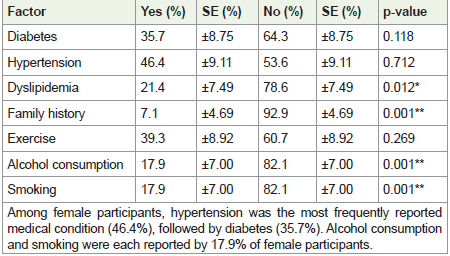
gastroenterology/hepatology outpatient department of a tertiary care
hospital in Nashik, Maharashtra. The study population consisted of
adult patients diagnosed with fatty liver disease.
Study Population and Sample Size:
A total of 100 patients aged 18–60 years were included. The
participants were divided into two equal groups:• AFLD: 50 patients
• NAFLD: 50 patients
Purposive sampling was used for participant selection. Diagnosis was based on clinical assessment, alcohol-consumption history and relevant clinical/radiological evaluation.
Data Collection:
Data were collected using a structured questionnaire designed
to obtain comprehensive information on the demographic, clinical,
lifestyle, and dietary characteristics of the study participants. The
questionnaire included socio-demographic characteristics, such as
age, sex, and other relevant personal information; medical history,
including previously diagnosed conditions and relevant health related
information; and anthropometric measurements, including
body weight, height, and body mass index (BMI). Information
regarding alcohol consumption was recorded to assess drinking
frequency and related patterns, while tobacco/smoking habits were
documented to determine the participants’ smoking status. The
questionnaire also assessed physical activity, including the frequency
and duration of exercise. Dietary information was collected through
questions related to general dietary habits and food choices, followed
by a food-frequency consumption assessment to determine the
frequency of intake of major food groups and selected food items. All
information was recorded systematically for subsequent analysis of
dietary and lifestyle factors among the study participants.A Food Frequency Questionnaire (FFQ) was used to determine the frequency of consumption of major food groups (Nikkhah et al., 2026) [5].
Anthropometric Assessment:
Body Mass Index (BMI) was calculated using:
BMI= Weight kg
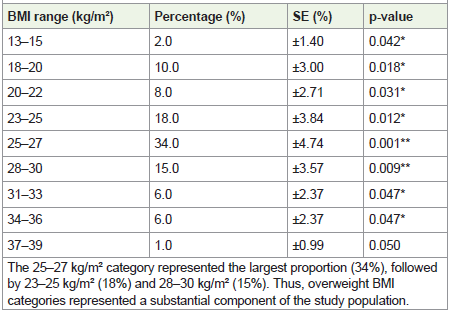
Height (m)² The study categorized participants according to BMI ranges. The highest proportion was observed in the 25–27 kg/m² category.
Assessment of Fatty Liver Severity:
Fatty liver severity was classified into three grades:• Grade I: Mild fatty liver
• Grade II: Moderate fatty liver
• Grade III: Severe fatty liver
The assessment was based on ultrasonographic classification reported in the study.
Statistical Analysis:
Data were entered and analyzed using statistical software.
Descriptive statistics including frequency and percentage were used
to summarize categorical variables. The dissertation reports use of the
Chi-square test for categorical associations and independent t-test for
comparisons of continuous variables between AFLD and NAFLD,
with p < 0.05 considered statistically significant. However, the report
also notes that advanced association analyses were not performed for
several dietary variables; therefore, the present paper does not claim
causal relationships.For the tables below, SE of percentage was calculated as:
SE=( p(1 p) ×100
n
where p is the proportion expressed as a decimal and n is the relevant sample size.
where p is the proportion expressed as a decimal and n is the relevant sample size.
Results
The present hospital-based study demonstrates that fatty liver
disease occurred in the context of multiple dietary, anthropometric
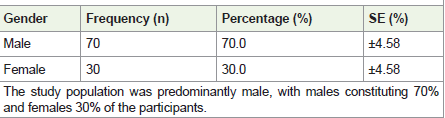
and lifestyle characteristics. The study population was predominantly
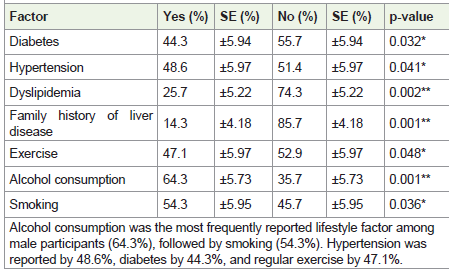
male (70%), and among male participants, alcohol consumption
(64.3%) and smoking (54.3%) were frequently reported. This
pattern is particularly relevant to Alcohol-Associated Fatty Liver
Disease (AFLD), for which cumulative alcohol exposure is a major
determinant of disease development and progression. Contemporary
clinical guidance emphasizes that harmful alcohol use is the primary
modifiable risk factor for alcohol-associated liver disease and that
sustained abstinence is an important determinant of long-term
outcomes (Jophlin et al., 2024) [6]. The coexistence of smoking
and alcohol consumption in a considerable proportion of male
participants is also clinically relevant because smoking has been
associated with MASLD, liver fibrosis and liver cancer (European
Association for the Study of the Liver [EASL], European Association
for the Study of Diabetes [EASD], and European Association for the
Study of Obesity [EASO], 2024) [7]. Therefore, the findings support
the importance of assessing multiple behavioural exposures rather
than considering alcohol intake in isolation.
Anthropometric findings showed that the 25–27 kg/m² BMI
category was the most common category, comprising 34% of
participants, while additional participants were represented in
higher BMI categories. This finding is consistent with the established
relationship between excess adiposity and metabolic dysfunctionassociated
steatotic liver disease (MASLD), the current terminology
encompassing much of what was previously classified as NAFLD.
The 2024 EASL-EASD-EASO guideline specifically identifies
overweight and obesity as important metabolic risk factors and
recommends sustained weight reduction in individuals with
MASLD and overweight/obesity. Weight reduction of at least 5% is
recommended to reduce liver fat, with larger reductions associated
with improvements in steatohepatitis and fibrosis (EASL, EASD, &
EASO, 2024) [7]. Similarly, the AASLD practice guidance reports that
even modest weight loss can improve hepatic steatosis, while greater
weight reduction is associated with improvement in steatohepatitis
and fibrosis (Rinella et al., 2023) [8]. Thus, the relatively high
representation of participants in overweight and higher BMI
categories in the present study reinforces the importance of
incorporating weight management into nutritional care for patients
with fatty liver disease.
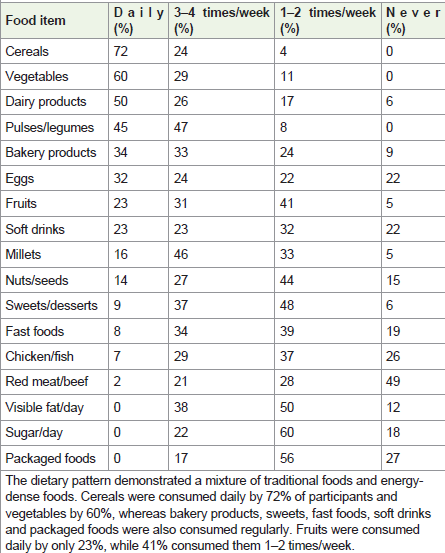
The dietary assessment revealed a mixed or dual dietary pattern. Participants commonly consumed traditional foods such as cereals, vegetables, pulses and dairy products, but these foods were accompanied by regular consumption of bakery products, sweets, soft drinks, fast foods and packaged foods. In particular, 34% of participants reported daily consumption of bakery products, 23% consumed soft drinks daily, and 8% consumed fast foods daily. This combination is relevant because current evidence indicates that overall diet quality, rather than consumption of a single food item, is important in the development and management of steatotic liver disease. The 2024 EASL-EASD-EASO guideline recommends improving overall diet quality, limiting ultra-processed foods rich in sugars and saturated fats, and avoiding sugar-sweetened beverages in adults with MASLD. The guideline also notes that sugar-sweetened beverages and red-meat consumption have been associated with increased risk of MASLD in prospective studies.
The present findings concerning soft-drink consumption are therefore particularly noteworthy. The EASL-EASD-EASO guideline summarizes prospective evidence indicating a dose-response association between soft-drink consumption and MASLD, with consumption of four or more servings per week associated with a higher risk of developing MASLD. Similarly, the AASLD guidance identifies excessive caloric intake, particularly from saturated fats, refined carbohydrates and sugar-sweetened beverages, as dietary factors associated with obesity and NAFLD (Rinella et al., 2023) [8]. The dietary profile observed in the present study therefore suggests that the simultaneous presence of traditional staple foods and energy-dense processed foods may be an important characteristic requiring attention during dietary counselling. However, because the present study did not quantify total energy, sugar, saturated fat or individual nutrient intakes, the findings should not be interpreted as demonstrating a direct nutrient-specific effect.
The consumption of vegetables, pulses and cereals observed in this study is also relevant because these foods can form components of dietary patterns recommended for metabolic liver disease. The 2024 EASL-EASD-EASO guideline describes a healthy dietary pattern broadly similar to the Mediterranean dietary pattern, emphasizing vegetables, fruits, nuts and seeds, legumes, whole grains, fish and minimally processed foods while reducing added sugars, refined carbohydrates, saturated fats and ultra-processed foods (EASL, EASD, & EASO, 2024) [7]. AASLD similarly recommends dietary patterns enriched in fibre and unsaturated fats and limited in carbohydrates and saturated fats for patients with NAFLD who are overweight or obese (Rinella et al., 2023) [8]. Therefore, the dietary findings from the present study indicate an opportunity to build on existing consumption of cereals, vegetables and pulses while reducing the frequency of energy-dense, highly processed foods.
Physical activity represented another important component of the lifestyle profile. Among physically active participants, 30–60 minutes per exercise session was the most commonly reported duration, although considerable physical inactivity was also documented in the overall sample. Current evidence supports the role of regular physical activity in reducing hepatic steatosis and improving cardiometabolic health. The AASLD guidance states that exercise may provide hepatic and cardiometabolic benefits independently of weight loss and should be individualized according to patients’ preferences and physical abilities (Rinella et al., 2023) [8]. The 2024 EASL-EASD-EASO guideline recommends physical activity tailored to individual ability and preference, preferably exceeding 150 minutes per week of moderate-intensity activity or 75 minutes per week of vigorous-intensity activity. The World Health Organization likewise recommends 150–300 minutes of moderate intensity aerobic physical activity per week for adults, together with muscle-strengthening activities on at least two days per week. Thus, although some participants in the present study reported moderate duration exercise, increasing the regularity and total weekly volume of physical activity may be relevant to lifestyle management.
The dietary assessment revealed a mixed or dual dietary pattern. Participants commonly consumed traditional foods such as cereals, vegetables, pulses and dairy products, but these foods were accompanied by regular consumption of bakery products, sweets, soft drinks, fast foods and packaged foods. In particular, 34% of participants reported daily consumption of bakery products, 23% consumed soft drinks daily, and 8% consumed fast foods daily. This combination is relevant because current evidence indicates that overall diet quality, rather than consumption of a single food item, is important in the development and management of steatotic liver disease. The 2024 EASL-EASD-EASO guideline recommends improving overall diet quality, limiting ultra-processed foods rich in sugars and saturated fats, and avoiding sugar-sweetened beverages in adults with MASLD. The guideline also notes that sugar-sweetened beverages and red-meat consumption have been associated with increased risk of MASLD in prospective studies.
The present findings concerning soft-drink consumption are therefore particularly noteworthy. The EASL-EASD-EASO guideline summarizes prospective evidence indicating a dose-response association between soft-drink consumption and MASLD, with consumption of four or more servings per week associated with a higher risk of developing MASLD. Similarly, the AASLD guidance identifies excessive caloric intake, particularly from saturated fats, refined carbohydrates and sugar-sweetened beverages, as dietary factors associated with obesity and NAFLD (Rinella et al., 2023) [8]. The dietary profile observed in the present study therefore suggests that the simultaneous presence of traditional staple foods and energy-dense processed foods may be an important characteristic requiring attention during dietary counselling. However, because the present study did not quantify total energy, sugar, saturated fat or individual nutrient intakes, the findings should not be interpreted as demonstrating a direct nutrient-specific effect.
The consumption of vegetables, pulses and cereals observed in this study is also relevant because these foods can form components of dietary patterns recommended for metabolic liver disease. The 2024 EASL-EASD-EASO guideline describes a healthy dietary pattern broadly similar to the Mediterranean dietary pattern, emphasizing vegetables, fruits, nuts and seeds, legumes, whole grains, fish and minimally processed foods while reducing added sugars, refined carbohydrates, saturated fats and ultra-processed foods (EASL, EASD, & EASO, 2024) [7]. AASLD similarly recommends dietary patterns enriched in fibre and unsaturated fats and limited in carbohydrates and saturated fats for patients with NAFLD who are overweight or obese (Rinella et al., 2023) [8]. Therefore, the dietary findings from the present study indicate an opportunity to build on existing consumption of cereals, vegetables and pulses while reducing the frequency of energy-dense, highly processed foods.
Physical activity represented another important component of the lifestyle profile. Among physically active participants, 30–60 minutes per exercise session was the most commonly reported duration, although considerable physical inactivity was also documented in the overall sample. Current evidence supports the role of regular physical activity in reducing hepatic steatosis and improving cardiometabolic health. The AASLD guidance states that exercise may provide hepatic and cardiometabolic benefits independently of weight loss and should be individualized according to patients’ preferences and physical abilities (Rinella et al., 2023) [8]. The 2024 EASL-EASD-EASO guideline recommends physical activity tailored to individual ability and preference, preferably exceeding 150 minutes per week of moderate-intensity activity or 75 minutes per week of vigorous-intensity activity. The World Health Organization likewise recommends 150–300 minutes of moderate intensity aerobic physical activity per week for adults, together with muscle-strengthening activities on at least two days per week. Thus, although some participants in the present study reported moderate duration exercise, increasing the regularity and total weekly volume of physical activity may be relevant to lifestyle management.
Alcohol consumption deserves particular consideration
because the study specifically included both AFLD and NAFLD
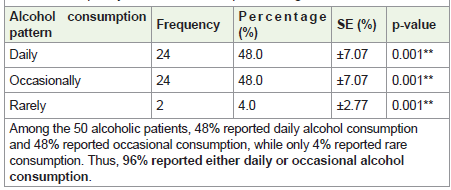
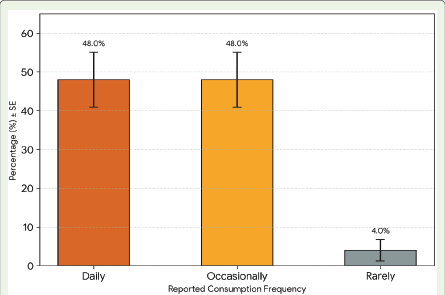
participants. Among the 50 alcoholic patients, 48% reported daily
alcohol consumption and 48% occasional consumption, indicating
that almost all participants in this subgroup reported either daily or
occasional alcohol intake. Current ACG guidance emphasizes that
alcohol exposure is a major determinant of alcohol-associated liver
disease and that sustained abstinence is central to preventing disease
progression and improving long-term outcomes (Jophlin et al.,
2024) [6]. The guideline also emphasizes that alcohol can accelerate
progression of other liver diseases, including metabolic dysfunction associated
steatotic liver disease. These observations strengthen the
relevance of systematic alcohol screening and appropriate counselling
among patients presenting with fatty liver disease.
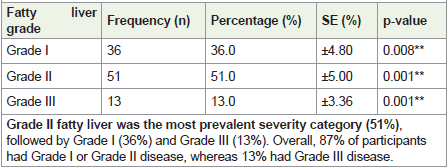
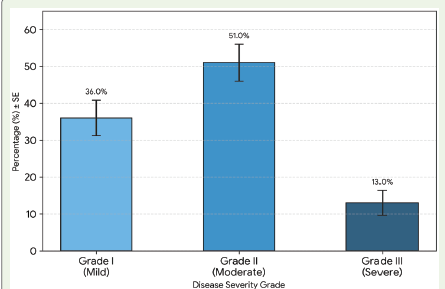
The finding that Grade II fatty liver was the most prevalent category (51%), followed by Grade I (36%) and Grade III (13%), suggests that moderate hepatic steatosis represented the most frequently observed stage in this hospital population. Importantly, the present study cannot establish that dietary or lifestyle factors caused progression to Grade II disease. Nevertheless, the coexistence of elevated BMI, unhealthy dietary exposures, physical inactivity and alcohol consumption provides a clinically relevant profile for risk assessment. Contemporary guidelines emphasize that lifestyle intervention involving diet, physical activity and weight management is central to the management of metabolic steatotic liver disease (Rinella et al., 2023; EASL, EASD, & EASO, 2024) [8,7].
The findings should, however, be interpreted in light of the methodological characteristics of the study. The investigation was conducted in a single tertiary-care hospital with 100 participants, used purposive sampling, and employed a cross-sectional design.
The dietary assessment was based on an FFQ and therefore depended partly on participants’ recall. Furthermore, detailed quantitative nutrient intake and biochemical nutritional markers were not assessed, and the original analysis was predominantly descriptive. The study itself acknowledges that cross-sectional data cannot establish cause-and-effect relationships and that the absence of a healthy comparison group limits interpretation. Consequently, the present results should be interpreted as descriptive risk-factor patterns and observed associations rather than evidence that any individual dietary or lifestyle factor directly caused fatty liver disease or determined its severity.
Overall, the findings are consistent with the broader literature indicating that fatty liver disease is influenced by interconnected metabolic and behavioural factors rather than a single dietary exposure. The combination of excess body weight, processed-food consumption, sugar-sweetened beverages, physical inactivity, alcohol exposure and tobacco use observed in this population supports a multidimensional approach to nutritional and lifestyle assessment. In clinical practice, dietary counselling should focus on improving overall diet quality, reducing ultra-processed foods and sugar-sweetened beverages, achieving appropriate weight reduction, increasing physical activity and addressing alcohol and tobacco exposure. Such an integrated approach is consistent with contemporary AASLD and EASL-EASD-EASO recommendations.
The finding that Grade II fatty liver was the most prevalent category (51%), followed by Grade I (36%) and Grade III (13%), suggests that moderate hepatic steatosis represented the most frequently observed stage in this hospital population. Importantly, the present study cannot establish that dietary or lifestyle factors caused progression to Grade II disease. Nevertheless, the coexistence of elevated BMI, unhealthy dietary exposures, physical inactivity and alcohol consumption provides a clinically relevant profile for risk assessment. Contemporary guidelines emphasize that lifestyle intervention involving diet, physical activity and weight management is central to the management of metabolic steatotic liver disease (Rinella et al., 2023; EASL, EASD, & EASO, 2024) [8,7].
The findings should, however, be interpreted in light of the methodological characteristics of the study. The investigation was conducted in a single tertiary-care hospital with 100 participants, used purposive sampling, and employed a cross-sectional design.
The dietary assessment was based on an FFQ and therefore depended partly on participants’ recall. Furthermore, detailed quantitative nutrient intake and biochemical nutritional markers were not assessed, and the original analysis was predominantly descriptive. The study itself acknowledges that cross-sectional data cannot establish cause-and-effect relationships and that the absence of a healthy comparison group limits interpretation. Consequently, the present results should be interpreted as descriptive risk-factor patterns and observed associations rather than evidence that any individual dietary or lifestyle factor directly caused fatty liver disease or determined its severity.
Overall, the findings are consistent with the broader literature indicating that fatty liver disease is influenced by interconnected metabolic and behavioural factors rather than a single dietary exposure. The combination of excess body weight, processed-food consumption, sugar-sweetened beverages, physical inactivity, alcohol exposure and tobacco use observed in this population supports a multidimensional approach to nutritional and lifestyle assessment. In clinical practice, dietary counselling should focus on improving overall diet quality, reducing ultra-processed foods and sugar-sweetened beverages, achieving appropriate weight reduction, increasing physical activity and addressing alcohol and tobacco exposure. Such an integrated approach is consistent with contemporary AASLD and EASL-EASD-EASO recommendations.
Conclusion
The present study indicates that dietary and lifestyle factors
constitute an important component of the clinical profile of patients
with both alcoholic and non-alcoholic fatty liver disease. The study
population was predominantly male, with substantial proportions
having elevated BMI and reporting alcohol consumption, smoking
and inadequate physical activity. Dietary assessment revealed frequent
consumption of both protective food groups, such as vegetables and
pulses, and potentially unfavorable foods, including bakery products,
sweets, soft drinks, fast foods and packaged foods. Grade II fatty liver
was the predominant disease stage.
These findings emphasize the importance of early nutritional screening, individualized dietary counselling, weight management, regular physical activity and reduction/cessation of alcohol consumption in the comprehensive management of fatty liver disease. The study recommendations similarly support dietitian-led nutrition counselling, reduction of processed and fried foods, promotion of whole grains, fruits, vegetables and pulses, regular physical activity and routine screening of metabolic risk factors.
These findings emphasize the importance of early nutritional screening, individualized dietary counselling, weight management, regular physical activity and reduction/cessation of alcohol consumption in the comprehensive management of fatty liver disease. The study recommendations similarly support dietitian-led nutrition counselling, reduction of processed and fried foods, promotion of whole grains, fruits, vegetables and pulses, regular physical activity and routine screening of metabolic risk factors.
References
Citation
Samrudhi MK, Anushree RK. Dietary and Lifestyle Risk Factors of Alcoholic and Non-Alcoholic Fatty Liver Disease: A Hospital-Based Cross-Sectional Study. Indian J Nutri. 2026;13(2): 352.