


Review Article
Nutritional Determinants of Sleep Quality: A Narrative Review
Panayotova GG¹*, Harikumar V², Harikumar A³ and Hachmeriyan A¹
1Department of Physiology and Pathophysiology, Faculty of Medicine, Medical University of Varna, Varna, Bulgaria
2Department of Medicine, Medical University of Varna, Varna, Bulgaria
3Medical Officer, Mighty Movers India, Ernakulam, Kerala, India
2Department of Medicine, Medical University of Varna, Varna, Bulgaria
3Medical Officer, Mighty Movers India, Ernakulam, Kerala, India
*Corresponding author: Gabriela Georgieva Panayotova, Division of Physiology, Department of Physiology and Pathophysiology, Faculty of Medicine, Medical University of Varna55 Marin Drinov Street, 9002 Varna, Bulgaria. E- mail Id: gabrielapanayotova95@gmail.com
Article Information:Submission: 29/09/2026; Accepted: 29/10/2026; Published: 03/11/2026
Copyright: © 2026 Panayotova GG, et al. This is an open access article distributed under the Creative Commons Attribution License, which permits unrestricted use, distribution, and reproduction in any medium, provided the original work is properly cited.
Abstract
Background: Sleep is a fundamental physiological process, and chronic sleep disturbances are common worldwide. Recent estimates suggest that clinically relevant insomnia affects approximately one in six adults globally. Nutrition is increasingly recognized as a modifiable component of sleep health because dietary composition and timing influence neurotransmitter availability, circadian signaling, metabolic homeostasis, inflammation, and the gut–brain
axis. The aim of this review is to synthesize current evidence on how macronutrients, micronutrients, dietary patterns, meal timing, specific foods and bioactive compounds, and gut microbiome-related pathways are associated with sleep quality, duration, continuity, and architecture.
Methods: This narrative review synthesizes randomized controlled trials, systematic reviews, meta-analyses, and relevant mechanistic and epidemiological studies identified in PubMed/MEDLINE, Scopus, and Web of Science. The final database search was completed on 1 September 2026, with no lower publication-year restriction. After duplicate references were removed, 77 unique sources were retained in the final narrative synthesis. Evidence strength was appraised using structured narrative criteria based on study design, consistency, precision, directness, sleep-outcome measurement, and risk of confounding or bias. Findings were integrated thematically. No, de novo meta-analysis was performed, and effect estimates with 95% confidence intervals were reported when available.
Results: The most consistent evidence favors overall diet quality rather than isolated nutrients. Mediterranean-style and other high-quality dietary patterns are associated with fewer insomnia symptoms and better sleep characteristics, whereas Western and ultra-processed dietary patterns are associated with poorer sleep outcomes. Caffeine and alcohol have reproducible adverse effects on objective sleep measures, including total sleep time, sleep efficiency, and sleep architecture. Tryptophan, omega-3 fatty acids, vitamin D, magnesium, and selected functional foods such as tart cherries show potential benefit, but effects are generally modest, heterogeneous, or strongest in deficient or symptomatic subgroups. Evidence for time-restricted eating and microbiome-targeted interventions remains promising but insufficient for universal clinical recommendations.
Conclusions: Nutrition is a clinically relevant component of sleep health, but the evidence supports a food-first and pattern-based approach rather than routine use of individual supplements. The most defensible strategy is a nutrient-dense, minimally processed dietary pattern with adequate fiber and protein, regular meal timing aligned with the daytime active phase, limited evening caffeine and alcohol, and correction of documented nutrient deficiencies. Larger randomized trials using objective sleep measures and standardized dietary interventions are needed to establish causality and define personalized recommendations.
Methods: This narrative review synthesizes randomized controlled trials, systematic reviews, meta-analyses, and relevant mechanistic and epidemiological studies identified in PubMed/MEDLINE, Scopus, and Web of Science. The final database search was completed on 1 September 2026, with no lower publication-year restriction. After duplicate references were removed, 77 unique sources were retained in the final narrative synthesis. Evidence strength was appraised using structured narrative criteria based on study design, consistency, precision, directness, sleep-outcome measurement, and risk of confounding or bias. Findings were integrated thematically. No, de novo meta-analysis was performed, and effect estimates with 95% confidence intervals were reported when available.
Results: The most consistent evidence favors overall diet quality rather than isolated nutrients. Mediterranean-style and other high-quality dietary patterns are associated with fewer insomnia symptoms and better sleep characteristics, whereas Western and ultra-processed dietary patterns are associated with poorer sleep outcomes. Caffeine and alcohol have reproducible adverse effects on objective sleep measures, including total sleep time, sleep efficiency, and sleep architecture. Tryptophan, omega-3 fatty acids, vitamin D, magnesium, and selected functional foods such as tart cherries show potential benefit, but effects are generally modest, heterogeneous, or strongest in deficient or symptomatic subgroups. Evidence for time-restricted eating and microbiome-targeted interventions remains promising but insufficient for universal clinical recommendations.
Conclusions: Nutrition is a clinically relevant component of sleep health, but the evidence supports a food-first and pattern-based approach rather than routine use of individual supplements. The most defensible strategy is a nutrient-dense, minimally processed dietary pattern with adequate fiber and protein, regular meal timing aligned with the daytime active phase, limited evening caffeine and alcohol, and correction of documented nutrient deficiencies. Larger randomized trials using objective sleep measures and standardized dietary interventions are needed to establish causality and define personalized recommendations.
Keywords:Sleep Quality; Nutrition, Dietary Patterns; Mediterranean Diet; Tryptophan, Caffeine; Alcohol, Micronutrients; Gut–Brain Axis;Circadian Rhythm
Introduction
Sleep is an essential biological process that supports
neurocognitive function, emotional regulation, metabolic
homeostasis, cardiovascular health, endocrine signaling, and immune
competence [1]. Sleep disorders and persistent sleep insufficiency
are therefore not simply symptoms of fatigue but clinically relevant
exposures associated with a broad range of adverse outcomes [2].
Recent global estimates suggest that approximately 16.2% of adults
meet criteria for clinically relevant insomnia and around 7.9% may
have severe insomnia, although prevalence varies according to the
diagnostic method, country, age, and sex [3]. Poor sleep quality and
short sleep duration are also associated with obesity, type 2 diabetes,
cardiovascular disease, depression, anxiety, impaired cognition,
accidents, and reduced productivity [2].
Sleep health is multidimensional. Relevant outcomes include sleep
duration, sleep onset latency, wake after sleep onset (WASO), sleep
efficiency, sleep architecture, circadian timing, daytime sleepiness,
and subjective sleep quality. These outcomes are not interchangeable
[4]. A nutritional exposure may improve one dimension without
affecting another - for example, a supplement may change subjective
sleep quality without materially altering objective total sleep time.
This distinction is important when interpreting the literature and
helps explain why findings across nutrition–sleep studies are often
heterogeneous [5].
Pharmacological treatments can be appropriate for selected sleep disorders, but medication is not the only modifiable component of sleep health [6]. Behavioral interventions, circadian alignment, physical activity, and diet all contribute to the physiological environment in which sleep occurs [7]. Nutrition is particularly attractive as a preventive and adjunctive target because food intake is repeated daily and simultaneously influences substrate availability, glucose and insulin dynamics, inflammatory tone, autonomic signaling, gut microbial metabolism, and peripheral circadian clocks [8,9].
The relationship is bidirectional. Diet can influence sleep, but insufficient or mistimed sleep can also change appetite, food choice, and energy intake [10]. Experimental sleep restriction has been associated with lower leptin, higher ghrelin, increased hunger, and greater preference for energy-dense foods [11,12]. Consequently, cross-sectional associations between poor diet and poor sleep may reflect a feedback loop rather than a one-way causal pathway [13]. A contemporary review therefore needs to distinguish biological plausibility from clinical efficacy and observational association from interventional evidence.
Human sleep is organized into non-rapid eye movement (NREM) sleep, comprising stages N1, N2, and N3, and rapid eye movement (REM) sleep. N3, or slow-wave sleep, is concentrated predominantly in the first part of the night and is associated with high-amplitude slow-wave activity and restorative physiological processes. REM sleep becomes more prominent later in the night and is involved in emotional and memory-related processing. Sleep is regulated by the interaction of homeostatic sleep pressure (Process S) and circadian timing (Process C), with the suprachiasmatic nucleus coordinating endogenous rhythms across the 24-hour cycle [14]. Diet can interact with these systems through several mechanisms. First, amino acids and micronutrients provide substrates and cofactors for neurotransmitter synthesis. Tryptophan is a precursor of serotonin and melatonin, while vitamin B6 supports enzymatic reactions in tryptophan metabolism [5,15]. Second, meal composition alters insulin and the plasma ratio of tryptophan to competing large neutral amino acids, thereby influencing tryptophan transport across the blood–brain barrier [15,16]. Third, meal timing acts as a zeitgeber for peripheral clocks. Eating late in the biological night may contribute to circadian misalignment even when the central light-entrained clock remains unchanged [17]. Fourth, dietary patterns modify systemic inflammation, oxidative stress, and metabolic health, all of which can influence arousal and sleep continuity [5] Fifth, diet is a major determinant of gut microbial composition and microbial metabolites, including short-chain fatty acids (SCFAs), that participate in gut– brain communication [18].
Growing evidence indicates that nutrition may influence multiple dimensions of sleep through interacting metabolic, neurochemical, circadian, inflammatory, and gut microbiome-related pathways. However, the available literature remains heterogeneous with respect to study design, population characteristics, dietary exposures, and sleep assessment methods, making it difficult to draw uniform conclusions across individual nutrients, foods, and dietary patterns. This review therefore aims to provide an integrated overview of current evidence on the relationship between nutrition and sleep. Specifically, it examines the roles of macronutrients, micronutrients, dietary patterns, meal timing, selected foods and bioactive compounds, and gut microbiome-related mechanisms in relation to sleep quality, duration, continuity, and architecture. Particular attention is given to the biological mechanisms that may explain these associations, the consistency and strength of the available evidence, and the methodological limitations that should be considered when interpreting current findings.
Pharmacological treatments can be appropriate for selected sleep disorders, but medication is not the only modifiable component of sleep health [6]. Behavioral interventions, circadian alignment, physical activity, and diet all contribute to the physiological environment in which sleep occurs [7]. Nutrition is particularly attractive as a preventive and adjunctive target because food intake is repeated daily and simultaneously influences substrate availability, glucose and insulin dynamics, inflammatory tone, autonomic signaling, gut microbial metabolism, and peripheral circadian clocks [8,9].
The relationship is bidirectional. Diet can influence sleep, but insufficient or mistimed sleep can also change appetite, food choice, and energy intake [10]. Experimental sleep restriction has been associated with lower leptin, higher ghrelin, increased hunger, and greater preference for energy-dense foods [11,12]. Consequently, cross-sectional associations between poor diet and poor sleep may reflect a feedback loop rather than a one-way causal pathway [13]. A contemporary review therefore needs to distinguish biological plausibility from clinical efficacy and observational association from interventional evidence.
Human sleep is organized into non-rapid eye movement (NREM) sleep, comprising stages N1, N2, and N3, and rapid eye movement (REM) sleep. N3, or slow-wave sleep, is concentrated predominantly in the first part of the night and is associated with high-amplitude slow-wave activity and restorative physiological processes. REM sleep becomes more prominent later in the night and is involved in emotional and memory-related processing. Sleep is regulated by the interaction of homeostatic sleep pressure (Process S) and circadian timing (Process C), with the suprachiasmatic nucleus coordinating endogenous rhythms across the 24-hour cycle [14]. Diet can interact with these systems through several mechanisms. First, amino acids and micronutrients provide substrates and cofactors for neurotransmitter synthesis. Tryptophan is a precursor of serotonin and melatonin, while vitamin B6 supports enzymatic reactions in tryptophan metabolism [5,15]. Second, meal composition alters insulin and the plasma ratio of tryptophan to competing large neutral amino acids, thereby influencing tryptophan transport across the blood–brain barrier [15,16]. Third, meal timing acts as a zeitgeber for peripheral clocks. Eating late in the biological night may contribute to circadian misalignment even when the central light-entrained clock remains unchanged [17]. Fourth, dietary patterns modify systemic inflammation, oxidative stress, and metabolic health, all of which can influence arousal and sleep continuity [5] Fifth, diet is a major determinant of gut microbial composition and microbial metabolites, including short-chain fatty acids (SCFAs), that participate in gut– brain communication [18].
Growing evidence indicates that nutrition may influence multiple dimensions of sleep through interacting metabolic, neurochemical, circadian, inflammatory, and gut microbiome-related pathways. However, the available literature remains heterogeneous with respect to study design, population characteristics, dietary exposures, and sleep assessment methods, making it difficult to draw uniform conclusions across individual nutrients, foods, and dietary patterns. This review therefore aims to provide an integrated overview of current evidence on the relationship between nutrition and sleep. Specifically, it examines the roles of macronutrients, micronutrients, dietary patterns, meal timing, selected foods and bioactive compounds, and gut microbiome-related mechanisms in relation to sleep quality, duration, continuity, and architecture. Particular attention is given to the biological mechanisms that may explain these associations, the consistency and strength of the available evidence, and the methodological limitations that should be considered when interpreting current findings.
Materials and Methods
This narrative review was based on a focused literature search of
PubMed/MEDLINE, Scopus, and Web of Science. The final database
search was completed on 1 September 2026. No lower publication year
restriction was applied. Literature available from database
inception through 1 September 2026 was eligible, and the sources
retained in the final manuscript ranged from 1986 to 2026. The search
strategy combined terms related to sleep, including sleep quality, sleep
duration, sleep efficiency, sleep architecture, insomnia, circadian
rhythm, and sleep disturbance, with nutrition-related terms covering
macronutrients, micronutrients, dietary patterns, Mediterranean
diet, meal timing, time-restricted eating, tryptophan, omega-3 fatty
acids, magnesium, zinc, vitamin D, caffeine, alcohol, ultra-processed
foods, functional foods, probiotics, prebiotics, and gut microbiome.
Reference lists of relevant reviews and key articles were also examined
to identify additional sources of importance.
Priority was given to systematic reviews, meta-analyses,
randomized controlled trials (RCTs), and recent observational
studies with direct relevance to the relationship between nutritional
exposures and sleep outcomes. Representative mechanistic studies
were additionally included when necessary to explain biological
pathways involving neurotransmitter synthesis, circadian regulation,
inflammatory signaling, and gut–brain communication. Titles and
abstracts were screened for direct relevance, followed by full-text
assessment of potentially eligible sources. Eligible evidence addressed
at least one relevant sleep outcome, including subjective sleep
quality, sleep duration, sleep onset latency, wake after sleep onset,
sleep efficiency, daytime sleepiness, or sleep architecture assessed
using questionnaires, actigraphy, or polysomnography. Sources were
excluded when they lacked a direct nutrition–sleep relationship, did
not report a relevant sleep outcome, duplicated another source, or did
not materially inform the focused synthesis. Because the review was
conceived as a narrative rather than a systematic review, a prospective
screening log was not maintained. After removal of duplicate
references, the final narrative synthesis comprised 77 unique sources.
Methodological quality and evidence strength were appraised using a structured narrative framework. For each exposure, interpretative weight was based on study-design hierarchy (systematic reviews/meta-analyses and RCTs given greater weight than observational or mechanistic studies), sample size and precision, consistency across studies, directness to the nutrition– sleep question, use of objective versus subjective sleep measures, baseline nutritional status, and susceptibility to confounding or other bias. Major exposures were graded as strong, moderate, limited, or emerging evidence. These author-defined categories are intended as a transparent narrative appraisal and are not equivalent to a formal GRADE assessment. Where pooled or primary effect estimates were available, effect sizes were extracted with 95% confidence intervals, units, and comparison groups. Findings were integrated using a thematic narrative synthesis organized a priori into macronutrients, micronutrients, dietary patterns, and meal timing/bioactive foods/ gut microbiome. No, de novo meta-analysis or formal qualitative meta-synthesis was performed because the included evidence was heterogeneous in design, exposure definition, population, and sleep outcome. Existing pooled estimates from systematic reviews and meta-analyses were preferentially reported rather than recomputed.
Methodological quality and evidence strength were appraised using a structured narrative framework. For each exposure, interpretative weight was based on study-design hierarchy (systematic reviews/meta-analyses and RCTs given greater weight than observational or mechanistic studies), sample size and precision, consistency across studies, directness to the nutrition– sleep question, use of objective versus subjective sleep measures, baseline nutritional status, and susceptibility to confounding or other bias. Major exposures were graded as strong, moderate, limited, or emerging evidence. These author-defined categories are intended as a transparent narrative appraisal and are not equivalent to a formal GRADE assessment. Where pooled or primary effect estimates were available, effect sizes were extracted with 95% confidence intervals, units, and comparison groups. Findings were integrated using a thematic narrative synthesis organized a priori into macronutrients, micronutrients, dietary patterns, and meal timing/bioactive foods/ gut microbiome. No, de novo meta-analysis or formal qualitative meta-synthesis was performed because the included evidence was heterogeneous in design, exposure definition, population, and sleep outcome. Existing pooled estimates from systematic reviews and meta-analyses were preferentially reported rather than recomputed.
Results
Macronutrients and Sleep:
Carbohydrate intake can influence sleep through both acute and
chronic pathways. Acutely, carbohydrate-induced insulin release
lowers circulating concentrations of several large neutral amino
acids relative to tryptophan, potentially increasing the tryptophanto-
LNAA ratio and facilitating central serotonin and melatonin
synthesis [19]. In a crossover experimental study of 12 healthy men, a
high-glycemic-index jasmine rice meal consumed four hours before
bedtime shortened mean sleep onset latency to 9.0 ± 6.2 minutes
compared with 17.5 ± 6.2 minutes after a low-GI meal (P = 0.009).
А 95% confidence interval for this comparison was not reported
[20]. This finding supports a plausible acute mechanism but should
not be extrapolated to recommend chronically high-glycemic diets.
Evidence strength for this acute effect is limited because it is based on
a small experimental sample.Long-term evidence increasingly distinguishes isolated pre-sleep carbohydrate effects from overall diet quality. A 2024 systematic review and meta-analysis of 37 observational studies involving 591,223 participants reported that higher dietary glycemic index was associated with greater odds of insomnia symptoms (OR 1.16, 95% CI 1.08–1.25), as was higher glycemic load (OR 1.10, 95% CI 1.01–1.20), whereas healthier dietary patterns were associated with lower risk [21]. These findings suggest that carbohydrate quality and habitual dietary context are more important for chronic sleep health than the short-term sleep-latency effects observed after selected high- GI meals. Overall evidence strength for habitual carbohydrate quality is moderate, with causal inference limited by the predominance of observational data.
Dietary fiber is one of the more consistent macronutrient-related correlates of sleep architecture. In a controlled feeding study, higher fiber intake was associated with more slow-wave sleep, whereas higher saturated fat and sugar intake were associated with lighter, more fragmented sleep [22]. Fiber may also influence sleep indirectly by improving glycemic stability, supporting microbial diversity, and increasing SCFA production [23]. These mechanisms are biologically plausible, but long-term randomized trials designed specifically around fiber and objective sleep endpoints remain limited. Evidence strength is therefore limited for a causal fiber effect on sleep architecture.
Protein provides tryptophan, the essential amino acid required for serotonin and melatonin synthesis. However, absolute tryptophan intake is not the sole determinant of central availability because tryptophan competes with other LNAAs for transport across the blood–brain barrier [24]. Dietary strategies that increase the tryptophan-to-LNAA ratio, including selected carbohydrate–protein combinations or proteins naturally rich in tryptophan relative to other amino acids, may therefore be more relevant than total protein alone [19].
The literature supports a modest sleep-promoting effect of tryptophan but not a universal hypnotic effect. A systematic review, meta-analysis, and meta-regression found that tryptophan supplementation reduced wake after sleep onset (SMD −1.08, 95% CI −1.89 to −0.28), with shorter wake after sleep onset in studies using doses of at least 1 g/day. Оther sleep outcomes were not consistently improved [25]. Tryptophan is biologically relevant and may improve selected sleep-continuity measures, but the evidence does not justify indiscriminate supplementation in the general population. Overall evidence strength is moderate but constrained by small, heterogeneous intervention studies.
Protein timing is less established. Evening intake of alphalactalbumin, a relatively tryptophan-rich protein, has been shown to increase plasma tryptophan availability and improve morning alertness in selected participants [26]. Claims that pre-sleep casein or other proteins independently improve sleep remain preliminary and are confounded by training status, total daily protein intake, energy balance, and the composition of the accompanying meal [27]. Adequate protein distribution should therefore be considered part of overall dietary adequacy rather than a stand-alone sleep treatment. Evidence strength for protein timing as an independent sleep intervention is emerging.
Long-chain omega-3 polyunsaturated fatty acids (LC-PUFAs), especially eicosapentaenoic acid (EPA) and docosahexaenoic acid (DHA), may influence sleep through membrane composition, inflammatory signaling, and serotonergic pathways [28]. Earlier pediatric and adult trials suggested potential benefits [29,30]. In a 2024 systematic review and meta-analysis of eight controlled trials, omega-3 LC-PUFAs improved sleep efficiency by 1.88 percentage points versus control (MD 1.88, 95% CI 1.00–2.77) and improved subjective sleep measures (MD −0.41, 95% CI −0.76 to −0.06), but did not significantly change sleep latency (MD −0.44 minutes, 95% CI −1.27 to 0.39) or total sleep duration (MD 5.45 minutes, 95% CI −10.33 to 21.23). Heterogeneity was substantial for subjective outcomes [31] Overall evidence strength is moderate.
Accordingly, omega-3 intake should be viewed as potentially supportive rather than a primary treatment for insomnia. Food sources such as oily fish also contribute protein, vitamin D, selenium, and other nutrients, making it difficult to isolate the sleep effect of EPA and DHA from the overall dietary pattern [32]. In contrast, high saturated-fat intake has been associated with reduced slow-wave sleep and greater arousal in controlled and observational studies. Chronic diets high in saturated fat may also promote inflammatory and metabolic disturbances that indirectly impair sleep, although direct causal evidence on sleep architecture remains limited [22]. Evidence strength for saturated fat as an independent determinant of sleep architecture is limited.
Micronutrients and Sleep:
Magnesium participates in hundreds of enzymatic reactions and
contributes to neuronal excitability, muscle function, and regulation
of glutamatergic and GABAergic signaling. These physiological roles
make magnesium a plausible sleep-related nutrient, particularly in
individuals with low intake or deficiency [33,34]. Earlier placebo controlled
trials in older adults reported improvements in subjective
insomnia measures. However, the evidence base is much smaller than
popular claims imply [35].A 2021 systematic review and meta-analysis identified only three RCTs involving 151 older adults. Compared with placebo, magnesium supplementation reduced sleep onset latency by 17.36 minutes (MD −17.36 minutes, 95% CI −27.27 to −7.44), whereas the increase in total sleep time was not statistically significant (MD 16.06 minutes, 95% CI −5.99 to 38.12). The certainty of evidence was low to very low because of small samples and risk of bias [36]. Thus, correcting inadequate magnesium intake is reasonable, but routine supplementation for insomnia in magnesium-replete adults is not strongly supported. Overall evidence strength is limited.
Zinc participates in neurotransmission and may modulate sleep–
wake regulation [37]. Experimental and observational evidence
has linked zinc status with sleep, and zinc is involved in enzymes
and signaling pathways relevant to melatonin biology. In an older
trial of institutionalized adults with primary insomnia, a combined
preparation containing melatonin, magnesium, and zinc improved
sleep quality, but the multicomponent design prevents attribution
of the effect to zinc alone. Food-first correction of inadequate zinc
intake is therefore more defensible than using zinc as an isolated
hypnotic intervention [38].
Iron has a clinically important relationship with sleep because brain iron and dopaminergic function are central to the pathophysiology of restless legs syndrome (RLS) [39]. Low ferritin or iron deficiency can exacerbate RLS symptoms and thereby disrupt sleep initiation and maintenance. This relationship is more clinically established than many other nutrient–sleep associations. In patients with RLS, assessment and correction of iron deficiency should follow disorder-specific clinical guidance rather than generic sleep supplementation [40]. Iron should not be taken empirically in individuals without evidence of deficiency because excess iron can be harmful [41]. Evidence strength is strong for correction of iron deficiency in the specific context of RLS, but this should not be generalized to insomnia without iron deficiency
Iron has a clinically important relationship with sleep because brain iron and dopaminergic function are central to the pathophysiology of restless legs syndrome (RLS) [39]. Low ferritin or iron deficiency can exacerbate RLS symptoms and thereby disrupt sleep initiation and maintenance. This relationship is more clinically established than many other nutrient–sleep associations. In patients with RLS, assessment and correction of iron deficiency should follow disorder-specific clinical guidance rather than generic sleep supplementation [40]. Iron should not be taken empirically in individuals without evidence of deficiency because excess iron can be harmful [41]. Evidence strength is strong for correction of iron deficiency in the specific context of RLS, but this should not be generalized to insomnia without iron deficiency
Vitamin B6 acts as a cofactor in amino-acid metabolism and
neurotransmitter synthesis, including pathways involving tryptophan
and serotonin [42]. Vitamin B12 participates in one-carbon
metabolism and methylation reactions and has been investigated in
relation to circadian timing [43]. These biochemical roles support
plausibility, but direct intervention evidence showing that B6 or B12
supplementation improves sleep in nutritionally sufficient individuals
is limited. Deficiency should be corrected for general neurological
and hematological health, while sleep-specific benefits should not be
overstated [44]. Evidence strength for direct sleep improvement is
limited.
Vitamin D receptors are expressed in brain regions involved in sleep regulation, and low circulating 25-hydroxyvitamin D has been associated with poor sleep quality and sleep disorders in observational studies [45]. Intervention evidence is more encouraging than for several other micronutrients but remains heterogeneous. A 2022 systematic review and meta-analysis of intervention studies found that vitamin D supplementation reduced Pittsburgh Sleep Quality Index scores by 2.33 points versus placebo (MD −2.33, 95% CI −3.09 to −1.57), while effects on sleep duration, specific sleep disorders, and daytime sleepiness were inconsistent [46]. Vitamin D supplementation may improve subjective sleep quality in deficient or selected populations, but vitamin D should not be considered a universal sleep aid. Baseline vitamin D status, dose, treatment duration, comorbidities, seasonal light exposure, and the use of subjective versus objective sleep outcomes are important sources of heterogeneity [47]. Overall evidence strength is moderate for subjective sleep quality and limited for other sleep outcomes.
Calcium is involved in neuronal signaling and may interact with tryptophan–melatonin pathways. Dairy foods also provide protein and tryptophan [48]. Observational studies have explored associations between dairy intake and sleep, but the independent sleep effect of calcium is difficult to isolate from other nutrients and food-matrix effects [49]. Similarly, folate, vitamin C, copper, and other micronutrients participate in metabolic pathways relevant to neurotransmission or oxidative balance, yet direct sleep-specific supplementation evidence is insufficient for routine recommendations [50]. The broader principle is that micronutrient adequacy matters most when a deficiency is present. Evidence strength for calcium and these additional isolated micronutrients as sleep interventions is limited.
Vitamin D receptors are expressed in brain regions involved in sleep regulation, and low circulating 25-hydroxyvitamin D has been associated with poor sleep quality and sleep disorders in observational studies [45]. Intervention evidence is more encouraging than for several other micronutrients but remains heterogeneous. A 2022 systematic review and meta-analysis of intervention studies found that vitamin D supplementation reduced Pittsburgh Sleep Quality Index scores by 2.33 points versus placebo (MD −2.33, 95% CI −3.09 to −1.57), while effects on sleep duration, specific sleep disorders, and daytime sleepiness were inconsistent [46]. Vitamin D supplementation may improve subjective sleep quality in deficient or selected populations, but vitamin D should not be considered a universal sleep aid. Baseline vitamin D status, dose, treatment duration, comorbidities, seasonal light exposure, and the use of subjective versus objective sleep outcomes are important sources of heterogeneity [47]. Overall evidence strength is moderate for subjective sleep quality and limited for other sleep outcomes.
Calcium is involved in neuronal signaling and may interact with tryptophan–melatonin pathways. Dairy foods also provide protein and tryptophan [48]. Observational studies have explored associations between dairy intake and sleep, but the independent sleep effect of calcium is difficult to isolate from other nutrients and food-matrix effects [49]. Similarly, folate, vitamin C, copper, and other micronutrients participate in metabolic pathways relevant to neurotransmission or oxidative balance, yet direct sleep-specific supplementation evidence is insufficient for routine recommendations [50]. The broader principle is that micronutrient adequacy matters most when a deficiency is present. Evidence strength for calcium and these additional isolated micronutrients as sleep interventions is limited.
Dietary Patterns and Sleep Quality:
Among nutritional exposures, overall dietary pattern now has
some of the most consistent epidemiological support. Mediterraneanstyle
diets emphasize vegetables, fruits, legumes, whole grains, nuts,
olive oil, fish, and relatively low consumption of processed meats and
highly refined foods. This pattern provides fiber, unsaturated fats,
polyphenols, tryptophan-containing foods, magnesium, and other
micronutrients while generally producing a lower inflammatory
dietary profile [51]A 2024 systematic review and meta-analysis found that
Mediterranean-diet adherence was associated with lower odds of
insomnia symptoms (OR 0.86, 95% CI 0.79–0.93), and broader highquality
dietary patterns were also associated with lower odds (OR
0.66, 95% CI 0.48–0.90) [21]. A 2025 meta-analysis of 62 studies
involving 328,493 participants found that sufficient sleep duration,
good sleep quality, and earlier chronotype were each associated with
greater Mediterranean-diet adherence, although heterogeneity was
substantial [52]. These data do not prove that the Mediterranean diet
directly treats insomnia because healthier sleep can also facilitate
healthier eating and because physical activity, socioeconomic status,
body weight, and other lifestyle factors cluster with diet quality.
Nevertheless, convergence across large observational datasets
and plausible mechanisms makes a Mediterranean-style pattern
a reasonable food-first recommendation [53]. Overall evidence
strength is moderate, primarily because most data are observational.
Western dietary patterns typically contain high amounts of refined carbohydrates, added sugars, sodium, saturated fat, and ultraprocessed foods (UPFs), while providing less fiber and micronutrient density. Such patterns may influence sleep through postprandial metabolic instability, obesity and sleep-disordered breathing risk, inflammation, appetite signaling, and unfavorable changes in the gut microbiome. The relationship is likely bidirectional because insufficient sleep increases preference for energy-dense foods [54]. A 2024 meta-analysis of seven observational studies found that higher UPF intake was associated with greater odds of insomnia (OR 1.53, 95% CI 1.20–1.95) [55]. Another systematic review concluded that evidence for a bidirectional UPF–sleep association is accumulating, but most studies relied on cross-sectional designs and self-reported sleep [56]. Thus, minimizing UPFs is consistent with sleep-health goals, while the causal contribution of processing level remains under investigation. Overall evidence strength is moderate but observational.
Vegetarian and vegan diets can be compatible with healthy sleep when they are well planned, because they are often rich in fiber, phytochemicals, complex carbohydrates, and unsaturated fats [57]. However, restrictive plant-based diets may increase the risk of inadequate vitamin B12, iron, zinc, calcium, or long-chain omega-3 intake if fortified foods or supplementation are not used appropriately [58]. Diet quality, nutrient adequacy, degree of processing, energy intake, and meal timing are likely more important than the presence or absence of animal products alone [59]. Evidence strength for plant-based diet status itself as an independent determinant of sleep is limited.
Western dietary patterns typically contain high amounts of refined carbohydrates, added sugars, sodium, saturated fat, and ultraprocessed foods (UPFs), while providing less fiber and micronutrient density. Such patterns may influence sleep through postprandial metabolic instability, obesity and sleep-disordered breathing risk, inflammation, appetite signaling, and unfavorable changes in the gut microbiome. The relationship is likely bidirectional because insufficient sleep increases preference for energy-dense foods [54]. A 2024 meta-analysis of seven observational studies found that higher UPF intake was associated with greater odds of insomnia (OR 1.53, 95% CI 1.20–1.95) [55]. Another systematic review concluded that evidence for a bidirectional UPF–sleep association is accumulating, but most studies relied on cross-sectional designs and self-reported sleep [56]. Thus, minimizing UPFs is consistent with sleep-health goals, while the causal contribution of processing level remains under investigation. Overall evidence strength is moderate but observational.
Vegetarian and vegan diets can be compatible with healthy sleep when they are well planned, because they are often rich in fiber, phytochemicals, complex carbohydrates, and unsaturated fats [57]. However, restrictive plant-based diets may increase the risk of inadequate vitamin B12, iron, zinc, calcium, or long-chain omega-3 intake if fortified foods or supplementation are not used appropriately [58]. Diet quality, nutrient adequacy, degree of processing, energy intake, and meal timing are likely more important than the presence or absence of animal products alone [59]. Evidence strength for plant-based diet status itself as an independent determinant of sleep is limited.
Meal Timing, Bioactive Foods, and Gut Microbiome:
Meal timing is increasingly recognized as an important
component of circadian health. Peripheral metabolic clocks respond
to feeding–fasting cycles, and late-night eating may contribute
to circadian misalignment, adverse metabolic effects, and poorer
sleep. Time-restricted eating (TRE) has therefore been investigated
as a strategy to consolidate food intake within a consistent daytime
window [17]. A 2026 meta-analysis of 13 studies involving 638
participants found a small improvement in PSQI in single-arm/TREarm
analyses (mean change −0.47 points, 95% CI −0.80 to −0.15),
with a larger improvement for early TRE schedules (MD −0.77 PSQI
points, 95% CI −1.29 to −0.24). However, controlled-trial metaanalyses
showed no significant differences in sleep duration or PSQI
[60]. Thus, regular daytime-aligned eating may support circadian
health, but TRE cannot currently be recommended as a primary
treatment for sleep disorders. Overall evidence strength is limited
because controlled comparisons are inconsistent.Specific foods, beverages, and bioactive compounds may also influence sleep. Tryptophan-rich foods, including dairy products, eggs, poultry, fish, soy, nuts, seeds, and legumes, may support serotonin and melatonin synthesis, although central tryptophan availability also depends on competition with other large neutral amino acids (LNAAs) [5]. Consequently, the overall composition of a meal may be more relevant than its absolute tryptophan content, supporting a food-based rather than high-dose supplementation approach [61].
Among commonly consumed beverages, caffeine and alcohol have some of the strongest evidence for adverse effects on sleep. Caffeine antagonizes adenosine receptors and can reduce sleep pressure [62]. In a 2023 meta-analysis of 24 studies, caffeine reduced total sleep time by 45.3 minutes versus control (95% CI 29.0–61.5 minutes reduction) and sleep efficiency by 7.0 percentage points (95% CI 4.0–10.0 reduction), while increasing sleep onset latency by 9.1 minutes (95% CI 3.8–14.4) and wake after sleep onset by 11.8 minutes (95% CI 2.5–21.0) [63]. Individual responses vary according to dose, habitual intake, metabolism, and timing. Overall evidence strength is strong because the effects are reproduced in controlled studies using objective sleep outcomes.
Although alcohol may initially shorten sleep onset latency, it disrupts subsequent sleep architecture (64). A 2025 systematic review and meta-analysis found that, versus control, alcohol delayed REM sleep onset by 18.0 minutes (95% CI 8.8–27.1), reduced REM sleep duration by 11.3 minutes (95% CI −20.8 to −1.8), and reduced the proportion of REM sleep by 2.8 percentage points (95% CI −3.9 to −1.7) [65]. These findings do not support the use of alcohol as a sleep aid and show measurable REM disruption even at relatively low doses. Overall evidence strength is strong for adverse effects on REM sleep architecture.
Several functional foods have shown potential sleep-promoting
effects, although the evidence remains limited. Tart cherries contain
melatonin and polyphenols, and small intervention studies have
reported modest improvements in sleep duration and efficiency [66].
The available systematic review did not provide a single robust pooled
effect estimate because studies differed in product formulation, dose,
population, and sleep outcomes. Similarly, a small study of adults
with sleep problems found that consuming two kiwifruits one hour
before bedtime for four weeks was associated with improvements in
sleep onset latency, sleep efficiency, and total sleep time [67]. These
findings are promising but require confirmation in larger controlled
trials. Overall evidence strength is emerging.
Herbal preparations have also been investigated. For example, chamomile contains apigenin, which can interact with GABA-A receptor binding sites and may contribute to mild sedative effects [68]. Small randomized trials have reported improvements in subjective sleep quality, while evidence for valerian, passionflower, lemon balm, and lavender remains inconsistent; because preparations, doses, and outcome scales differ substantially, a single comparable pooled effect estimate is not available for this heterogeneous group [69]. Potential drug interactions further limit firm clinical recommendations.
Overall evidence strength is emerging.
The gut microbiome represents another potential link between nutrition and sleep. The gut–brain axis involves neural, endocrine, immune, and metabolic pathways, while microbial metabolites such as short-chain fatty acids (SCFAs) may influence inflammatory signaling, tryptophan metabolism, and neurotransmitter-related processes [70]. Diet is a major determinant of microbial composition: fiber, polyphenols, and unsaturated fats generally support microbial diversity and SCFA production, whereas highly processed, low-fiber diets may have less favorable effects [9]. Evidence strength for the microbiome as a causal mediator of diet-related sleep effects remains emerging because human mediation studies are limited.
Experimental studies suggest that selected Lactobacillus and Bifidobacterium strains can influence GABAergic signaling and stress-related responses [71]. In a 2025 meta-analysis of six RCTs including 424 patients with insomnia, probiotics reduced PSQI scores by 2.10 points versus control (MD −2.10, 95% CI −3.86 to −0.34), but did not significantly improve total sleep time (MD 43.70 minutes, 95% CI −18.07 to 105.46), sleep efficiency (MD 0.41 percentage points, 95% CI −1.67 to 2.48), or sleep latency according to the authors’ significance criterion (MD −4.74 minutes, 95% CI −9.42 to −0.05; P = 0.05) [72]. Probiotic effects remain strain-, dose-, and population-specific. Evidence strength is moderate for subjective sleep quality in insomnia but limited for objective sleep outcomes; the microbiome is therefore better regarded as a plausible mediator than an established universal therapeutic target [73].
Herbal preparations have also been investigated. For example, chamomile contains apigenin, which can interact with GABA-A receptor binding sites and may contribute to mild sedative effects [68]. Small randomized trials have reported improvements in subjective sleep quality, while evidence for valerian, passionflower, lemon balm, and lavender remains inconsistent; because preparations, doses, and outcome scales differ substantially, a single comparable pooled effect estimate is not available for this heterogeneous group [69]. Potential drug interactions further limit firm clinical recommendations.
Overall evidence strength is emerging.
The gut microbiome represents another potential link between nutrition and sleep. The gut–brain axis involves neural, endocrine, immune, and metabolic pathways, while microbial metabolites such as short-chain fatty acids (SCFAs) may influence inflammatory signaling, tryptophan metabolism, and neurotransmitter-related processes [70]. Diet is a major determinant of microbial composition: fiber, polyphenols, and unsaturated fats generally support microbial diversity and SCFA production, whereas highly processed, low-fiber diets may have less favorable effects [9]. Evidence strength for the microbiome as a causal mediator of diet-related sleep effects remains emerging because human mediation studies are limited.
Experimental studies suggest that selected Lactobacillus and Bifidobacterium strains can influence GABAergic signaling and stress-related responses [71]. In a 2025 meta-analysis of six RCTs including 424 patients with insomnia, probiotics reduced PSQI scores by 2.10 points versus control (MD −2.10, 95% CI −3.86 to −0.34), but did not significantly improve total sleep time (MD 43.70 minutes, 95% CI −18.07 to 105.46), sleep efficiency (MD 0.41 percentage points, 95% CI −1.67 to 2.48), or sleep latency according to the authors’ significance criterion (MD −4.74 minutes, 95% CI −9.42 to −0.05; P = 0.05) [72]. Probiotic effects remain strain-, dose-, and population-specific. Evidence strength is moderate for subjective sleep quality in insomnia but limited for objective sleep outcomes; the microbiome is therefore better regarded as a plausible mediator than an established universal therapeutic target [73].
Methodological Considerations in Nutrition–Sleep Research:
A large proportion of nutrition–sleep research relies on foodfrequency
questionnaires, diet histories, or 24-hour recalls. These
methods are vulnerable to recall error, social desirability, portionsize
misestimation, and systematic underreporting of energy-dense
foods. Sleep is also frequently measured using one or two self-report
questions or questionnaires such as the PSQI and Epworth Sleepiness
Scale. These instruments are valuable for symptoms and patient
experience but do not directly measure sleep stages or respiratory
events.Measurement error can attenuate true associations, generate spurious associations, and make studies difficult to compare. Future studies should combine validated dietary methods with repeated assessment and, where feasible, objective biomarkers of nutritional exposure. Similarly, sleep outcomes should be matched to the research question: questionnaires for symptoms, actigraphy for multi-night sleep–wake patterns, and PSG for architecture and sleep-disordered breathing.
Diet and sleep share many determinants, including body mass
index, socioeconomic status, stress, depression, anxiety, physical
activity, shift work, alcohol use, smoking, medication, chronic
disease, and chronotype [74]. Inadequate statistical adjustment
can therefore produce apparent diet–sleep relationships that partly
reflect other lifestyle or clinical factors. Reverse causality is especially
important because poor sleep alters appetite and food choice, while
better sleepers may have more regular schedules and greater capacity
to prepare healthy meals [75].
Heterogeneity also arises from age, sex, metabolic health, baseline nutrient status, cultural diet, habitual caffeine intake, chronotype, and sleep disorder phenotype. An intervention that benefits an older adult with a nutrient deficiency may not benefit a young, healthy adult with adequate intake. Future trials should therefore characterize baseline nutritional and sleep phenotypes rather than treating participants as a homogeneous group.
Polysomnography remains the reference method for detailed sleep architecture and the diagnosis of disorders such as obstructive sleep apnea. It simultaneously records electroencephalography, electrooculography, electromyography, cardiorespiratory signals, and oxygen saturation. Its limitations include cost, participant burden, limited scalability, and the first-night effect, in which unfamiliar laboratory conditions alter sleep [76].
Actigraphy provides a practical alternative for estimating sleep– wake patterns across multiple nights in naturalistic conditions and is well suited to dietary intervention studies [77]. Consumer devices are increasingly used, but performance differs across brands, firmware versions, and populations. Validation against PSG or research-grade actigraphy remains essential before consumer-derived sleep-stage estimates are interpreted as physiological endpoints.
Heterogeneity also arises from age, sex, metabolic health, baseline nutrient status, cultural diet, habitual caffeine intake, chronotype, and sleep disorder phenotype. An intervention that benefits an older adult with a nutrient deficiency may not benefit a young, healthy adult with adequate intake. Future trials should therefore characterize baseline nutritional and sleep phenotypes rather than treating participants as a homogeneous group.
Polysomnography remains the reference method for detailed sleep architecture and the diagnosis of disorders such as obstructive sleep apnea. It simultaneously records electroencephalography, electrooculography, electromyography, cardiorespiratory signals, and oxygen saturation. Its limitations include cost, participant burden, limited scalability, and the first-night effect, in which unfamiliar laboratory conditions alter sleep [76].
Actigraphy provides a practical alternative for estimating sleep– wake patterns across multiple nights in naturalistic conditions and is well suited to dietary intervention studies [77]. Consumer devices are increasingly used, but performance differs across brands, firmware versions, and populations. Validation against PSG or research-grade actigraphy remains essential before consumer-derived sleep-stage estimates are interpreted as physiological endpoints.
Discussion
Taken together, the findings are best interpreted as a hierarchy
of evidence rather than as a list of individuals “sleep-promoting”
foods or nutrients. Controlled evidence is most persuasive when a
nutritional exposure produces reproducible changes in objective
sleep physiology, whereas associations involving overall dietary
patterns, micronutrients, and functional foods require greater
caution because confounding, reverse causality, baseline nutritional
status, and heterogeneous outcome measurement can materially
alter the apparent effect [21,36,46,52,63,65]. This distinction should
guide both clinical interpretation and the wording of public-health
recommendations.
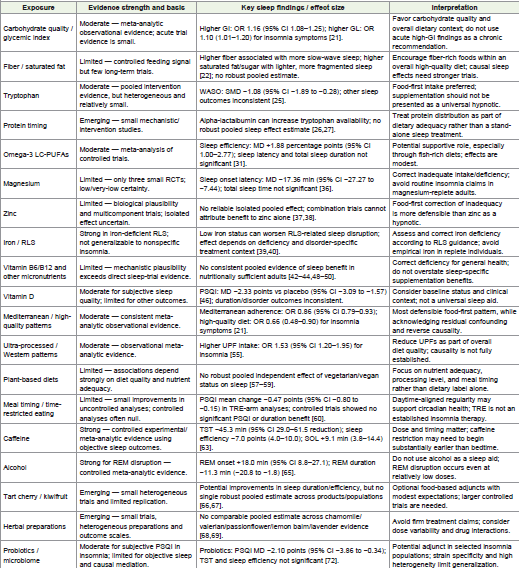
A second cross-cutting issue is context dependence. The same exposure may have different implications according to deficiency status, age, metabolic health, chronotype, habitual intake, and the presence of a specific sleep disorder. Consequently, evidence of benefit in a deficient or symptomatic subgroup should not be generalized to nutritionally replete adults, and statistically significant changes in subjective sleep scores should not automatically be assumed to represent equivalent changes in objective sleep architecture. The evidence-strength ratings in [Table 1] were therefore used to separate relatively reproducible effects from signals that remain supportive, limited, or hypothesis-generating.
At the dietary-pattern level, the principal interpretative advantage is that whole diets capture interactions among fiber, unsaturated fats, polyphenols, micronutrients, protein quality, food processing, and meal timing rather than isolating one component from its usual food matrix [2,53]. This systems perspective may explain why patternlevel associations are often more internally consistent than singlesupplement findings, while still falling short of proving causality when the underlying studies are predominantly observational. Deficiency correction remains clinically justified, but routine supplementation in nutritionally replete individuals requires stronger and more reproducible trial evidence [36,46].
The gut microbiome provides a useful mechanistic framework that links these observations. A high-fiber, plant-rich, minimally processed diet can simultaneously increase SCFA substrate availability, reduce inflammatory burden, improve metabolic stability, and support microbial diversity [9,73]. These pathways
A second cross-cutting issue is context dependence. The same exposure may have different implications according to deficiency status, age, metabolic health, chronotype, habitual intake, and the presence of a specific sleep disorder. Consequently, evidence of benefit in a deficient or symptomatic subgroup should not be generalized to nutritionally replete adults, and statistically significant changes in subjective sleep scores should not automatically be assumed to represent equivalent changes in objective sleep architecture. The evidence-strength ratings in [Table 1] were therefore used to separate relatively reproducible effects from signals that remain supportive, limited, or hypothesis-generating.
At the dietary-pattern level, the principal interpretative advantage is that whole diets capture interactions among fiber, unsaturated fats, polyphenols, micronutrients, protein quality, food processing, and meal timing rather than isolating one component from its usual food matrix [2,53]. This systems perspective may explain why patternlevel associations are often more internally consistent than singlesupplement findings, while still falling short of proving causality when the underlying studies are predominantly observational. Deficiency correction remains clinically justified, but routine supplementation in nutritionally replete individuals requires stronger and more reproducible trial evidence [36,46].
The gut microbiome provides a useful mechanistic framework that links these observations. A high-fiber, plant-rich, minimally processed diet can simultaneously increase SCFA substrate availability, reduce inflammatory burden, improve metabolic stability, and support microbial diversity [9,73]. These pathways
may converge on sleep regulation without requiring that any single
food exert a direct hypnotic effect [18,73] This systems-level view is
consistent with the broader literature showing that dietary patterns
often produce more reproducible health associations than isolated
nutrients [21,53].
For clinical translation, dietary advice should complement
rather than replace evidence-based evaluation and treatment of sleep
disorders. Persistent insomnia may require cognitive behavioral
therapy for insomnia (CBT-I), while symptoms of sleep apnea, RLS,
circadian rhythm disorders, or parasomnias require disorder-specific
assessment. Nutrition is most appropriately integrated as part of a
broader sleep-health plan [5,39,40].
The bidirectional nature of the nutrition–sleep relationship
also deserves greater emphasis. Short or fragmented sleep can alter
leptin and ghrelin signaling, increase hunger, and favor energy-dense
food choices, while irregular schedules may promote late eating and
greater caffeine use [11,12,75]. Consequently, an observed association
between a poor diet and poor sleep may represent a reinforcing
cycle rather than a one-directional effect [13,22]. This has practical
implications: dietary counseling may be less effective if chronic
insomnia, shift-work-related circadian misalignment, or untreated
sleep-disordered breathing continues to disrupt appetite regulation
and daily routines. Conversely, sleep treatment may indirectly
improve adherence to healthier dietary behaviors. Future intervention
studies should therefore consider combined sleep-and-nutrition
strategies instead of treating the two domains as independent lifestyle
factors [13].
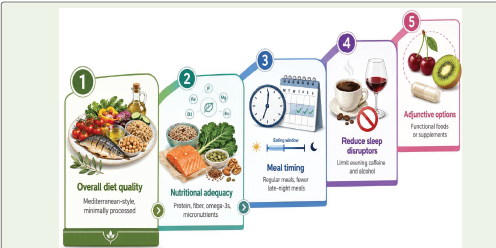
A practical hierarchy can be derived from the evidence [Figure 1]. First, optimize overall diet quality using a Mediterranean style or similarly minimally processed pattern [21,52,53]. Second, ensure adequate intake of protein, fiber, omega-3-rich foods, and micronutrients, with laboratory assessment and targeted supplementation when deficiency is clinically plausible [31,36,46]. Third, modify timing: avoid large late-night meals, maintain reasonably consistent eating times, and consider an earlier daytime eating window if compatible with the individual’s schedule [17,60]. Fourth, address the exposures with the clearest adverse effects— particularly caffeine timing and alcohol near bedtime [63,65]. Finally, consider functional foods or supplements only as adjuncts, with realistic expectations about effect size and attention to interactions, dose, and comorbid disease [66,67].
A practical hierarchy can be derived from the evidence [Figure 1]. First, optimize overall diet quality using a Mediterranean style or similarly minimally processed pattern [21,52,53]. Second, ensure adequate intake of protein, fiber, omega-3-rich foods, and micronutrients, with laboratory assessment and targeted supplementation when deficiency is clinically plausible [31,36,46]. Third, modify timing: avoid large late-night meals, maintain reasonably consistent eating times, and consider an earlier daytime eating window if compatible with the individual’s schedule [17,60]. Fourth, address the exposures with the clearest adverse effects— particularly caffeine timing and alcohol near bedtime [63,65]. Finally, consider functional foods or supplements only as adjuncts, with realistic expectations about effect size and attention to interactions, dose, and comorbid disease [66,67].
A further challenge is the substantial interindividual variability
in nutritional responses. Chronotype, habitual caffeine exposure, sex,
age, genetic variation in metabolism, comorbid disease, medication
use, and baseline nutrient status can all modify the effect of a dietary
exposure on sleep [17,62]. The same caffeine dose, for example,
may have little effect in one habitual user but meaningfully delay
sleep in a slow metabolizer or a person with high caffeine sensitivity
[62,63]. Similarly, magnesium or vitamin D supplementation is more
biologically plausible in individuals with low baseline status than in
those with adequate stores [36,46,47]. These observations support
a move toward individualized recommendations based on clinical
context and exposure timing rather than universal lists of foods or
supplements that are presumed to improve sleep.
The principal strength of the current literature is the convergence of mechanistic, observational, and interventional data across several domains. Recent systematic reviews have also improved quantitative estimates for dietary patterns, caffeine, alcohol, omega-3 fatty acids, TRE, UPFs, vitamin D, magnesium, and tart cherries [21,31,36,46,52,55,60,63,65,66]. However, several limitations remain. Many associations are cross-sectional; intervention trials are often small and short; dietary and sleep assessments vary widely; baseline nutritional
The principal strength of the current literature is the convergence of mechanistic, observational, and interventional data across several domains. Recent systematic reviews have also improved quantitative estimates for dietary patterns, caffeine, alcohol, omega-3 fatty acids, TRE, UPFs, vitamin D, magnesium, and tart cherries [21,31,36,46,52,55,60,63,65,66]. However, several limitations remain. Many associations are cross-sectional; intervention trials are often small and short; dietary and sleep assessments vary widely; baseline nutritional
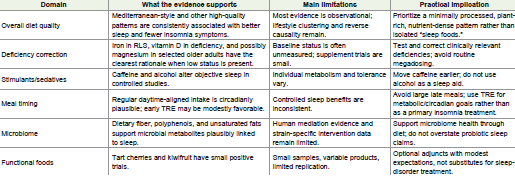
status is not consistently measured; and sleep disorders are frequently
not phenotyped using objective methods [21,36,56].
Another limitation is publication and product heterogeneity. Supplements labeled with the same nutrient can differ in dose, formulation, co-ingredients, and bioavailability. Probiotics are strain specific [72]. Tart-cherry products vary in concentration [66]. Caffeine exposure differs by beverage size and preparation [63]. These sources of heterogeneity make simple public-facing claims difficult to defend. Future evidence synthesis should therefore emphasize standardized exposure reporting and clinically interpretable effect sizes.
From a public-health perspective, the current evidence also supports greater integration between sleep medicine and nutritional assessment [5,22]. Routine questions about caffeine timing, alcohol use, late-night eating, overall dietary quality, and possible micronutrient deficiency can be incorporated into the clinical evaluation of patients reporting poor sleep at relatively low cost [17,63,65]. Likewise, nutrition studies should treat sleep duration, quality, timing, and sleep-disorder symptoms as relevant covariates rather than background characteristics. Such cross-disciplinary assessment may improve both clinical care and research validity because it recognizes that sleep and diet share common behavioral, metabolic, and circadian determinants [13,22]. However, nutritionbased recommendations should remain proportionate to the evidence: they are best positioned as modifiable components of comprehensive sleep health, not substitutes for established therapies such as CBT-I or the diagnosis and treatment of obstructive sleep apnea and RLS [39,40].
Future studies should prioritize: (1) adequately powered RCTs of whole dietary patterns with objective multi-night sleep measurement; (2) prospective cohorts with repeated diet and sleep assessments to clarify directionality; (3) trials stratified by baseline nutrient status, chronotype, sex, age, and sleep-disorder phenotype; (4) studies combining actigraphy or PSG with metabolomics and microbiome profiling to test mediation pathways; (5) standardized reporting of meal timing, caffeine dose and timing, alcohol dose, and supplement formulation; and (6) pragmatic studies evaluating whether nutrition focused interventions add clinically meaningful benefit when combined with established sleep therapies [73,76,77].
Another limitation is publication and product heterogeneity. Supplements labeled with the same nutrient can differ in dose, formulation, co-ingredients, and bioavailability. Probiotics are strain specific [72]. Tart-cherry products vary in concentration [66]. Caffeine exposure differs by beverage size and preparation [63]. These sources of heterogeneity make simple public-facing claims difficult to defend. Future evidence synthesis should therefore emphasize standardized exposure reporting and clinically interpretable effect sizes.
From a public-health perspective, the current evidence also supports greater integration between sleep medicine and nutritional assessment [5,22]. Routine questions about caffeine timing, alcohol use, late-night eating, overall dietary quality, and possible micronutrient deficiency can be incorporated into the clinical evaluation of patients reporting poor sleep at relatively low cost [17,63,65]. Likewise, nutrition studies should treat sleep duration, quality, timing, and sleep-disorder symptoms as relevant covariates rather than background characteristics. Such cross-disciplinary assessment may improve both clinical care and research validity because it recognizes that sleep and diet share common behavioral, metabolic, and circadian determinants [13,22]. However, nutritionbased recommendations should remain proportionate to the evidence: they are best positioned as modifiable components of comprehensive sleep health, not substitutes for established therapies such as CBT-I or the diagnosis and treatment of obstructive sleep apnea and RLS [39,40].
Future studies should prioritize: (1) adequately powered RCTs of whole dietary patterns with objective multi-night sleep measurement; (2) prospective cohorts with repeated diet and sleep assessments to clarify directionality; (3) trials stratified by baseline nutrient status, chronotype, sex, age, and sleep-disorder phenotype; (4) studies combining actigraphy or PSG with metabolomics and microbiome profiling to test mediation pathways; (5) standardized reporting of meal timing, caffeine dose and timing, alcohol dose, and supplement formulation; and (6) pragmatic studies evaluating whether nutrition focused interventions add clinically meaningful benefit when combined with established sleep therapies [73,76,77].
Conclusions
Nutrition is a modifiable component of sleep health, but the
relationship is complex, bidirectional, and strongly influenced by
overall lifestyle and clinical context. Current evidence most strongly
supports a pattern-based approach: Mediterranean-style or similarly
high-quality diets are associated with better sleep, whereas ultraprocessed
dietary patterns are associated with poorer outcomes.
Caffeine and alcohol have the most reproducible adverse effects
on objective sleep and should be addressed explicitly when sleep
complaints are present.
Specific nutrients—including tryptophan, omega-3 fatty acids, vitamin D, magnesium, zinc, and iron—participate in pathways relevant to sleep physiology, but supplementation is not uniformly beneficial. The clearest clinical rationale is to correct documented or likely nutritional deficiencies and to use food-first strategies whenever possible. Meal timing and the gut microbiome are important emerging domains, although controlled evidence is not yet sufficient for universal prescriptions. Overall, dietary optimization should be viewed as a foundation that supports sleep health and complements, rather than replaces, established diagnostic and therapeutic approaches for sleep disorders.
Specific nutrients—including tryptophan, omega-3 fatty acids, vitamin D, magnesium, zinc, and iron—participate in pathways relevant to sleep physiology, but supplementation is not uniformly beneficial. The clearest clinical rationale is to correct documented or likely nutritional deficiencies and to use food-first strategies whenever possible. Meal timing and the gut microbiome are important emerging domains, although controlled evidence is not yet sufficient for universal prescriptions. Overall, dietary optimization should be viewed as a foundation that supports sleep health and complements, rather than replaces, established diagnostic and therapeutic approaches for sleep disorders.
Author contributions (CRediT):
Gabriela Georgieva Panayotova: Conceptualization,Methodology, Investigation, Writing – review & editing, Visualization, Project administration.Vaisakhkrishna Harikumar: Investigation, Writing – original draft.
Anjali Harikumar: Investigation, Writing – original draft. Antoniya Hachmeriyan: Conceptualization, Methodology, Supervision, Writing – review & editing.
All authors critically reviewed the manuscript, approved the final version, and agreed to be accountable for the work.
References
Citation
Panayotova GG, Harikumar V, Harikumar A, Hachmeriyan A. Nutritional Determinants of Sleep Quality: A Narrative Review: A Comparative Study. Indian J Nutri. 2026;13(2): 350.