


Research Article
Balanced Nutrition: Women’s Guide to Hormonal Health
Anagha NV1, Anfas EK1, Ashima Sherin KP1, Asiya Arva1, Ashoka CH2, Annapoorna JP1, and Rao S1*
1Department of Microbiology, Yenepoya Institute of Arts, Science, Commerce, and Management, Yene Poya (Deemed to be University), Kulur, Mangalore, Karnataka, India
2Department of Zoology, Dr. P. Dayananda Pai - P. Satisha Pai Govt First Grade College, Mangalore, Karnataka, India
2Department of Zoology, Dr. P. Dayananda Pai - P. Satisha Pai Govt First Grade College, Mangalore, Karnataka, India
*Corresponding author:Dr Sumangala Rao, Department of Microbiology, Yenepoya Institute of Arts, Science, Commerce and management, (Yenepoya Deemed To Be University), Managlore, India
Article Information:Submission: 20/09/2025; Accepted: 23/10/2025; Published: 28/10/2025
Copyright: © 2025 Anagha NV, et al. This is an open access article distributed under the Creative Commons Attribution License, which permits unrestricted use, distribution, and reproduction in any medium, provided the original work is properly cited.
Abstract
Menstrual health is a vital component of women’s overall well-being, and dietary habits play a significant role in regulating hormonal balance, alleviating menstrual symptoms, and maintaining cycle regularity. This study explores the relationship between nutrition and menstrual health, considering both
physiological and psychological aspects of the menstrual cycle. A cross-sectional survey of 133 South Indian women aged 17–43 revealed notable age-related differences in dietary habits and their effects on menstrual health. Younger women showed a stronger preference for non-vegetarian foods, while home-cooked
meals were favored across all age groups. Menstrual symptoms, such as cramps and mood swings, were more pronounced among younger participants but decreased with age. Conversely, irregular cycles were more frequent in older women and were often linked to higher consumption of fast food. The findings highlight the potential of balanced diets to support menstrual well-being and underscore the negative impact of junk food. The study emphasizes the need for further research into targeted nutritional interventions to improve menstrual health outcomes.
Keywords:Menstrual Cycle; Food Preferences; Hormonal Balance; Age-Related Dietary Patterns
Introduction
A nutritionally balanced diet is essential for maintaining
menstrual health (Barcın Güzeldere et al., 2024) [1]. Menstruation,
the monthly shedding of the uterine lining, involves the release of
blood and tissue through the vagina (Sevim & Yagar, 2022; John et
al., 2021). [2,3] The average age of menarche typically falls between
12 and 13 years. According to a World Health Organization study in
2006, menstrual pain affects 16.8–81.0% of women of reproductive
age, with severe symptoms reported in 12–14% (Naraoka et al., 2023)
[4].
A normal menstrual cycle lasts 24–38 days, with menstruation occurring once per cycle and lasting five to eight days (Onieva-Zafra et al., 2020) [5]. About 30% of women experience changes in the volume or pattern of menstrual blood flow, which typically ranges from 5 to 80 milliliters (Sevim et al., 2022; Onieva-Zafra et al., 2020) [2,5].
A normal menstrual cycle lasts 24–38 days, with menstruation occurring once per cycle and lasting five to eight days (Onieva-Zafra et al., 2020) [5]. About 30% of women experience changes in the volume or pattern of menstrual blood flow, which typically ranges from 5 to 80 milliliters (Sevim et al., 2022; Onieva-Zafra et al., 2020) [2,5].
Hormonal changes during the cycle also influence appetite.
Progesterone, together with estrogen, stimulates hunger and increases
food intake. Studies have shown that during the late luteal phase,
women aged 18–44 experience increased overall hunger, cravings for
chocolate and sweets, and a preference for salty foods (Matsuura et
al., 2020) [6].
Physiological and psychological symptoms such as cramps, mood swings, tension, irritability, fatigue, headaches, and increased appetite are commonly associated with the menstrual cycle (Sevim et al., 2022) [2]. Proper menstrual hygiene management is crucial for preserving the dignity and overall well-being of women (John et al., 2021) [3].
Physiological and psychological symptoms such as cramps, mood swings, tension, irritability, fatigue, headaches, and increased appetite are commonly associated with the menstrual cycle (Sevim et al., 2022) [2]. Proper menstrual hygiene management is crucial for preserving the dignity and overall well-being of women (John et al., 2021) [3].
Many women experience changes in eating habits during the
menstrual cycle, particularly cravings for chocolate, sweets, and
salty foods (Bronzi de Souza et al., 2018) [7]. Dietary patterns and
food cravings fluctuate across the different phases of the menstrual
cycle (Sevim et al., 2022) [2]. Among younger populations, fast
food has become increasingly popular due to its convenience, taste,
affordability, marketing strategies, and peer influence. A subset of
fast food, commonly referred to as junk food, is calorie-dense but
nutrient-poor (Pramanik & Dhar, 2014) [8].
Numerous studies have linked junk food consumption to menstrual irregularities. Diets high in junk food have been associated with dysmenorrhea, premenstrual symptoms, and irregular menstrual cycles because these foods are deficient in essential micronutrients (Latif et al., 2022) [9]. Such “empty calorie” foods are high in energy but low in vitamins, minerals, fiber, amino acids, and protein. They typically contain large amounts of trans fats, refined sugar, white flour, salts, and additives such as tartrazine and monosodium glutamate, while lacking nutrients essential for overall health (Pramanik & Dhar, 2014) [8].
Previous research has also explored the relationship between diet and menstrual pain, highlighting the potential protective effects of consuming fruits, vegetables, fish, and dairy products. However, the available data remain limited, and further studies are needed (Onieva- Zafra et al., 2020) [5]. Junk foods, particularly those high in saturated fatty acids, may interfere with progesterone metabolism during the menstrual cycle, potentially exacerbating menstrual symptoms (Latif et al., 2022) [9,10].
Nutrition plays a significant role in managing and alleviating menstrual-related problems. The present study aims to examine the eating patterns of women and their relationship with menstrual health (BarcınGüzeldere et al., 2024) [1]
Numerous studies have linked junk food consumption to menstrual irregularities. Diets high in junk food have been associated with dysmenorrhea, premenstrual symptoms, and irregular menstrual cycles because these foods are deficient in essential micronutrients (Latif et al., 2022) [9]. Such “empty calorie” foods are high in energy but low in vitamins, minerals, fiber, amino acids, and protein. They typically contain large amounts of trans fats, refined sugar, white flour, salts, and additives such as tartrazine and monosodium glutamate, while lacking nutrients essential for overall health (Pramanik & Dhar, 2014) [8].
Previous research has also explored the relationship between diet and menstrual pain, highlighting the potential protective effects of consuming fruits, vegetables, fish, and dairy products. However, the available data remain limited, and further studies are needed (Onieva- Zafra et al., 2020) [5]. Junk foods, particularly those high in saturated fatty acids, may interfere with progesterone metabolism during the menstrual cycle, potentially exacerbating menstrual symptoms (Latif et al., 2022) [9,10].
Nutrition plays a significant role in managing and alleviating menstrual-related problems. The present study aims to examine the eating patterns of women and their relationship with menstrual health (BarcınGüzeldere et al., 2024) [1]
Materials and Methods
Study Design and Participants:
This cross-sectional study was conducted in November and
December 2024 using an online survey (Google Forms) targeting
South Indian women aged 17-43 who were menstruating. A total of
133 women participated in the study, of which 100 were ultimately
included in the analysis (Barcın Güzeldere et al., 2024) [1].Survey Instrument:
A self-designed questionnaire consisting of 25 multiple-choice
questions was used to collect data. The survey included demographic
information such as age, name, and occupation, as well as questions
related to health, diet and nutrition history, menstrual health, eating
habits, and food cravings. Evaluating participants’ lifestyle and quality
of life provides valuable insights into the interplay between nutrition
and menstrual health (Parvathy & Varsha, 2022) [6].STAGE 1::
Women were given a self-administered questionnaire,
and to avoid errors, respondents were given enough time
to complete the questions.STAGE 2::
Data from administered questions was analysed
statistically to discover connections between parameters
and develop conclusions.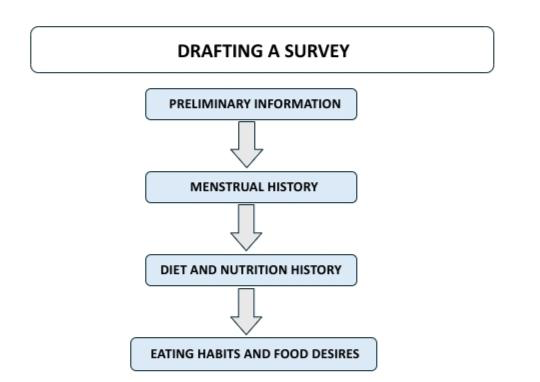
Results
Statistical analysis procedure that gains an in-depth understanding
of a huge population data by examining the sample’s information, the
responses from 133 women who are in the age range of 17-43 and live
across South India, are given below; [Parvathy, & Varsha, 2022] [6].
Relation Between Age Group and Food Habits:
[Figure 1] indicates that non-vegetarian diets are strongly
preferred, particularly among those aged 17 to 23, and that this desire
declines with age. With the largest preference among those aged 24
to 30, vegetarian diets are less popular. The least popular diets for
all age categories are eggetarian ones. This suggests a prevalent nonvegetarian
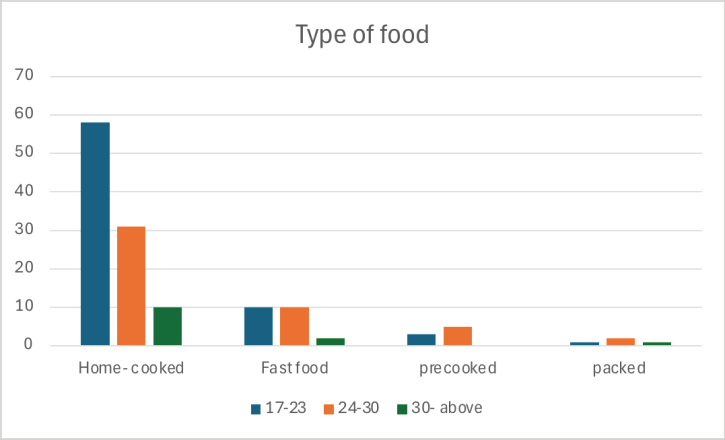
trend among younger people.[Figure 2] shows a considerable preference for home-cooked meals, especially among the 17-23 and 24-30 age groups, with the younger group having the highest preference. Fast food is somewhat popular across all age categories, but pre-cooked food has a low preference, particularly among those aged 24-30. Packed food is the least popular, with little consumption throughout all demographics. This indicates a general preference for healthier, home-prepared meals.
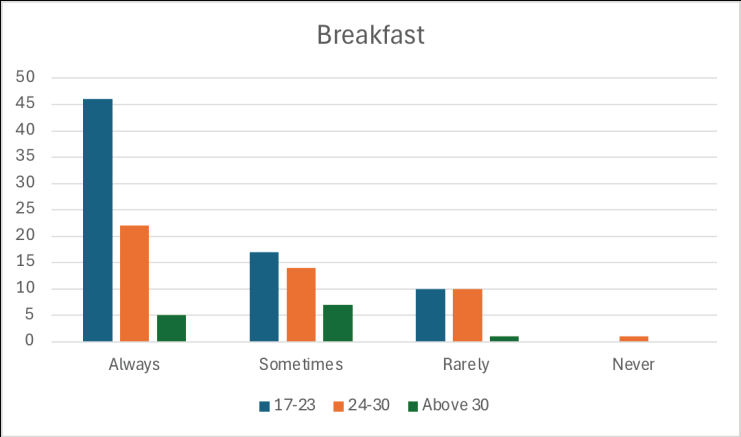
[Figure 3] depicts that Breakfast is most commonly consumed by
people aged 17 to 23, followed by those aged 24 to 30, and those aged
30 and older. Breakfast is eaten on occasion by a moderate number
of people in all age groups, with the 24-30 group leading the way.
Breakfast is rarely eaten by both the 17-23 and 24-30 age groups, with
low participation by the over-30 age group. The “never” category is
exclusively represented in the 24-30 age range. When it comes to
breakfast habits, younger people appear to be more constant than
older people.
Relation Between Age Group and Menstruation:
[Figure 4] depicts the regularity of menstrual periods in three age
groups. The 17-23 age range has the highest proportion of those with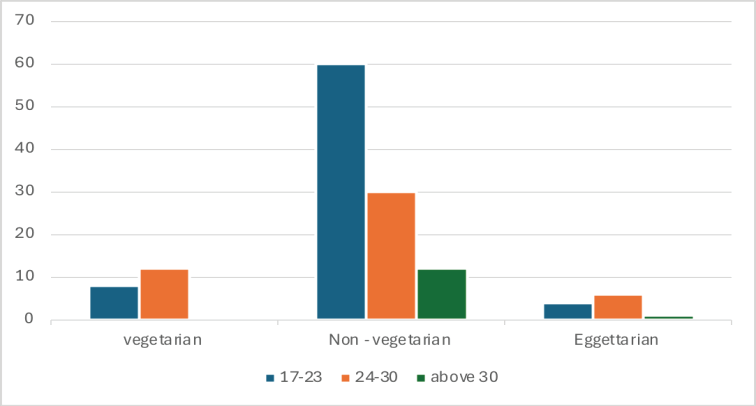
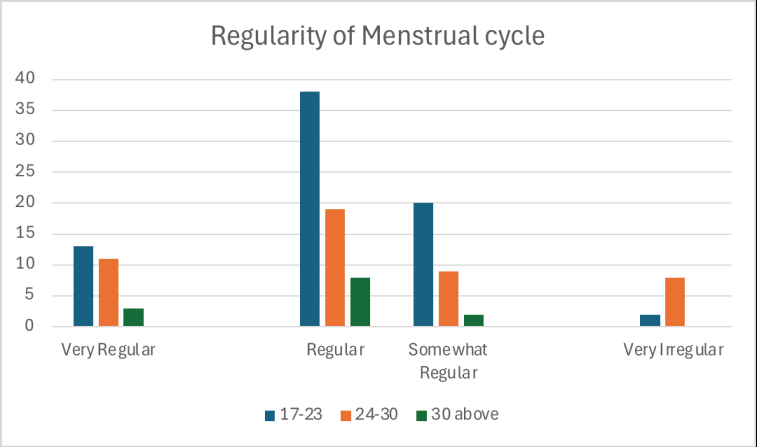
regular cycles, followed by those with moderately regular cycles. The
24-30 age group has many normal cycles, but fewer than the younger
group, and inconsistencies are slightly higher. The 30 and older group
has fewer regular cycles and a greater proportion of moderately
regular and very irregular cycles. This points to a tendency in which
menstrual cycle regularity declines with age.
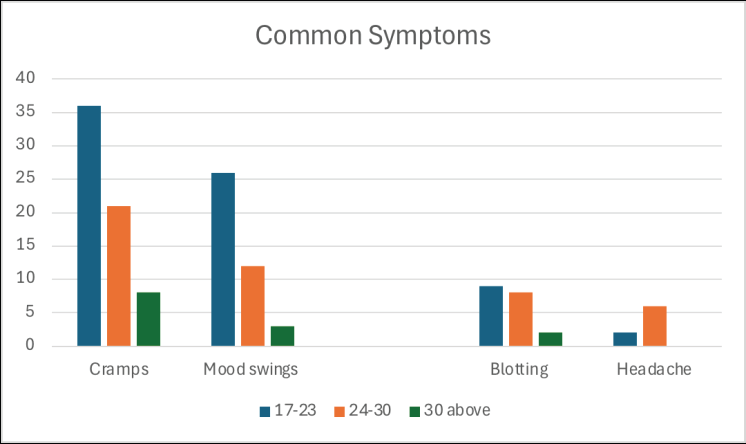
[Figure 5] depicts that the cramps are the most common symptom,
especially among the 17-23 and 24-30 age groups, with a considerable
decrease in the 30 and older group. Mood fluctuations are also typical,
peaking in the 17-23 age group and declining with age. Bloating and
headaches are less common, with comparable patterns of reduction
in older age groups. This study demonstrates that younger age groups
had more severe menstruation symptoms than older people.
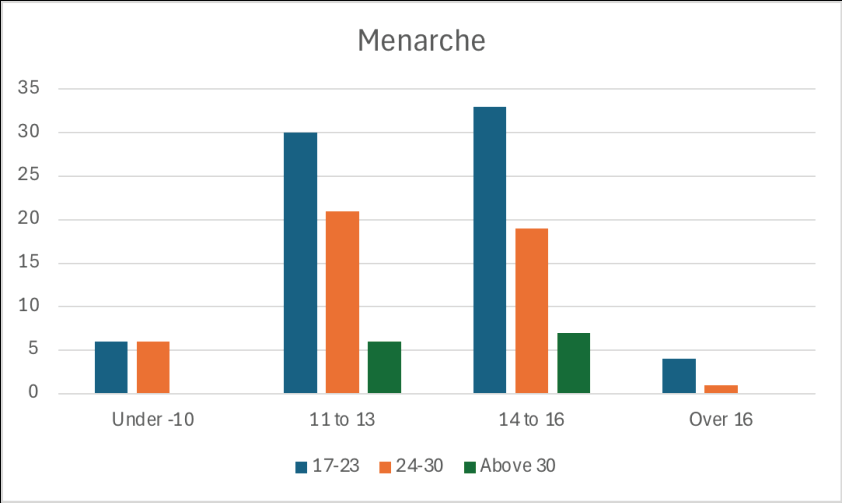
[Figure 6] depicts the most prevalent age range for menarche
among various age groups. Menarche occurred most frequently
between the ages of 11 and 13, followed by 14 and 16. Early menarche
(under 10 years) and late menarche (beyond 16 years) were less
common. The data reveal that biological trends are consistent, with
younger participants (17-23) having slightly greater proportions in
the normal age range of 11-16 years.
Relation Between Food Habits and Menstruation:
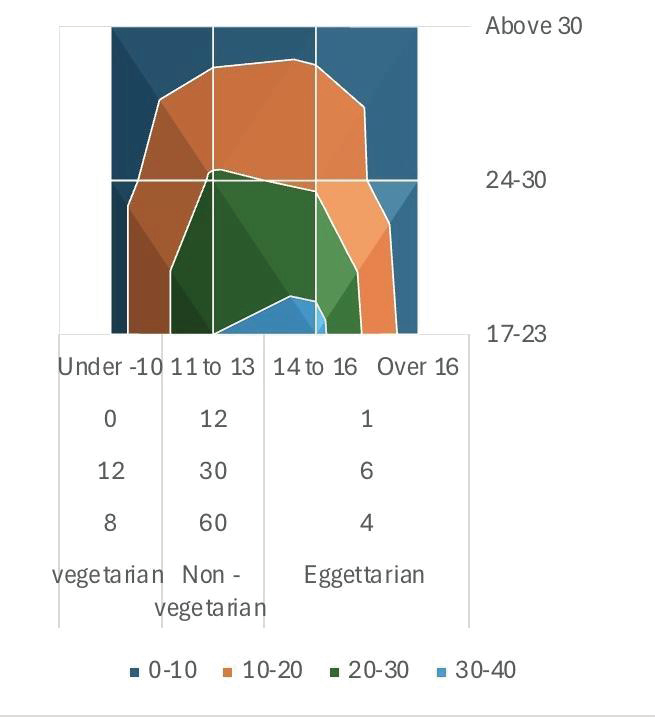
The [Figure 7] depicts the time of menarche (the commencement
of menstruation) in different age groups, as well as their dietary
preferences (vegetarian, nonvegetarian, and eggetarian). The
majority of respondents went through menarche between the ages
of 11-13 and 14-16, with fewer reporting early (under 10) or late
(over 16) menarche. Non-vegetarians make up the largest group in
all menarche age categories, particularly at common menarche ages,
followed by vegetarians and eggitarians, who are in lower numbers.
This data demonstrates a significant frequency of non-vegetarian
meals in relation to menarche timing trends.The [Figure 8] depicts dietary patterns and food preferences across age groups (17-23, 24-30, and 30+) based on the type of food consumed (home-cooked, fast food, pre-cooked, and packaged food) and its frequency. Home-cooked meals are most commonly consumed by the younger age group (17-23). Fast food is the most popular, particularly among those aged 24 to 30, and is consumed on a daily basis. Pre-cooked food is consumed moderately by all age groups, with rather consistent patterns. Packed food, on the other
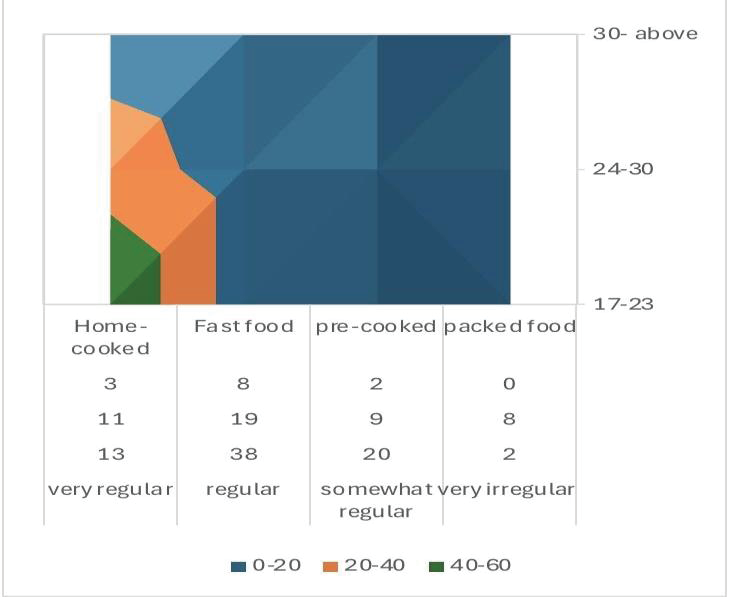
hand, is the least consumed and is mostly related with extremely
irregular eating habits. This demonstrates the impact of age and
lifestyle on food choices, with younger people preferring traditional
meals and others opting for convenience-based options.
Discussion
The analysis highlights the significant influence of dietary
practices on menstrual health. A preference for traditional, home cooked
meals among younger women (ages 17-23) was associated
with a higher prevalence of regular menstrual cycles. In contrast,
higher consumption of fast food, particularly among women aged 24-
30, was linked to irregular periods and more pronounced symptoms
such as cramps and mood swings. These findings align with previous
research demonstrating that junk foods—rich in trans fats and
processed carbohydrates—can disrupt progesterone metabolism and
overall hormonal balance.
Menstrual symptoms, including bloating, mood swings, and cramps, were most prevalent among younger participants and tended to decrease with age, possibly due to adaptive coping strategies or lifestyle adjustments in older women. Notably, the age of menarche for participants generally ranged between 11 and 13 years, indicating biological consistency across age groups.
The study also identified a strong correlation between menstrual symptoms and dietary habits. Diets high in saturated fats and low in essential micronutrients appeared to exacerbate symptoms, whereas regular consumption of fruits, vegetables, and nutrient-dense foods was associated with alleviation of menstrual discomfort. These findings underscore the importance of nutritional education and awareness, particularly for younger women, to support long-term menstrual health.
Menstrual symptoms, including bloating, mood swings, and cramps, were most prevalent among younger participants and tended to decrease with age, possibly due to adaptive coping strategies or lifestyle adjustments in older women. Notably, the age of menarche for participants generally ranged between 11 and 13 years, indicating biological consistency across age groups.
The study also identified a strong correlation between menstrual symptoms and dietary habits. Diets high in saturated fats and low in essential micronutrients appeared to exacerbate symptoms, whereas regular consumption of fruits, vegetables, and nutrient-dense foods was associated with alleviation of menstrual discomfort. These findings underscore the importance of nutritional education and awareness, particularly for younger women, to support long-term menstrual health.
Conclusion
The study demonstrates that dietary choices significantly
influence menstrual regularity, symptom severity, and overall wellbeing,
highlighting a clear connection between women’s eating habits
and menstrual health. The findings support the adoption of nutrientdense,
well-balanced diets as an effective strategy for managing
menstrual-related issues. Raising awareness about the adverse effects
of junk food and the benefits of healthier dietary practices is essential.
Future research could further investigate specific nutritional
components that affect menstrual health, enabling the development
of tailored dietary recommendations for women at different stages
of life
References
Citation
Anagha NV, Anfas EK, Ashima Sherin KP, Asiya Arva, Ashoka CH, et al. Balanced Nutrition: Women’s Guide to Hormonal Health. Indian J Nutri. 2025;12(2): 328.