


Review Article
Therapeutic Potential of Raw Onion Juice: Composition and Clinical Applications
Mansi Andhare*, Alisha Shirole and Sayali Gambhir
Department of Nutrition, Indian Institute of Cosmetology and Nutrition, Pune, Maharashtra, India
*Corresponding author:Mansi Andhare, Department, Indian Institute of Cosmetology and Nutrition, Pune, Maharashtra, India. E-Mail Id: iicannutritionhod02@gmail.com
Article Information:Submission: 02/08/2025; Accepted: 23/08/2025; Published: 28/08/2025
Copyright: © 2025 Andhare M, et al. This is an open access article distributed under the Creative Commons Attribution License, which permits unrestricted use, distribution, and reproduction in any medium, provided the original work is properly cited.
Abstract
The therapeutic value of raw onion (Allium cepa) juice has attracted increasing scientific interest due to its rich phytochemical composition and diverse biological activities. This review explores existing literature on the bioactive compounds found in raw onion juice, including flavonoids (especially quercetin),
sulfur-containing compounds (such as allicin and thiosulfinates), and antioxidants. These constituents are linked to several mechanisms that contribute to its medicinal properties, such as anti-inflammatory, antimicrobial, antihypertensive, antidiabetic, and anticancer effects. Experimental studies demonstrate
that onion juice modulates key cellular pathways, including oxidative stress reduction, inhibition of pro-inflammatory cytokines, and improvement of insulin sensitivity. Clinical investigations, though limited, suggest potential benefits in managing conditions like hypertension, dyslipidaemia, type 2 diabetes, and Antiinflammatory and Immune Effects, Anticarcinogenic Effect, NAFLD. Overall, raw onion juice presents promising but underutilized therapeutic potential. Future research should aim to bridge gaps between preclinical evidence and clinical practice, ensuring its safe and evidence-based integration into complementary and integrative health strategies.
Keywords:Raw Onion Juice; Phytochemicals; Quercetin; Antioxidant Activity; Anti-Inflammatory
Introduction
Onion (Allium cepa), a staple in culinary traditions worldwide, has
long been recognized not only for its flavor but also for its medicinal
properties in traditional systems of medicine [1,2]. Among its various
forms, raw onion juice has gained attention for its rich composition
of bioactive compounds, including flavonoids, sulfur-containing
compounds, vitamins, and antioxidants [3,4].These constituents
are believed to contribute to a wide spectrum of therapeutic effects,
ranging from cardiovascular protection and blood sugar regulation
to antimicrobial and anti-inflammatory activities. Recent scientific
investigations have started to validate many of these traditional
claims, exploring the mechanisms by which raw onion juice may
exert beneficial effects on human health [5].
Origin:
Allium species have been cultivated for over 5,000 years and are
now grown in approximately 175 countries worldwide. It is believed
that wild onion varieties originated in regions such as Iran, western
Pakistan, and Central Asia. The ancient Egyptians regarded the
concentric layers of the onion bulb as a representation of cosmic
structure and eternity. The word “onion” is derived from the Latin
term “unun”, meaning “one” [6].Importance:
It is widely integrated into various culinary traditions, particularly
within the Mediterranean diet, onion is recognized not only as a staple
food component but also as a functional ingredient with substantial
nutritional and therapeutic potential. Cultivated extensively across
the globe, it contributes significantly to both domestic consumption
and international trade. Onions are consumed in multiple forms—
raw, cooked, or processed—serving as a source of diverse bioactive
compounds. These include organosulfur compounds and flavonoids,
which are associated with a broad range of physiological benefits.
Among the most studied are its cardioprotective properties,
including hypocholesterolemic, hypolipidemic, antihypertensive,
antithrombotic, and hypoglycemic effects. Additionally, onionderived
compounds have demonstrated antiproliferative activity in
various cancer cell lines, modulatory effects on bone metabolism,
and potential antidepressant-like actions. Moreover, regular intake
has been shown to enhance gut microbiota composition, particularly
by stimulating the growth of beneficial strains such as Bifidobacteria
and Lactobacilli, thereby supporting overall gastrointestinal and
metabolic health [7]Health Benefits of Onion:
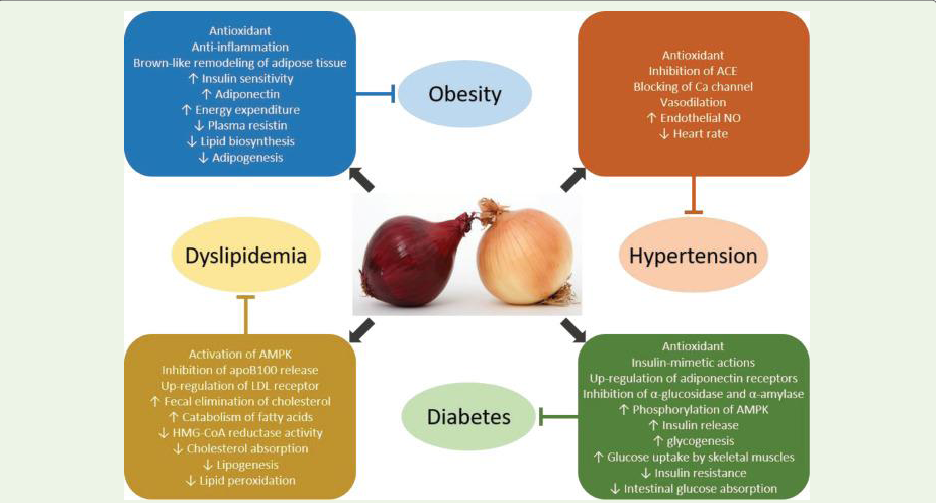
1. Diabetes: A study indicates that the administration of ripe
onion (*Allium cepa*) juice over an extended duration may
contribute to the normalization of blood glucose levels. The
findings suggest that ripe onion juice exhibits significant
antihyperglycemic activity when administered continuously
[10]2. Cardiovascular: Daily consumption of onions over a three month period has been shown to significantly reduce total cholesterol levels, body weight, waist circumference, and body mass index (BMI). Additionally, onion intake was
associated with the inhibition of platelet aggregation and
an enhancement in fibrinolytic activity. Phytochemicals
present in onions, particularly quercetin, demonstrate both
preventive and therapeutic potential in the management of
prehypertension [11].
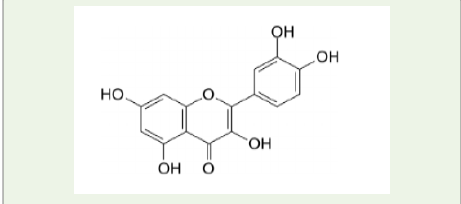
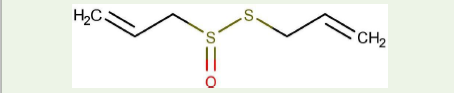
3. Anticarcinogenic Effect: Recent studies suggest that polyphenolic constituents, particularly flavonoids, may significantly contribute to the antioxidant properties of onions and participate in multiple biological pathways associated with anticarcinogenic effects. Among these, quercetin and its glycosylated derivatives present in onions are likely to exert chemoprotective actions. Additionally, organosulfur compounds such as alkyl sulfides and diallyl disulfides have demonstrated potential in inhibiting the initiation phase of carcinogenesis, primarily by modulating the activity of enzymes involved in the biotransformation of carcinogenic agents [1].
4. Non-Alcoholic Fatty Liver Disease: Arising exploration suggests that harmonious input of onion may help alleviate the onset and progression ofnon-alcoholic adipose liver complaint ( NAFLD), indeed under metabolic conditions generally associated with increased threat — similar as
3. Anticarcinogenic Effect: Recent studies suggest that polyphenolic constituents, particularly flavonoids, may significantly contribute to the antioxidant properties of onions and participate in multiple biological pathways associated with anticarcinogenic effects. Among these, quercetin and its glycosylated derivatives present in onions are likely to exert chemoprotective actions. Additionally, organosulfur compounds such as alkyl sulfides and diallyl disulfides have demonstrated potential in inhibiting the initiation phase of carcinogenesis, primarily by modulating the activity of enzymes involved in the biotransformation of carcinogenic agents [1].
4. Non-Alcoholic Fatty Liver Disease: Arising exploration suggests that harmonious input of onion may help alleviate the onset and progression ofnon-alcoholic adipose liver complaint ( NAFLD), indeed under metabolic conditions generally associated with increased threat — similar as
inordinate body weight, elevated blood lipid situations,
and consumption of calorie-rich diets high in fats and
sugars. These hepatoprotective goods are believed to be
intermediated through enhanced regulation of blood glucose
and triglyceride situations, as well as repression of hepatic
expression of excrescence necrosis factor- nascence ( TNF-
α), apro-inflammatory cytokine known to play a critical
part in dismembering insulin signaling and promoting liver
inflammation [12]
5. Anti-inflammatory and Immune Effects: Selenium, a trace
element found in relatively high concentrations in onions,
exhibits notable anti-inflammatory and immunomodulatory
properties. It plays a critical role in initiating appropriate
immune responses while preventing excessive immune
activation. Selenium deficiency in immune cells is associated
with increased oxidative stress, impaired cellular proliferation,
reduced protein synthesis, and compromised calcium
transport. These disruptions can adversely affect immune
competence. Furthermore, selenium has been implicated in
the regulation of viral infections, inflammatory disorders,
and allergic conditions. In addition, quercetin—a flavonoid
abundant in onions—has demonstrated anti-inflammatory
effects through the inhibition of pro-inflammatory mediators
such as leukotrienes, prostaglandins, and histamines. This
action contributes to its therapeutic potential in inflammatory
conditions such as osteoarthritis (OA) and rheumatoid
arthritis (RA), and also supports its role in inhibiting cancer
progression [13].
Conclusion
Thus, raw onion juice holds significant and promising, yet
largely underutilized, therapeutic potential. Its medicinal properties
are attributed to a rich profile of bioactive compounds, including
flavonoids like quercetin and various sulfuryl-containing compounds.
These constituents have been shown to exert diverse effects, such as
anti-inflammatory, antimicrobial, antihypertensive, antidiabetic, and
anticancer properties, through mechanisms like reducing oxidative
stress, inhibiting pro-inflammatory cytokines, and improving insulin
sensitivity. While preclinical and experimental studies provide strong
evidence for these benefits, clinical research remains limited Further
investigation is warranted to elucidate the mechanisms and clinical
utility of these findings, with the ultimate goal of developing safe and
evidence-based protocols for clinical implementation.
Acknowledgement
The author would like to express sincere gratitude to all those
who have contributed to the successful completion of this research
paper. We extend our heartfelt appreciation to the Head of the dept.
Dr Mansi Andhare and Faculty Sayali Gambhir for their guidance
and support, and valuable insights throughout the entire research
process.
References
Citation
Andhare M, Shirole A, Gambhir S. Therapeutic Potential of Raw Onion Juice: Composition and Clinical Applications. Indian J Nutri. 2025;12(2): 04 323.