


Review Article
Nutrition in Orthodontic Practice: An Indian Perspective
Vinay VB, Mahajan S and Shrivastav T
Orthodontics People’s College of Dental Science Bhopal, Madhya Pradesh, India
*Corresponding author:Vinay V Bedre, Orthodontics People’s College of Dental Science Bhopal, Madhya Pradesh, India, E-mail Id: vinay.bedre7022@gmail.com
Article Information: Submission: 02/06/2025; Accepted: 02/07/2025; Published: 05/07/2025
Copyright: © 2025 Vinay VB, et al. This is an open access article distributed under the Creative Commons Attribution License, which permits unrestricted use, distribution, and reproduction in any medium, provided the original work is properly cited.
Abstract
In this article, a perspective is provided on nutrition and intersection of orthodontic practice in the Indian context. The focus is on the role of nutrition in enhancing treatment outcomes and patient satisfaction for individuals receiving orthodontic care. By examining the physiological effects of nutrition on
processes such as bone remodelling and tissue repair, the specific nutritional needs of patients are outlined, with an emphasis on essential vitamins and minerals. Furthermore, by analyzing typical Indian dietary patterns, regional differences in their impact on orthodontic treatment outcomes are highlighted. Addressing the challenges of integrating nutrition into orthodontic practice, also the importance of nutrition and the socio-economic factors that affect access to nutritious foods is essential. Through this comprehensive exploration, gaps in current research are identified, and future directions for enhancing orthodontic practice in India, including policy changes and interdisciplinary collaboration, are proposed.
Keywords:Nutrition; Orthodontic Treatment; Dietary Approaches; Patient Education; India
Introduction
In recent years, the intersection of nutrition and orthodontic
treatment has received considerable attention, emphasizing the
important role, dietary habits play in orthodontic care. In the Indian
context, unique patterns, cultural variations, and an abundance of
food choices exist. The integration of nutritional care into orthodontic
practice in India poses specific challenges that require careful and
strategic implementation. By understanding the role of nutrition
in orthodontic care, treatment outcomes can be improved while
safeguarding patient satisfaction, ultimately leading to more effective
orthodontic interventions in India.
Nutrition is a fundamental component of overall health and wellbeing,
playing a vital role in the body’s physiological processes. In
orthodontic treatment, nutrition is particularly important because it
affects bone remodelling, tissue health, and oral health. The process
of orthodontic treatment involves applying force to the teeth, which
causes bone remodelling. Osteoblastic and osteoclastic activity is
heightened during this process. Adequate nutrition, rich in essential
vitamins and minerals, supports these processes by promoting
healthy bone metabolism [1].
In the Indian context, nutritional considerations in orthodontic
treatment are important due to the diverse dietary patterns across the
country. The traditional Indian diet, is often high in carbohydrates and
spices, may affect the success of oral health interventions. It is crucial
for orthodontists in India to tailor their nutritional recommendations
accordingly [2]. Furthermore, the prevalence of dental problems such
as caries and periodontal disease, which may be exacerbated by poor
nutrition, is highlighted [3].
Integrating nutritional care into orthodontic practice in India
poses numerous challenges. One of the primary barriers is the lack
of awareness among patients about the impact of diet on orthodontic
outcomes. Educational initiatives are needed to inform patients about
the importance of maintaining a balanced diet during treatment [4].
Furthermore, socio-economic factors such as limited availability of
nutritious food and financial constraints can hinder patients’ ability
to adhere to dietary recommendations. Orthodontists face the
challenge of providing culturally sensitive and economically viable
nutritional guidance [5].
The diversity of dietary patterns across different regions of India
is another consideration. With diverse culinary traditions and food
preferences, orthodontists need to adopt a flexible approach to
nutritional management. Understanding the nutritional components
of traditional Indian foods and their potential benefits or challenges
is crucial for designing effective dietary plans that align with cultural
practices [6]. Collaboration with nutritionists and other healthcare
professionals can enhance orthodontic treatment outcomes and
facilitate the development of personalized nutritional strategies [7].
Orthodontic care providers in India urgently need to improve
treatment outcomes and patient satisfaction. By recognizing the role
of nutrition in supporting bone remodeling and tissue repair, they
can optimize treatment plans to achieve better results. Furthermore,
orthodontists will be able to provide culturally appropriate care while
addressing the unique challenges and considerations associated with
dietary patterns in India.
An orthodontic literature review will be conducted with the following objectives::
To examine the physiological processes involved in orthodontic
treatment and the role of nutrition in this process.To analyse and recommend nutritional needs of patient, undergoing orthodontic treatment.
To explore the impact of common Indian dietary patterns on orthodontic outcomes and the challenges associated with integrating nutritional care in India.
Identify barriers to effective nutritional management, including patient education, socio-economic considerations, and collaboration with nutritionists.
By achieving these objectives, the literature review aims to highlight the role of nutrition in orthodontic care and provide practical insights to enhance treatment outcomes in the Indian context.
The Role of Nutrition in Orthodontic Treatment:
Orthodontic treatment is a carefully conducted procedure
in which teeth are moved within the jawbone to new positions,
improving oral health. This process is influenced by many factors,
one of the most important being nutrition. Nutrition affects the
physiological processes involved in orthodontic treatment, such as
bone remodeling, which is crucial for treatment success [8]. This
section explores how nutrition influences these processes, the specific
needs of patients undergoing orthodontic treatment, and the effects
of poor nutrition on oral health.resorption and formation, allowing teeth to move within the jawbone. Essential nutrients such as calcium and vitamin D are critical in this process, as they directly influence bone metabolism.
Nutrition and Physiological Processes in Orthodontics:
Nutrition plays a key role in the physiological processes that
support orthodontic treatment. Bone remodeling—the process by
which bones adjust and change shape in response to forces applied
by orthodontic appliances—depends on adequate nutrition. Proper
nutrition ensures the body has the necessary building blocks to
facilitate these changes [2] When orthodontic appliances exert
pressure on teeth, they create a controlled environment for bone[9] emphasize that inadequate calcium intake compromises bone
density and strength, which are vital during orthodontic adjustments.
Conversely, vitamin D enhances bone mineralization, making
remodelling more efficient. Phosphorus, another essential mineral,
also contributes to bone and tooth structure.
Protein is another crucial nutrient, necessary for tissue repair and growth. Orthodontic treatment can cause minor trauma to oral tissues, leading to inflammation. Protein aids in collagen formation, a major component of oral connective tissue, helping tissues adapt to orthodontic forces [1].
Protein is another crucial nutrient, necessary for tissue repair and growth. Orthodontic treatment can cause minor trauma to oral tissues, leading to inflammation. Protein aids in collagen formation, a major component of oral connective tissue, helping tissues adapt to orthodontic forces [1].
Specific Nutritional Needs of Orthodontic Patients:
Patients undergoing orthodontic treatment have unique
nutritional requirements that must be met for optimal outcomes. As
mentioned earlier, vitamins and minerals play a vital role in bone and
tissue health. Incorporating these nutrients into a patient’s diet can
enhance treatment efficacy and accelerate recovery.Vitamin C is essential for collagen synthesis, which supports gum health and oral tissue repair. Deficiency can weaken gums and delay healing, increasing complication risks [10]. Additionally, vitamin C acts as an antioxidant, protecting cells from damage.
- Iron facilitates oxygen transport in the blood, critical for cellular metabolism. Iron deficiency can cause fatigue and impair tissue repair, prolonging recovery [7].
- Zinc supports immune function, protein synthesis, and cell division. Its role in tissue regeneration is particularly important for orthodontic patients [11].
Consequences of Poor Nutrition on Oral Health:
Malnutrition has severe implications for oral health, especially
in orthodontic patients. Inadequate intake of essential nutrients
increases the risk of dental caries and periodontal disease, which can
hinder treatment progress [11].Dental Caries: Patients with braces face higher caries risk due to challenges in maintaining oral hygiene. Diets high in sugar and carbohydrates exacerbate this problem by promoting acid production, which erodes enamel [12].
- Periodontal Disease: Poor nutrition weakens gingival and periodontal structures, compromising tooth stability post-treatment. Deficiencies in vitamins and minerals also reduce immunity, increasing susceptibility to infections [13].
Moreover, malnutrition is linked to systemic health issues that indirectly affect oral health. A weakened immune system slows healing, prolonging treatment duration and raising complication risks.
Indian Dietary Patterns and Their Impact on Orthodontic Care:
Orthodontic care requires not only mechanical adjustments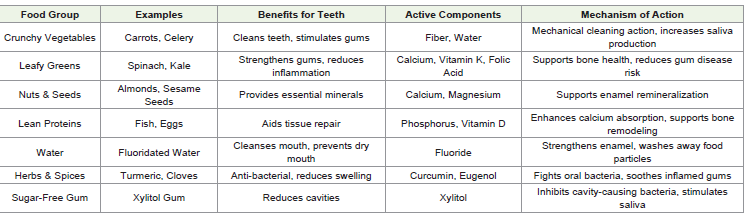
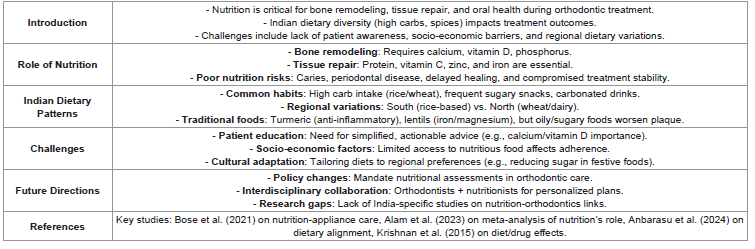
but also an understanding of patients’ dietary habits. In India,
diverse dietary patterns significantly influence treatment efficacy.
This section examines common Indian dietary habits, cultural and
regional variations, and the role of traditional foods in nutritional
management.
Common Dietary Habits in India:
India’s cuisine varies widely, but certain trends impact
orthodontic care:- High Carbohydrate Intake: Staples like roti and rice contribute to plaque accumulation, increasing caries risk [14].
- Frequent Snacking: Sugary and fried snacks exacerbate dental problems, particularly for patients with braces [15].
- Sugary Beverages: Soft drinks and juices erode enamel, complicating orthodontic adjustments [16].
Regional and Cultural Variations:
- South India: Rice-based diets with legumes offer nutritional
benefits but are high in starch [17].- North India: Wheat and dairy products provide calcium but often include fatty, sugary foods [18].
- Festive Practices: Religious festivals increase consumption of sweets, requiring dietary modifications during treatment [19].
Traditional Foods: Benefits and Challenges:
- Benefits: Spices like turmeric have anti-inflammatory properties,
aiding oral health [20]. Lentils and pulses supply iron and magnesium,
supporting bone health [21].- Challenges: Oily and sugary foods (e.g., desserts) promote plaque and caries [22].
Strategies for Culturally Adapted Care:
Orthodontists should:
- Educate patients on reducing sugar and oil intake.
- Promote nutrient-rich traditional foods [23].
- Collaborate with nutritionists for personalized plans [24].Challenges and Considerations in Nutrition Management Patient Education:
- Misconceptions about nutrition are common. Simplified,
actionable advice improves adherence[1].- Counseling should emphasize calcium, vitamin D, and iron[3].
Socio-Economic Barriers:
- Income disparities limit access to nutritious foods [9].Policy interventions (e.g., subsidized nutrition programs) can help [25].
Interdisciplinary Collaboration:
- Nutritionists can tailor culturally appropriate diets [26].- Schools and community programs should integrate oral health education [27].
Future Perspectives and Research Gaps:
Current Status in India
- Nutritional education in dental curricula is growing but
inconsistently applied [2].- Awareness of nutrition’s role in appliance durability is rising [1].
Research Gaps
- Few studies link nutrition directly to orthodontic outcomes in India [8].
- Socio-cultural dietary influences remain understudied [28]. Future Directions
- Policy Changes: Mandate nutritional assessments in orthodontic care [29].
- Interdisciplinary Teams: Orthodontists, nutritionists, and hygienists should collaborate [30].
- Community Programs: Public health initiatives to improve dietary habits [31-37].
Conclusion
Nutrition plays a crucial role in orthodontic treatment,
especially in the Indian context, where cultural and ritual influences
shape dietary patterns. Nutritional planning and interdisciplinary
collaboration are essential in orthodontic practice. Understanding
the impact of nutrition on bone remodeling, tissue repair, and overall
oral health can enhance orthodontic treatment outcomes and patient
satisfaction. Through a comprehensive literature review, this paper
attempts to provide practical insights into the role of nutrition in
orthodontic care and to improve orthodontic treatment outcomes in
India.
Nutrition is indispensable to orthodontic success in India, where cultural dietary practices pose unique challenges. By integrating nutritional counseling, addressing socio-economic barriers, and fostering interdisciplinary collaboration, orthodontists can enhance treatment outcomes. Future research should focus on India-specific dietary impacts, paving the way for evidence-based guidelines.
Nutrition is indispensable to orthodontic success in India, where cultural dietary practices pose unique challenges. By integrating nutritional counseling, addressing socio-economic barriers, and fostering interdisciplinary collaboration, orthodontists can enhance treatment outcomes. Future research should focus on India-specific dietary impacts, paving the way for evidence-based guidelines.
Key Takeaways:
Nutritional Needs: Calcium, vitamin D, protein, and
micronutrients are vital for bone/tissue health.Indian Context: Regional diets require tailored advice (e.g., reducing sugars/oils, leveraging anti-inflammatory spices).
Barriers: Socio-economic disparities and cultural habits hinder optimal nutrition.
Solutions: Education, policy reforms, and collaboration with nutritionists.
References
Citation
Vinay VB, Mahajan S, Shrivastav T. Nutrition in Orthodontic Practice: An Indian Perspective. Indian J Nutri. 2025;12(2): 317.