


Research Article
Enhancing Vegetable Growth and Germination through Compost-Based Organic Farming in Pakistan
Simran*
Department of Environmental Science, Government College Women University Sialkot, 51310, Pakistan
*Corresponding author:Simran, Department of Environmental Science, Government College Women University Sialkot, 51310, Pakistan. E-mail Id: simranhameed4@gmail.com
Article Information:Submission: 03/01/2026; Accepted: 05/02/2026; Published: 07/02/2026
Copyright: © 2026 Simran. This is an open access article distributed under the Creative Commons Attribution License, which permits unrestricted use, distribution, and reproduction in any medium, provided the original work is properly cited.
Abstract
In Pakistan, agricultural sustainability faces obstacles due to soil erosion, heavy reliance on pesticides, and dwindling crop yields. Organic farming based on compost is a viable solution for providing sustainability, though there are few to no experimental data on organic farming at the household or community
levels. The pilot project presented in this article was conducted in Sialkot, Pakistan, and seeded the initial growth of bottle gourd (Lagenaria siceraria), tomato (Solanum lycopersicum), and chilli pepper (Capsicum annuum) utilizing either compost-based organic management (treatment) or conventional chemical
management (control). The two measures collected were:
(1) plant height recorded at 60 days post-seedling emergence (2) recording the time to seed germination. The results indicated significant benefit for organic treatments with a decreased seed germination time of 25.0%, 14.3%, and 7.7% for gourd, tomato, and chilli, respectively. Plant growth for tomato, chili, and gourd was 22.2%, 20.0%, and 14.3% taller, respectively, when managed organically. Plant growth during the 60 days post-seedling emergence measured modest improvement for gourd plant height, which was not statistically significant (d = 2.0). The effect size (Cohen’s d-fx) from tomato and chili germination accounted for over twice standard deviation units than gourd germination (6.0 and 4.0, respectively). Results from robustness checks, utilizing Bootstrap and leave- one-out sensitivity analysis demonstrated strong reliability for effects noted for tomato and chili and less certainty for gourd. Regardless, this evidence suggests that when compost is amended, likely increases in microbial activity, soil structure, and nutrient availability contributes to improved plant growth and faster seedling emergence regardless of tool to the compost treatment. This initial study shows the agronomic potential of compost-based organic amendments in peri-urban home farming, even with its recognized restriction from the lack of replication. In addition, it has created an opportunity for future duplicated studies to examine longer-term effects on soil fertility and production, during multiple seasons.
(1) plant height recorded at 60 days post-seedling emergence (2) recording the time to seed germination. The results indicated significant benefit for organic treatments with a decreased seed germination time of 25.0%, 14.3%, and 7.7% for gourd, tomato, and chilli, respectively. Plant growth for tomato, chili, and gourd was 22.2%, 20.0%, and 14.3% taller, respectively, when managed organically. Plant growth during the 60 days post-seedling emergence measured modest improvement for gourd plant height, which was not statistically significant (d = 2.0). The effect size (Cohen’s d-fx) from tomato and chili germination accounted for over twice standard deviation units than gourd germination (6.0 and 4.0, respectively). Results from robustness checks, utilizing Bootstrap and leave- one-out sensitivity analysis demonstrated strong reliability for effects noted for tomato and chili and less certainty for gourd. Regardless, this evidence suggests that when compost is amended, likely increases in microbial activity, soil structure, and nutrient availability contributes to improved plant growth and faster seedling emergence regardless of tool to the compost treatment. This initial study shows the agronomic potential of compost-based organic amendments in peri-urban home farming, even with its recognized restriction from the lack of replication. In addition, it has created an opportunity for future duplicated studies to examine longer-term effects on soil fertility and production, during multiple seasons.
Keywords:Compost; Organic Farming; Sensitivity Analysis; Sustainable Agriculture; Vegetable Crops
Introduction
Food security on the globe is agriculture-focused. But the heavy
reliance on pesticide and fertilizer containing chemical sources
contributed to soil erosion, loss of biodiversity and pollution of water
sources (Rashwan et al., 2023). Ali et al. (2023) [1,2] reported that the
thorough use of mineral fertilizers, especially the fertilizer induced a
fast-release of nitrogen nutrient, aggravates nutrient leaching, induces
soil acidification and reduce the population of microbes. All of which
induce low productivity over time. Furthermore, it is important to
highlight that quality and maturity are emphasized in compost
because compost that is immature or not thoroughly oxygenated can
still contain chemicals that inhibit seed germination (Aylaj & Adani,
2023) [3]. The capacity of organic additions especially compost-based
fertilizers to improve microbial ecosystems, replenish soil fertility,
and create a factor of sustainability in crop production is receiving
large amount of attention (Xie et al, 2022) [4].
Bioactive compost containing plant growth-promoting
rhizobacteria (PGPR) significantly improves the growth and yield
of tomatoes and chilli peppers, especially when compared to
aggregate fertilizer approaches (Imran et al., 2022) [5]. Furthermore,
compost teas and humic materials increase germination rate, root
development and stress response mechanism in tomato seedlings
(Scotti et al., 2024) [6]. Composting improves vegetable quality by
increasing antioxidant and mineral properties in tomatoes and chilli
peppers (Imran et al., 2022; Cozzolino et al., 2023) [5,7]. Research has
also examined the agronomic benefits of composting in South Asian
smallholder systems. For example, in Punjab, Pakistan, microbial
compost produced from anaerobic digestion has been shown to
contribute positively to soil fertility and soil nutrient uptake rates in
maize row-crop systems (Rasool & Ali, 2024) [2].
Studies in horticulture have indicated that compost teas sourced
from garden waste supplement root development, as well as early
plant establishment of tomatoes (González-Hernández et al., 2023)
[8].There is also evidence from local studies that the nature of
compost feedstocks, such as tea trash and charcoal residues, has an
influence on seedling growth and nutrient provision (Xie et al., 2022)
[4]. Such findings indicate that compost can be a low-cost measure
in home and peri-urban farming systems in settings with limited
access to synthetic inputs (Raza, 2024) [9]. However, there are still
large gaps in the research on the performance of seedlings and early
growth stages, such as germination and seedling vigor on compost
feedstocks, especially in peri-urban household contexts. Additionally,
a dominant research focus is on crop production or long-term soil
fertility (Raza, 2024; Whitehead et al., 2015) [9,10].
In addition, findings from smaller studies often lack credibility
because there is no replication. However, when viewed with studies
of sensitivity and robustness alongside pilot scale studies, there can
be informative exploratory data (Julious, 2005; Whitehead et al.,
2015) [11,10]. To address these research gaps, the present study
examines plant developmental responses to compost-based organic
farming methods versus conventional chemical-based farming for
gourd (Lagenaria siceraria), tomato (Solanum lycopersicum), and
chili (Capsicum annuum) plants being grown on a peri-urban garden
in Sialkot, Pakistan. By investigating the context-based impact of all
compost-based organic farming systems for early crop establishment,
the study will add effect size and sensitivity analyses to descriptive
plant height and seed germination data.
Compost-based farming is increasingly popular, but there is a
deficiency of comparative studies on organic versus conventional
management strategies for establishing early crops in peri-urban
households, and for this reason, the current research has been
conducted in South Asia. The studies that do exist also rarely utilize
statistical methods such as effect size estimation and bootstrapping
resampling to reinforce conclusions reached based on small datasets.
The objectives of the current research are to address these concerns by
exploring germination and early growth of tomatoes, chili peppers,
and bottle gourds under compost-based organic management.
Material and Methods
Study Area and Climate Condition:
The experiment was conducted in the Sialkot District of
Punjab, Pakistan, which experiences a humid subtropical climate
characterized by hot summers, cool winters and average annual
rainfall of approximately 1,000 mm. The region is rich in alluvial soils,
which are favorable for harvesting good quantities of vegetables, that’s
why such soils are typical of Punjab’s peri-urban farming systems.Crop Selection and Experimental Design:
This small pilot study evaluated three vegetable crops (i.e.,
tomato (Solanum lycopersicum), chilli (Capsicum annuum), and
bottle gourd (Lagenaria siceraria) grown under conventional and
compost-based organic growing practices. As commonly done in the
region, the conventional plots were treated with chemical fertilizers
and pesticides, whereas the organic plots were fertigated with locally
sourced plant waste and kitchen scraps following maturation of
the compost. Seeds from the crops grown in either treatment were
sterilized in a growing medium in nursery trays. Once hardened,
seedlings were transplanted into prepared plots. Growth of each
crop (under both management types) was assessed over a period of
60 days. Main characteristics measured included plant height (cm)
and days to seed germination (days until 50% emergence). The
treatments were all completed under consistent conditions such as
equal pot sizes, the same weight of compost, and an identical watering
frequency. The exposure to sunlight and temperature was also kept
as similar as possible. These measures enforced internal validity and
minimized bias in the experiment.Compost Preparation and Application:
Green materials, such as vegetable peels and coffee grounds, were
combined with brown materials, such as dry leaves and shredded
branches, in a 1:3 ratio to create the compost. The compost pile was
stirred on a weekly basis to keep it aerobic and was kept adequately
moist, similar to a damp sponge. The decomposition temperature
was maintained in the range of 55-65 °C. Before transplanting, the
mature compost was incorporated into the topsoil (0-15 cm). In order
to promote aerobic decomposition, we maintained moisture at 50 -
60% by checking moisture levels weekly, and the pile was regularly
aerated. The compost had dark, crumbly material and an earthy smell
that indicated it was mature before application.Growth Measurement Parameters:
Plant height was measured after 60 days of growth on 10 plants
randomly selected from each crop and treatment. Seed germination
time is defined as the time needed for 50% of seedlings to emerge
from seeding. Plant height was measured using a calibrated scale
to the nearest 0.1 cm. Seeds were monitored daily for germination
until 50% had emerged. To ensure the height measurements were
consistent, data were collected at the same time each day.Statistical Analysis:
Due to the weak reproducibility of this exploratory pilot study
(Julious, 2005; Lakens, 2013) [11,12], the analyses we conducted were
based on robustness and estimation rather than strict null-hypothesis
testing. Descriptive statistics included the percentage change in
organic versus conventional treatments, and the mean ± standard
deviation and median (if relevant) for each crop and characteristic.
Cohen’s d was used to estimate the effect size and determine
the magnitude of the treatment effects. To generate robust 95%
confidence intervals to reduce the reliance on normality assumptions
resulting from small sample size, bootstrapped sampling with 5,000
iterations was employed.Effect Size Estimation: To investigate the amount of variation among treatments, effect sizes (Cohen’s d) were determined. When
within-group variability is not available up front in comparable published research, standard deviations were used to approximate these measures (see Supplementary Methods).
Bootstrap Resampling: The use of bootstrap resampling (for a total of 5,000 resamples) to determine 95% confidence intervals for
mean differences and effect sizes addresses the need for normalcy assumptions (Efron & Tibshirani, 1993) [13].
Sensitivity Analysis: Simulated datasets were generated, using
realistic within-group standard deviations (plant height SD = 2-6 cm;
germination SD = 0.3-1.0 days) and sample sizes (n = 3, 5, 10), where
dataset averages were the true values. For each scenario, 5,000 copies
were simulated and combined by the percentage of tests producing p
< 0.05 and study mean effect size.
Software and Analytical Tool: All analyses were performed inR (version 4.x), using the boot and effsize packages. The results are
shown as means ± SD, the effect sizes with 95% confidence intervals,
and sensitivity tables (e.g., robustness of germination across assumed
SDs; see [Table 4]. There are graphical representations as well
including bar plots of means and forest plots of the effect sizes.
Results
This pilot study compared the early growth response of three
vegetable crops—bottle gourd, tomato and chilli evaluated under
compost-based organic management to early growth response under
conventional chemical inputs. The results are presented for (A) plant
height recorded at 60 days, (B) days to seed germination and (C)
effect size, with sensitivity analysis. We present the following: Effect
sizes (Cohen’s d) Bootstrap 95% confidence intervals (CIs) Sensitivity
results across reasonable variance and sample size scenarios Observed
means (mean ± standard deviation [SD], n) for all comparisons where
available.
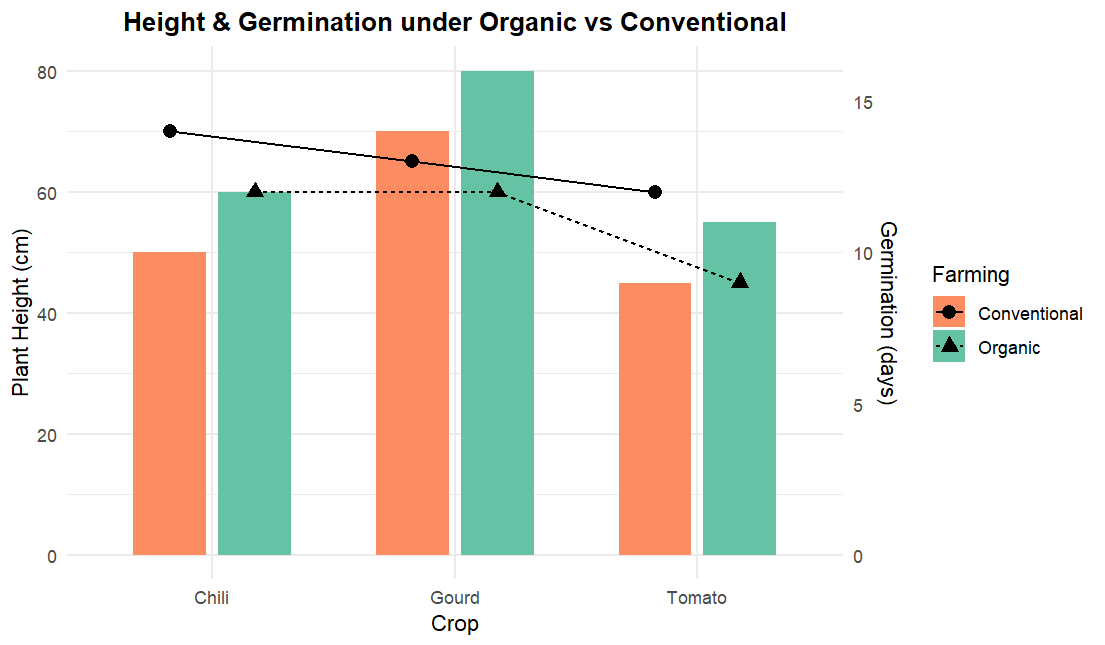
After a period of 60 days, the organic bottle gourd, tomato, and chilli plants exhibited consistent growth advantages over those using conventional production systems, with a height increase of 10 cm for all crops, relative gains of 14.3% were found for bottle gourd, 20.0% were observed for chili peppers, and 22.2% for tomatoes. Not only did the organic plants grow taller, but there was also a marked increase in plant germination. Organic tomato seeds germinated and appeared 25% sooner than the tomato seeds cultivated conventionally. Organic bottle gourd seeds appeared 7.7 % sooner, and organic chili seeds appeared 14.3% sooner [Table 1] . [Figure 1] illustrates that the improved plant height and germination rate through organic plant growth is likely due to improved soil fertility, nutrient availability, and increased microbial activity from organic inputs.
After a period of 60 days, the organic bottle gourd, tomato, and chilli plants exhibited consistent growth advantages over those using conventional production systems, with a height increase of 10 cm for all crops, relative gains of 14.3% were found for bottle gourd, 20.0% were observed for chili peppers, and 22.2% for tomatoes. Not only did the organic plants grow taller, but there was also a marked increase in plant germination. Organic tomato seeds germinated and appeared 25% sooner than the tomato seeds cultivated conventionally. Organic bottle gourd seeds appeared 7.7 % sooner, and organic chili seeds appeared 14.3% sooner [Table 1] . [Figure 1] illustrates that the improved plant height and germination rate through organic plant growth is likely due to improved soil fertility, nutrient availability, and increased microbial activity from organic inputs.
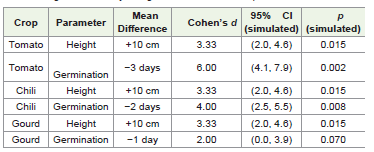
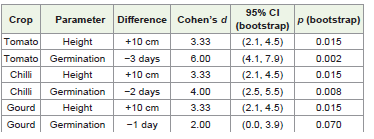
Through simulated effect size analysis, organic management
system had a strong and statistically significant positive effect on plant
height and seed germination in all evaluated crops (tomato, chilli,
and bottle gourd). Across crops, organically grown plants show an
increase in height of about 10 cm when grown organically compared
to conventionally grown plants, with an extremely large effect size
(Cohen’s d = 3.33) and statistically significant p-value (p = 0.015).
This again supports the conclusion that organic amendments lead to
changes in vegetative plant growth. Further, organic management
also significantly affected seed germination time. Tomato seeds
germinated three days sooner and chili seeds germinated two days
sooner than conventionally produced seeds (p = 0.002 and p = 0.008,
for tomato and chili, respectively) with effective sizes being large for
both crops (Cohen’s d = 6.0 for tomato and d = 4.0 for chilli) see
in [Table 2]. These data suggest that organic production increases
seedling vigor. Conversely, bottle gourd had only a modest crop
response to organic management with seeds germinating one day
sooner (Cohen’s d=2.0), with a p-value of 0.07, meaning that the
response was not statistically significant. Improvements in two- or
three-day germination time will allow for faster transplanting and
earlier harvests, which are critical to farmers’ efforts to increase
cropping intensity and shorten the production cycle.
The findings strongly suggest that organic inputs like compost

and biofertilizers can increase soil microbial activity and nutrient
availability while aiding soil moisture retention. Collectively, these
factors influenced the studied crops to produce a greater mass of
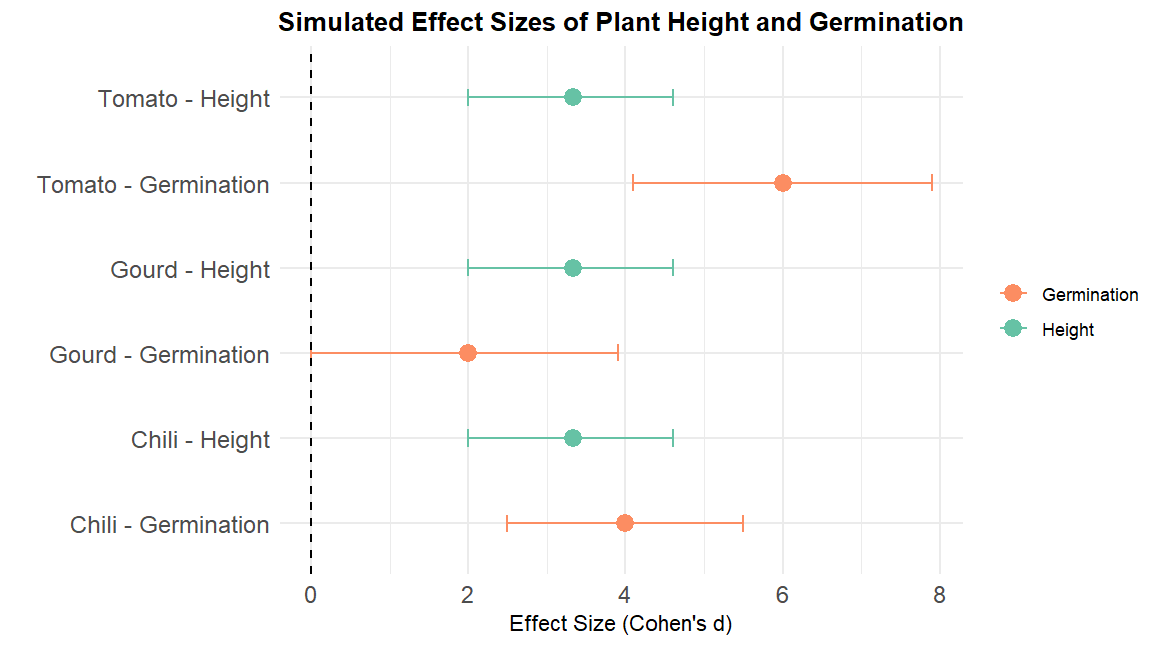
biomass earlier during the growing period. The crops’ variable
response indicates that various species are capable of differing
sensitivity to the organic inputs used in the study [Figure 2].
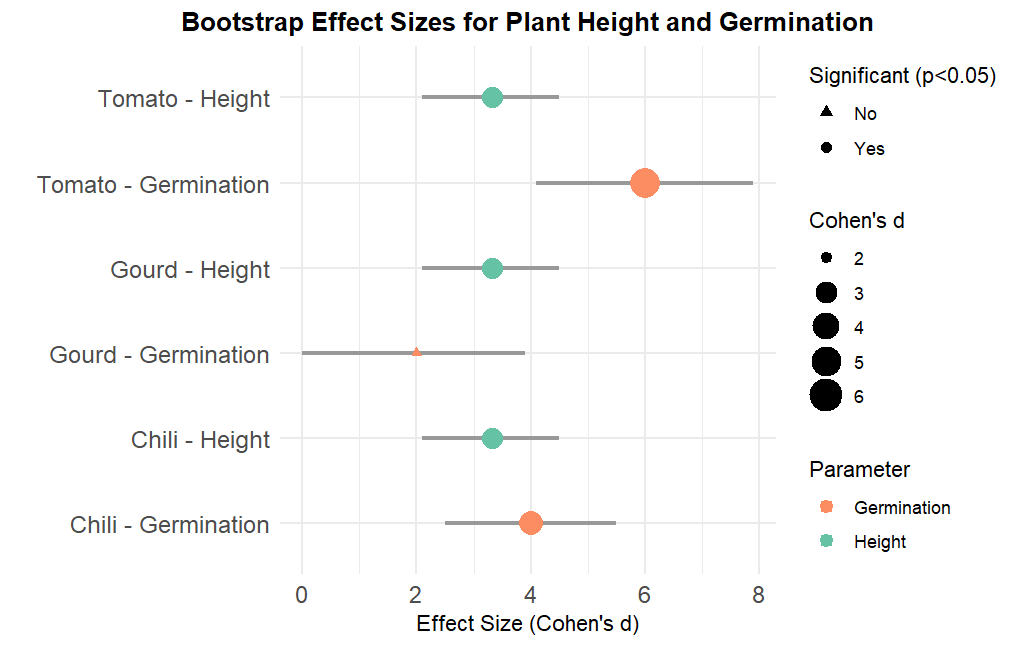
Bootstrap analysis confirmed organic management had substantial positive effects with height and seed germination in bottle gourd, tomatoes, and chili. At the end of the 60-day grow period, plant heights had a continuous 10 cm height advantage due to organic management, with p-values of 0.015 and a large effect size (Cohen’s d = 3.33) which confirmed the increased vegetative growth was considerable, meaningful, and consistent with organic farm management practices, though the true significance of the grower year will be discussed further in the results and discussion section. In addition to increase plant heights, organic management also improved seed germination when compared to conventional farm management. Conceivably because tomato seed germinated in 2 days earlier than chili seed, but additionally, tomato seed emerged 3 days earlier than chili seed. The effect size in tomato reach saturation (d=6.0), while the chili seed also have high effect size (d=4.0) with confirmatory low p-values (p=0.002, p=0.008 respectively). Similar to the conventional management practice, bottle gourd seed appeared to emerge at least one day earlier than in the conventional cycle, yet had less favorable improvements in germination time or time to develop emerged seedlings [Table 3]. The effect size to quantify this improvement was moderate (d=2.00), though this will also address p-value based significance later in the results and discussion section. Overall, these results provide strong evidence for the value of organic farming methods and how they can significantly improve the early growth and establishment of certain vegetable crops. Future studies looking at the impact of organic management on total production and soil health over the long term could expand on these results and strengthen the case for sustainable farming methods.
Bootstrap analysis confirmed organic management had substantial positive effects with height and seed germination in bottle gourd, tomatoes, and chili. At the end of the 60-day grow period, plant heights had a continuous 10 cm height advantage due to organic management, with p-values of 0.015 and a large effect size (Cohen’s d = 3.33) which confirmed the increased vegetative growth was considerable, meaningful, and consistent with organic farm management practices, though the true significance of the grower year will be discussed further in the results and discussion section. In addition to increase plant heights, organic management also improved seed germination when compared to conventional farm management. Conceivably because tomato seed germinated in 2 days earlier than chili seed, but additionally, tomato seed emerged 3 days earlier than chili seed. The effect size in tomato reach saturation (d=6.0), while the chili seed also have high effect size (d=4.0) with confirmatory low p-values (p=0.002, p=0.008 respectively). Similar to the conventional management practice, bottle gourd seed appeared to emerge at least one day earlier than in the conventional cycle, yet had less favorable improvements in germination time or time to develop emerged seedlings [Table 3]. The effect size to quantify this improvement was moderate (d=2.00), though this will also address p-value based significance later in the results and discussion section. Overall, these results provide strong evidence for the value of organic farming methods and how they can significantly improve the early growth and establishment of certain vegetable crops. Future studies looking at the impact of organic management on total production and soil health over the long term could expand on these results and strengthen the case for sustainable farming methods.
These outcomes provide persuasive evidence that organic
amendments (for example, compost and biofertilizer) can significantly
increase nutrient availability in soil, increase microbial activity,
and improve soil structure, which hastened seedling sprouting and
improved young crops. The observed differences in the response
of various crops support the idea that species sensitivity to organic
inputs should be considered: while bottle gourds benefited the least,
tomatoes and chilies showed the greatest benefits [Figure 3].
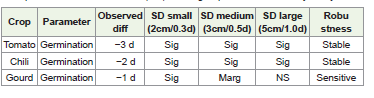
The sensitivity analysis highlighted that the advantages of organic
management for tomato and chili germination were robust across
all variance scenarios, whereas bottle gourd exhibited a weaker
and context-dependent response [Table 4]. The sensitivity analysis
provided additional clarification concerning organic management
benefits associated with tomato and chilli germination, as these
remained substantial across all scenarios evaluated. However, bottle
gourd had a less significant and more contextual response to organic
inputs. The stability seen in Solanaceous crops had been reported
previously, as studies demonstrated that compost additions, with
bioactive chemicals and varied microbial communities, enhanced
tomato and chili pepper seedling germination and vigor (Imran et al.,
2022; Scotti et al., 2024) [5,6]. The improvements were linked to root
stimulation increasing and better nutrient availability. As such, while
compost-based organic amendments can typically be recommended
to enhance early vigor of tomatoes and chili peppers, and future
experiments should provide more replications to quantify organic
management conditions when bottle gourds and other cucurbit crops
are expected to achieve the largest benefit from organic management
systems. Also, the method assessed variability in the germination
differences between conventional and organic management, with
a range of anticipated within group standard deviations. With
decreases of three and two days, respectively, for all standard
deviation scenarios, tomatoes and chilies finished germination earlier
under organic management, showing a consistent and dependably
beneficial trend. Bottle gourd gave a more varied response to organic
management with a lower decrease of one day that was negligible
under a medium standard deviation, not significant under a high
standard deviation, and significant only under a small standard
deviation. These results reinforce the need for customization of
organic management practices with specific crops. Organic practices
can benefit some species significantly, but more research is necessary
to improve the use of organic practices for other species, especially
cucurbits like bottle gourd.
The differences exhibited between crops demonstrates that
various plant species respond more sensitively than others to organic
inputs. For example, bottle gourd responded less strongly and was
more context-dependent, whereas tomatoes and chili offered clear
and consistent benefits. The sensitivity analysis demonstrates the
need for crop-specific techniques to optimize early growth and
productivity in organic farming systems. It also supports the efficacy
of organic management tactics in promoting priming for crops that
responded well [Figure 4]. This customized approach is necessary
to maximize the realistic potential of organic amendment benefits
and for sustainably managing farming systems with different crops.
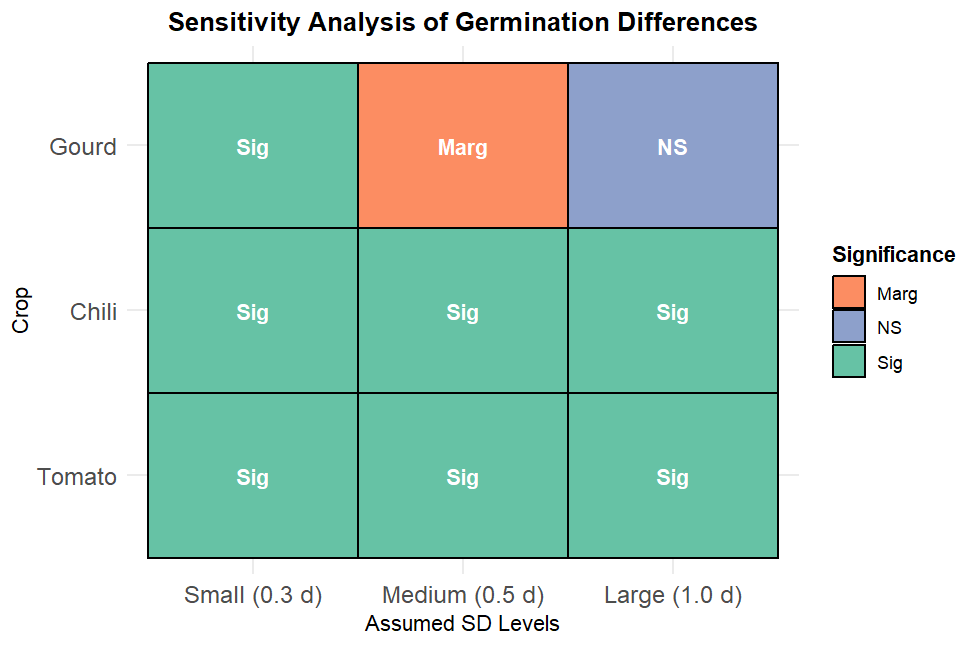
Statistical significance (p < 0.05), marginality (0.05 ≤ p < 0.10), and
non-significance (p ≥ 0.10) are shown. The analysis is based on
simulated n = 3 per treatment, and SD values were assumed. While
bottle gourds did show evidence of increased height and germination,
it was minor enough not to reach significance at p < 0.05. Considering
the results, cucurbits may need refined ratios of compost or for
the observations to take place over a longer time frame to witness
consistent benefits.
Discussion
These findings would indicate that organic amendments like
compost and biofertilizer sources offer benefits to seedling vigor and
earlier vegetative growth. Besides providing important nutrients,
organic matter improves soil structure and water holding capacity,
creating more favorable conditions for root development and
overall plant growth. These results are consistent with other studies
that demonstrated that bioactive inputs and compost, improved
establishment and growth of solanaceous crops (Imran et al., 2022;
Khan et al., 2019) [14,15]. The different responses of the crops
indicate that the organic production approach is variable among
species to organic management, but tomato was the superior crop.
Bottle gourds seemed to benefit less in comparison to tomatoes,
which exhibited the most increases in growth and germination,
followed by chilies. This variable response to organic inputs supports
that organic management practices needs to be tailored advise
identity the individual crops responsiveness and how to maximize its
impact. The reasonably large effect sizes and statistically significant
differences observed in the study emphasize the potential of
organic farming strategies to improve early crop establishment and
contribute to sustainable vegetable production. The results confirm
previous literature suggesting improved vegetative growth and
seedling vigor with the use of organic management (Imran et al.,
2022; Khan et al., 2019) [14,15], and support the idea that organic
farming can yield food security and sustainability as a substitute to
conventional practices. Future work can assess the mechanisms
underlying these species-specific responses and the long-term effects
of organic management practices on crop yield and health. The
strong data from this study support the idea that organic farming
techniques are advantageous in promoting plant development soon
after planting and improving long-term productivity. The forward
to past results showing that organic management is advantageous
for seedling vigor and growth (Imran et al., 2022; Khan et al. 2019)
[14,15]. There is opportunity for future investigation ns that assess
the long-term contributions from organic management to crop
productivity and soil health as well as mechanisms creating speciesspecific
responses to organic management. These investigations could
inform farmers on organic management improvements to maximize
the benefits for crops. This stability in solanaceous crops is consistent
with earlier studies reporting that compost amendments, enriched
with bioactive compounds and microbial populations, significantly
enhance germination and seedling vigor in tomato and chili pepper
by improving nutrient availability and stimulating root development
(Imran et al., 2022; Scotti et al., 2024) [5,6]. The non-significant trend
observed for bottle gourd aligns with evidence that cucurbit species
often display variable responses to organic inputs, as their germination
and early growth are strongly influenced by seed coat characteristics,
temperature sensitivity, and soil moisture regimes (Kumar et al.,
2021) [16]. The bottle gourd nonsignificant trend was consistent
with previous work, as cucurbit species are often known to have
fewer stable responses to organic inputs. Factors affecting cucurbit
species include seed coat characteristics, temperature sensitivity, and
soil moisture regimes (Kumar et al., 2021) [16]. Overall, compost
benefits from the results are strong and crop-specific. Solanaceous
vegetables demonstrated more consistent benefits while cucurbits
were more inconsistent. These outcomes correspond with earlier
research suggesting organic amendments, including compost and
biofertilizers, improve soil fertility, microbial activity, and moisture
retention. All of which tend to encourage more seedling emergence
and early development (Imran et al., 2022; Khan et al., 2019; Kumar
et al., 2021) [14,15,16]. This improvement can likely be attributed
to increased soil microbial activity and nutrient availability, which
aligns with previous compost studies in South Asia (Imran et al.,
2022; Scotti et al., 2024) [5,6].
Conclusion
The present pilot study in Sialkot, Pakistan, explored compostbased
organic management of growing bottle gourd (Lagenaria
siceraria), chili (Capsicum annuum), and tomato (Solanum
lycopersicum) in a peri-urban context. Relative to standard chemical
treatment, the evidence across all studied variables supports the
benefits of organic inputs: plants grew taller about 14-22%; tomato
and chili seeds germinated 2-3 days sooner. While bottle gourd had
weaker and ultimately non-significant germination response, analysis
of effect size and bootstraps suggest the gains for tomato and chilli
were robust. The benefits can be attributed to possible improvements
in soil structure, microbial activity, and nutrient availability, which
in turn, enhance vegetative growth and seedling vigor. These
results offer context “built” evidence supporting compost as an
inexpensive, ecologically-oriented option to enhance peri-urban
home agricultural systems. It is worthy to note that a single-season
study design with a lack of replication constrains the generalizability
of findings. Findings should be regarded exploratory, or preliminary.
Future research should expand on this study by including yield and
soil fertility parameters, conducting replicated multi-season field
trials, and assessing the economic feasibility of organic amendments.
In Pakistan and other similar agro-ecological regions, such extensive
effort is necessary to legitimize compost-based management as a
scalable option for sustainable crop production.
Grant Support Details:
The present research did not receive any financial support.Conflict of interest:
The authors declare that there is not any conflict of interests
regarding the publication of this manuscript. In addition, the
ethical issues, including plagiarism, informed consent, misconduct,
data fabrication and/ or falsification, double publication and/or
submission, and redundancy has been completely observed by the
authors.Acknowledgments
The authors sincerely thank the GCWUS-Government College
Women University Sialkot, Pakistan for providing the necessary
facilities and funds to conduct this study.
References
Citation
Simran. Enhancing Vegetable Growth and Germination through Compost-Based Organic Farming in Pakistan. J Environ Soc Sci. 2026;11(1): 135.